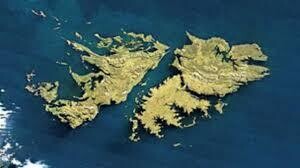
For the Argentine Republic, this scenario demands a high level of strategic intelligence: not to celebrate the isolation of an adversary, but to maneuver shrewdly in a world where alliances are no longer signed with treaties, but with the effective presence of ships in the theater of operations. As classical doctrine taught, when great powers come into friction, empty spaces tend to be occupied. President Trump has understood that the post-war international order has died from the starvation of its members. The security of the British occupation of the Falkland Islands and its Antarctic projection has always rested on a tripod: its own military capability, international law (conveniently interpreted), and, fundamentally, the logistical and political backing of the United States. If Trump questions the utility of the United Kingdom as an ally, the cost-benefit of sustaining British colonial claims in the South Atlantic enters a zone of review for Washington. From the perspective of Grand Strategy and National Strategic Planning, we are witnessing a 'combat audit' in real time of the Western security architecture. Trump has put on the table the crude reality of National Power: the will to fight. This question itself is a psychopolitical warfare maneuver that leaves the United Kingdom in an unprecedented strategic exposure since 1945. From our perspective as Argentine analysts, this break is of extreme sensitivity. The question for our leadership is whether we are ready to understand this new language of global power. Trump, with his direct style, has exposed this capitulation: 'Do we really need them?'. By denouncing the 'silence' of London in the face of the request for naval assets in the Strait of Hormuz, Washington has officially declared the end of the 'Special Relationship' based on nostalgia, to make way for a Results-Transactional Security. In the language of Strategic Intelligence, Trump's request to the UK was not intended to complement the operational capability of the U.S. Navy—which has overwhelming superiority in the Middle East theater—but to conduct a force recognition of the political will of its allies. The British 'silence' in the face of the Hormuz crisis reveals a deep strategic atrophy at 10 Downing Street. The United Kingdom today faces the risk of 'strategic loneliness'. The scenario as of March 16, 2026, presents three vectors of critical risk: Risk of escalation due to a vacuum: The lack of cohesion in NATO, evidenced by British inaction, incentivizes regional actors in the Persian Gulf to radicalize the blockade, assuming that the U.S.-led coalition is fractured. Systemic economic risk: For Argentina, sustaining the price of crude above $100 due to 'ally friction' is a factor of macroeconomic destabilization that requires an immediate reconfiguration of our energy and transport forecasts. Risk of territorial dismemberment: A weakened United Kingdom, publicly reprimanded by its main military ally, could be forced to accelerate sovereignty transfers (as happened with Chagos) or drastically reduce its military presence in overseas territories to concentrate its scarce resources on the defense of its own islands. We are facing a Historical Inflection. Trump's logic is clear: if there is no contribution in the Strait of Hormuz, there is no commitment in the Strait of Magellan or the Scotia Sea. A state that is not capable of projecting power to secure its own lines of maritime communication (SLOC), while crude oil climbs to $105, is a state that has renounced its category as a global power.