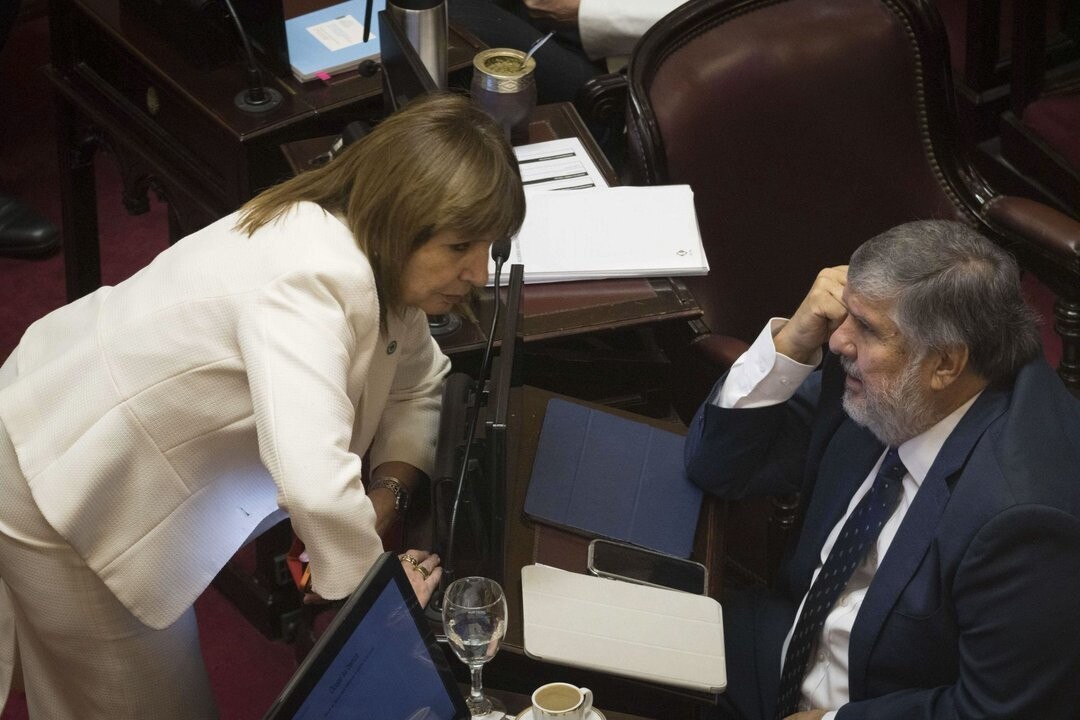
The National Congress will begin to slowly resume parliamentary activity, but with strong control from La Libertad Avanza over the legislative agenda, and with Peronism unable to find a mechanism to regain the initiative. The ruling coalition in the Chamber of Deputies and the Senate has retaken leadership of these parliamentary bodies and leaves no room for others to dictate the topics for debate, after a year when the Justicialist Party (PJ), along with some allies, controlled the threads of Parliament and passed laws against the government. In this new stage, with the ruling coalition being the minority in the Chamber of Deputies and with parity in the Senate, it controls the parliamentary agenda, which this week will be focused on the formation of committees and a brief session in the upper house to advance the discussion of nominations. In this context, Peronist blocs have not been able to devise a strategy to break the tight control exerted by the libertarians due to divisions within them stemming from the lack of a national Peronist strategy. Parliamentary sources told the Argentine News Agency that it is very difficult for Peronism in the Chamber of Deputies to agree on a single position. The ruling coalition has not yet defined how it will carry out these public meetings.
The Senate will hold a session next Wednesday at 2 p.m. to admit the nominations of Judge Carlos Mahiques - father of the Minister of Justice - and former Senator Lucila Crexell as ambassador to Canada. The main objective of the ruling coalition is to grant entry to the nominations of Mahiques, Crexell, and six military personnel, as well as any others submitted by that date, as learned by the Argentine News Agency. In addition, two international agreements signed with France and Austria, and another one with the United Nations Food and Agriculture Organization (FAO) in 2009, will be debated in that session. Mahiques is a member of the Federal Chamber of Cassation and will turn 75 on November 1, which is the age at which he should retire according to the National Constitution, but now the ruling coalition is promoting that he can stay for another five years. Crexell, who was a senator until December 2025, has been proposed as ambassador to Canada, but her appointment will not be without controversy, as when she voted in favor of the Bases Law, it had been reported that she would be proposed as ambassador to UNESCO.
In the Senate, nine commissions will be constituted between Wednesday and Thursday, with the greatest interest being generated by those considered of management, such as Constitutional Affairs and General Legislation, which will be in the hands of the libertarians. The Constitutional Affairs Commission was called for Wednesday at 11 a.m., where they will designate the young Fueguian libertarian Agustín Coto as president, while General Legislation, which will meet on Thursday, will elect as its head the LLA senator, Nadia Márquez. On Wednesday, the Internal Security and Narcotics Commission will also be constituted, which will be chaired by the Santa Fe radical, Carolina Losada. The list of commissions to be constituted on Thursday are: Agriculture and Livestock, Freedom of Expression, Tourism, National Defense, Administrative and Municipal Affairs, and Sports. Agriculture will be chaired by the libertarian Joaquín Benegas Lynch, Freedom of Expression will remain in the hands of the Convicción Federal Peronist, Carolina Moisés, and Tourism will be headed by the Mendoza radical Mariana Juri. The commissions of Defense, Administrative and Municipal Affairs, and Sports will be chaired by Luis Juez (LLA), Daniel Kroneberger, and Bruno Olivera Lucero (LLA).
In the case of the debate on Glaciers, there are divisions, as some legislators will vote with their governors while others lead the protest against the reform of this initiative that will allow for the advancement of mining projects. This scenario allows the ruling coalition to advance without difficulties in the distribution of power in both the Chamber of Deputies and the Senate, where, together with its allies, they will take control of the strategic commissions, which will allow them to manage the parliamentary agenda without problems.
The Chamber of Deputies will constitute 18 commissions this week, although the ruling coalition will maintain control of the main advisory bodies to push its parliamentary agenda. In December, 9 commissions - called management commissions - were left in the hands of La Libertad Avanza, and now four more substantial ones will be added for the LLA. Legislative sources told the Argentine News Agency that between Tuesday, Wednesday, and Thursday, 18 commissions will be constituted, of which 9 will be for Peronism, 4 for La Libertad Avanza, 3 for the Forces of Change - integrated by PRO, UCR, MID, and For Santa Cruz - and 2 for the United Bloc (Encounter Federal, Provinces United, and Civic Coalition). In any case, the bodies that will correspond to Peronism are those that "theoretically" do not set the agenda, although sometimes a topic may begin to have public impact, as happened last year with disability.
Another central topic on the agenda will be the organization of Public Hearings for March 25 and 26 on the Glaciers Law, as registration has exceeded all expectations and more than 34,000 speakers have already registered.