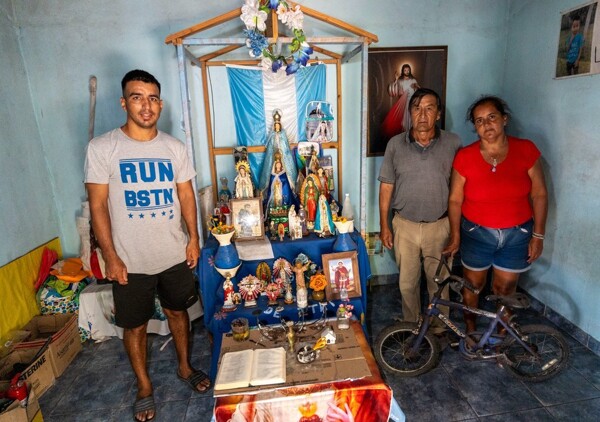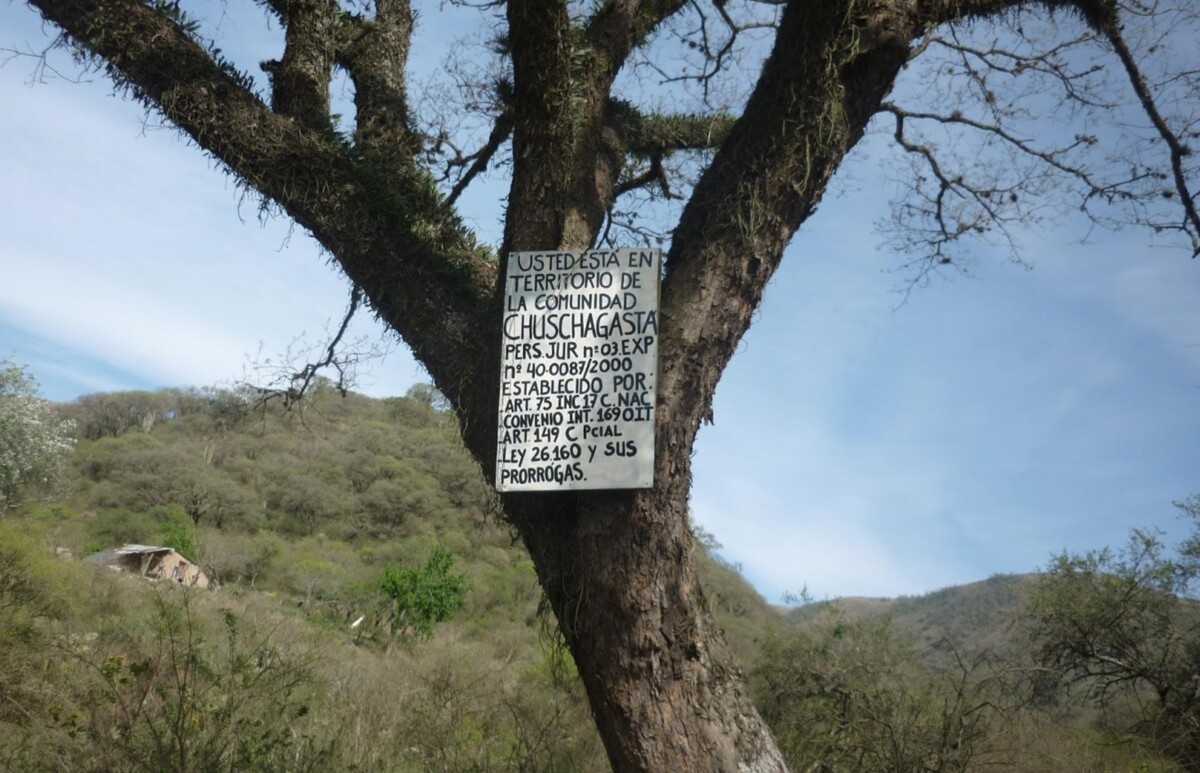
This is what one community leaves for the rest, and what is now available for anyone who wants to make another film. It's about the state not responding to a request from a community. Javier's son said, "The film is based on real events that have happened in our community, and this is part of why we, as a community, feel abandoned by the state. If they had taken indigenous communities into account, we wouldn't be seeing this film today." "We would be happy with my father alive and with us, at home." He reiterated the call on the state to take responsibility not just for his community, but for all: "We are still in time. The truth is that what we have been through is something very hard." He also noted that the film will be a great starting point for a dialogue with the provincial state, as it should be. After the film, a conversation was held with the audience. In her closing remarks, Martel stated that "the ideal would be for communities to be able to tell their own stories. We have to be a strong community. Luckily, at least justice reacted to so many outrages, but it wasn't until 2025 that the Court confirmed the sentence." Martel added that the state is the first entity we must demand accountability from: "but we cannot keep trusting governments, because we don't know what government will come to power. Although we have lost a life and it makes no sense, we believe the state must take responsibility and deliver the lands to the indigenous communities." On this point, Martel added: "I don't know if anyone in this room knows Governor Jaldo. Today we present the film to make people reflect and see all the outrages we have suffered. It should reach people who don't make it to the city cinemas and, above all, serve for debate and action. This is a great year to make a big decision: to restore the lands to the Chuschagasta community and, hopefully, to all the communities in Tucumán that have been demanding this for decades. If there are people marching in the city, you have to support them because we have to help each other and, of course, demand the State with all our strength. We have to support each other." She also spoke to the community, saying, "Whether you will like the film or not, whether it will embarrass you to see what we did." Regarding this, Martel explained that she had agreed with the film's financiers that—after a run in cinemas—the film would be given to the community and, in parallel, would be "released" to anyone who requests it. "We are going to give it to all organizations, clubs, community halls, and anyone who wants to show it on the condition that it be for non-profit purposes." This will begin on May 22, for which the production has enabled an email for interested parties to contact: nuestratierra.proyecciones@gmail.com. "It was our turn to contribute at this moment. Don't trust your film too much, but make an archive and share it with the communities." A film that reaches everyone who wants to see it. Seeing the film in a cinema allows you to appreciate it in all its visual and sound dimensions, but the idea is that it can reach as many places as possible at some point. And to tell them that whatever information they need, the historical evidence they need to make that decision, is available whenever they want." Referring to the historical process, the director added that "it is scandalous what the Government of Tucumán did. We have to be a community that defends itself with words, with music, we have to defend ourselves among ourselves." The director emphasized that this story can be repeated in any community and added that "when you see someone on television asking for help because they have been evicted, because they have been shot, I ask you to believe them or to investigate. We are defending our lands, our rights, the place where we were born, and the customs of our ancestors," added Audolio. "But don't let those news stories pass, because it is the news of our country." The cacique of the Indigenous Community of Chuschagasta, Azucena Cata, also spoke, saying that the community is immensely happy to reach this moment: "Today we can say that with the film, a before and after is marked, not only for the Chuschagasta community, but for all communities at the national and international level where they exist." Cata concluded her intervention with a call: "this gives a foothold to sit down and dialogue with the Provincial State, because the communities in Tucumán tell us 'we have to go to the national level,' but the communities of the province of Tucumán live within a territory that is Tucumán's." She thanked Martel's team, noting that in the 14-year process there were "agreements and disagreements," but what is seen in the film is the fruit of that process. "You don't know that, but while you are researching and making an archive of documents, photos, documents, and organizing them, but I tell my colleagues: you never know if the film will be good or bad, if you made a mistake, if you romanticized or exaggerated." The premiere in cinemas will be on March 5. Before the screening, besides the director, Audolio Chocobar (son of Javier) and Cacique Azucena Cata spoke. Standing before the audience, Audolio Chocobar thanked those present, recounted the events of the attack on October 12, 2009, in which his father, Javier Chocobar, was murdered. It was attended by Lucrecia Martel and her team, as well as a large delegation from the Indigenous Community of Chuschagasta and other communities in Tucumán. It should be remembered that for this fact, its authors were tried and convicted in 2018: Humberto "el niño" Gómez (to 18 years), José Valdivieso (to 10 years), and the author of the shot that killed Chocobar, Darío Amín (to 22 years), who died of Covid in 2021. Image: ENOTPO. The pre-premiere in Tucumán of the documentary film "Our Land" took place on February 27. If you don't believe it, if you doubt it, investigate.