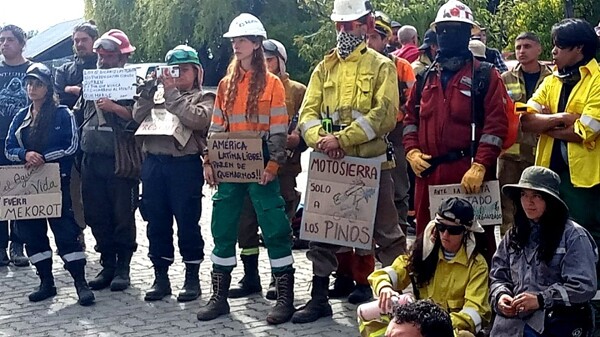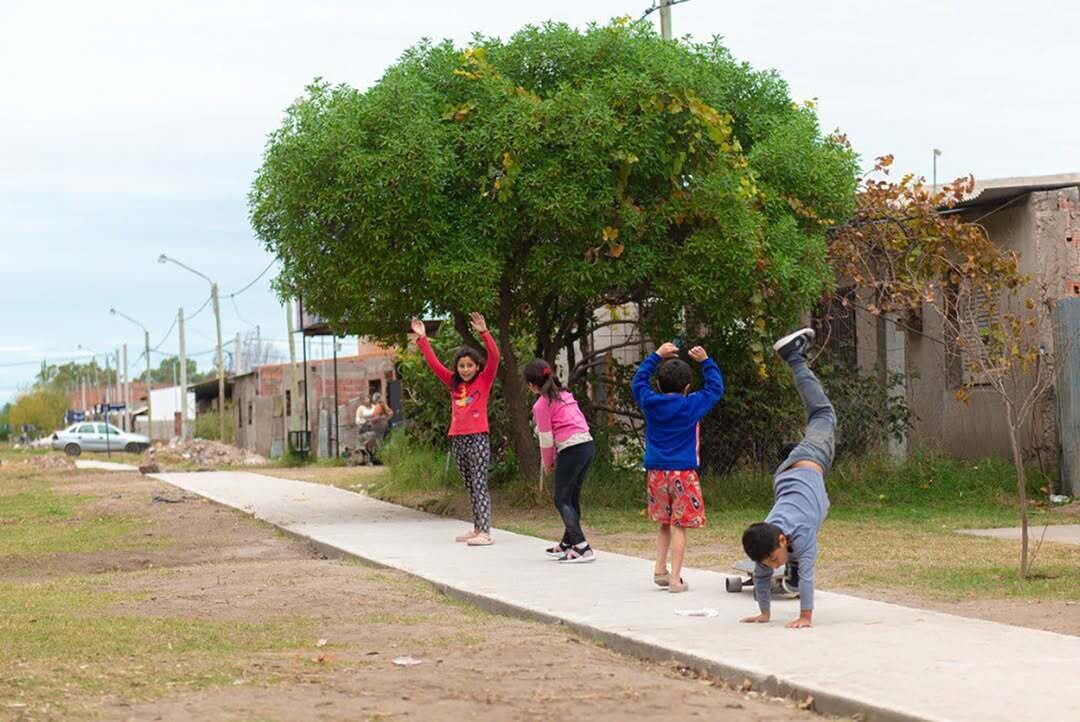
The government seeks to downgrade the area to a National Directorate, affecting 5 million people, halting over 600 works on sewers, sidewalks, electricity, and water, and liquidating the FISU to favor the financial scheme, breaking a historic political consensus that united all political forces, the church, and social movements.
Today, complying with that legislative refusal, the government of Javier Milei seeks to downgrade the area for the second time. After having degraded it from a Secretariat to a Subsecretariat, they now intend to reduce it to a simple National Directorate. The political objective is clear: to empty the body of content and budget to liquidate the Social and Urban Integration Fund (FISU), attack neighborhood and community organization, and continue the dismantling of the National State.
Under the orbit of the Ministry of Economy led by Luis 'Toto' Caputo and the management of the Undersecretary Sebastián Pareja until his assumption as National Deputy, the elimination of FISU does not respond to a logic of savings, but to the intention to redirect those multimillion-dollar funds towards financial businesses and the 'fiscal blender', in tune with the deregulations promoted by Federico Sturzenegger. It also directly affects more than 11,000 women who would be left with unfinished works from the My Room program.
The actions of the Ministry of Economy not only break the social and political contract but also openly violate the current legality. The measure disobeys the ruling of the federal judge of Pehuajó, Andrés Heim, who explicitly ordered the continuity of the works financed by FISU and demanded the National State a plan of action in the face of a collective amparo presented by neighbors and social organizations.
Without workers, there is no public policy. While the government celebrates 'zero deficit' and approves the 'labor reform law', more than 250 families of state workers join the ranks of unemployment, and 5 million inhabitants of popular neighborhoods see how the State withdraws, delivering the soil and territory to real estate, financial speculation and drug trafficking.
This decision implies the total paralysis of the only federal policy aimed at urbanizing the shantytowns and settlements of the country, where approximately 5 million people live and indirectly affecting more than double. The seriousness of the measure lies in that it attacks one of the few State policies that had managed to cross the Argentine political crack.
The Ministry of Economy, under the orders of Luis Caputo, threatens to terminate the contracts of more than 250 technicians and professionals from the Undersecretariat of Social and Urban Integration (SSISU). The dismissal of the technical, administrative, and territorial teams (who plan, formulate, survey, and execute in the neighborhoods) guarantees that there will be no operational capacity to comply with the law.
This Tuesday, February 11, the authorities informed more than 250 workers that their contracts will end on February 28, leaving us in the street as of March 1. It is not a simple 'administrative restructuring' as indicated by the Ministry of Economy, but the closure of the body in charge of executing Law 27.453 on Land Regularization and Social and Urban Integration. A public policy defended on several occasions by the former Libertarian Undersecretary, Sebastián Pareja, and audited twice by the National State, verifying its efficiency and effectiveness.
To this is added the imminent danger of 150 active eviction processes that the SSISU had to stop through land regularization processes. According to the workers, the emptying directly affects 628 works that are currently stopped throughout the country. The only political force that voted against this expansion of rights in 2022 was precisely, La Libertad Avanza.
The creation of RENABAP and the implementation of SISU were approved by national law in 2018 and expanded in 2022 unanimously in both chambers. Social and urban integration has ceased to be a right to become a variable of fiscal adjustment. A transfer of resources from the popular sectors to the concentrated power sectors.
The dismantling has immediate consequences. In a new blow to inclusion public policies, the national government advances with the definitive dismantling of the Undersecretariat of Social and Urban Integration (SSISU). In addition, 20,000 lots with services that were to be awarded to homeless families remain. The State's withdrawal leaves 50,000 families unprotected who need to process or regularize their Family Housing Certificate, a key document for access to basic services.