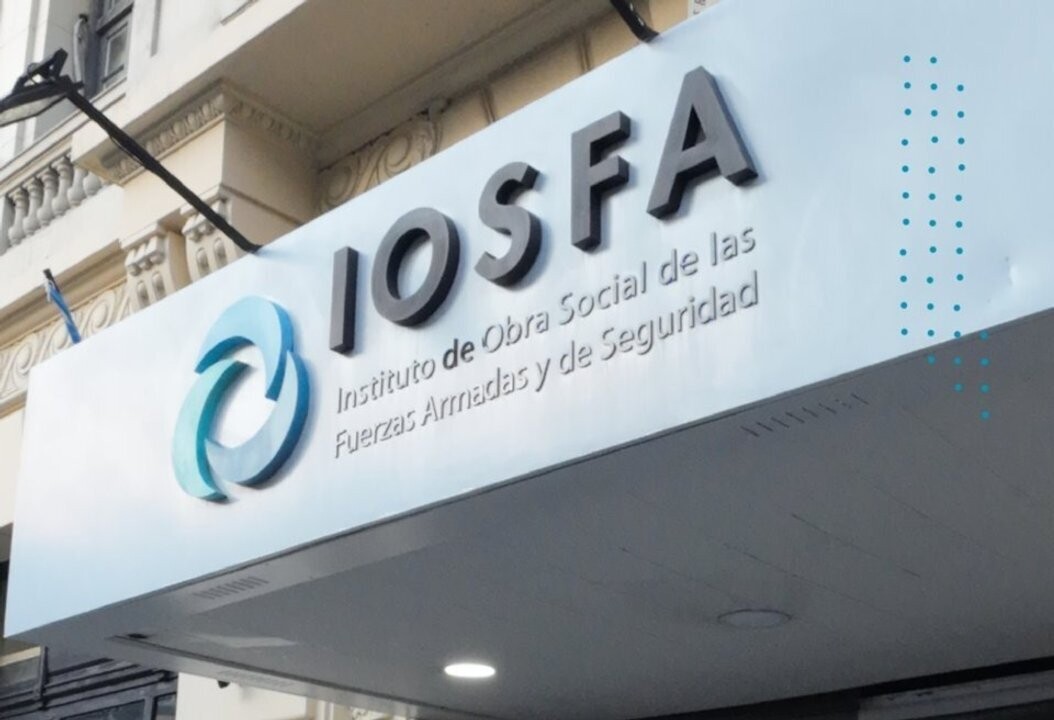
The National Executive has taken a strategic move to mitigate the operational and financial collapse of healthcare in military institutions. It has officially approved the comprehensive restructuring of the Social and Health Institute of the Armed Forces and Security (IOSFA). This measure, as anticipated by the Argentine News Agency, was formalized today through the respective decree and provides for the definitive split of the organism and the creation of two new autonomous entities: the Armed Forces Social Work (OSFA) and the Federal Security Forces Social Work (OSFFESEG). This administrative decision seeks to respond to a financial crisis of critical magnitude, with an audited liability amounting to 200 billion pesos. Its constitution as an autonomous entity grants it its own legal personality to manage the health of active-duty military personnel, civilians from the Armed Forces, retirees, and their family groups. A Special Ad-Hoc Commission, made up of representatives from the Defense, Security, Economy, and Health ministries, will supervise that the transfer does not affect the continuity of the Mandatory Medical Program (PMO) or the ongoing treatments of beneficiaries. From the Government, it is emphasized that this decentralization will allow for more agile management aligned with the specific needs of each force, ensuring long-term financial sustainability and the preservation of the constitutional right to health of the military and security family groups. On the other hand, OSFFESEG will fall under the orbit of the Ministry of Security, providing specific coverage to the National Gendarmerie and the Argentine Naval Prefecture. A central aspect of the regulation is the shielding of financial resources. The decree stipulates a rigid allocation structure for both institutions: 80% of income: Exclusively destined for the provision of medical-assistance services. 8% (Maximum): Reserved for administrative and operational expenses. 12% (Surplus): Can be directed to other social benefits, as long as health obligations are fully guaranteed. Rigor in governance and oversight To prevent the repetition of the systemic failures detected in IOSFA, the Executive has imposed suitability requirements for Board members. Directors must prove proven track records in administration and health, both in the public and private sectors. According to the technical perspective of the Ministry of Defense and the Chief of Cabinet, the unviability of the previous scheme lay in irregularities in previous management and a structural imbalance that compromised the care of more than 500,000 beneficiaries. Breakdown of the new benefit scheme The new OSFA will operate under the jurisdiction of the Ministry of Defense, led by Carlos Presti. Furthermore, the entities will be subject to the permanent audit of the General Audit Office of the Nation (SIGEN), under a strict regime of incompatibilities to prevent conflicts of interest. The urgency of the reordering is palpable in critical points of the national territory. In Punta Alta, an epicenter of naval activity, the Association of State Workers (ATE) has denounced that approximately 42,000 people—more than half of the local population—depend on this coverage and have faced months of interruptions in basic services. Transition and service continuity The transition process contemplates the orderly transfer of assets, liabilities, and personnel from the defunct IOSFA to the new structures.