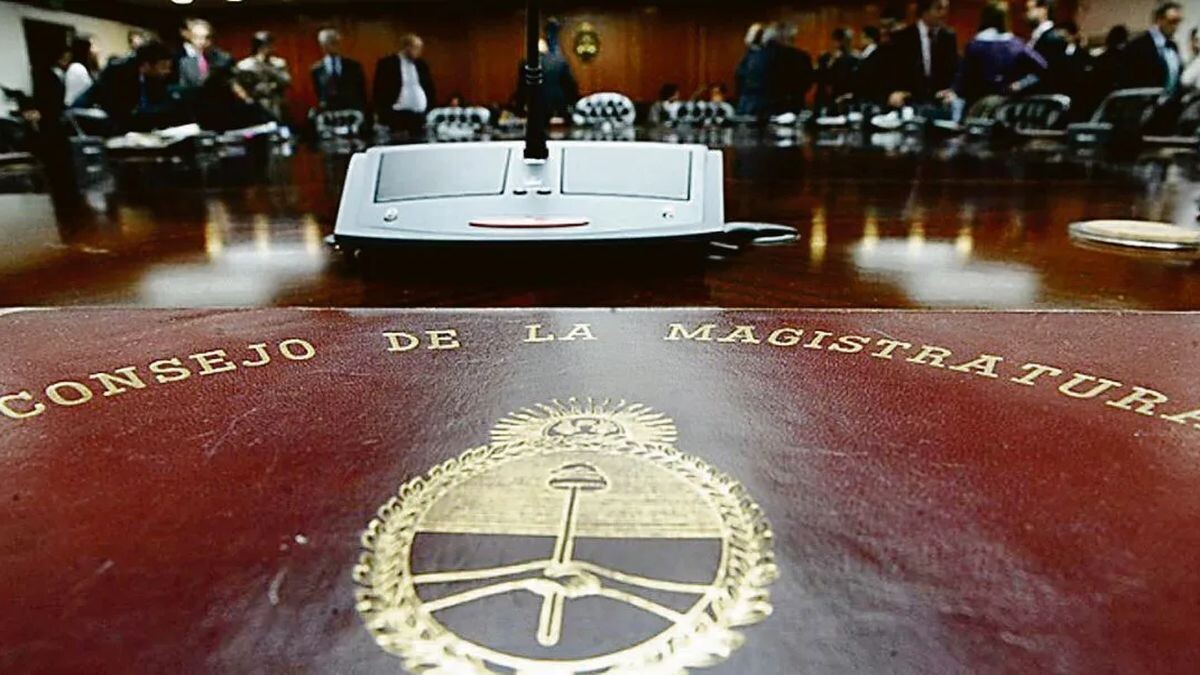
President Dr. Javier Milei faces a dilemma regarding judicial appointments, a problem his inner circle likely already has a plan to solve. Over the past six years, vacancies have accumulated in Federal and National courts. While competitions have been held to fill 65% of these positions, and the National Council of the Judiciary has submitted shortlists, no candidate has yet been sent to the Senate for approval. Meanwhile, under Milei's administration, no new competitions have been held, meaning all candidates were selected during the final term of President Macri and the four years of President Alberto Fernández's administration, alongside Cristina Fernández de Kirchner. It is crucial to recall how the National Council of the Judiciary was established. Following the 1994 constitutional reform, Article 114 created the Council as a permanent body to enhance judicial independence, participate in judge selection through competitions, manage the judicial budget, exercise disciplinary powers, and propose the removal of magistrates. The Council began operating in late 1998, replacing the previous system through an electoral process for its members. Before 1998, from the return to democracy in 1983, judges were appointed by the Executive branch after passing through the Senate's Agreement Commission. The selection process relied heavily on political connections. The 1994 system was an advance? The answer is: it depends. In the old system, the circle of influence was small; if a candidate had political connections, a legal career, and moral integrity, they could become a judge. The new system legitimizes the question: "Why not me?" for every law graduate. However, the complex reality is that political backing remains essential to succeed in the selection process. Politics inevitably crosses the path to the judiciary, especially when the council is composed of judges, senators, deputies, lawyers, academics, and an executive representative, each with their own political interests. From a strategic standpoint, the question is whether Milei is willing to appoint judges selected by a council dominated by members linked to the previous Kirchnerist government. For example, is it strategically advisable to appoint National Labor Court judges in Buenos Aires who were previously vetted by figures like Héctor Pedro and Mariano Recalde, just as the "Labor Reform" bill is set to be debated in parliament? The answer is no. The politically superior approach would be to redistribute existing cases in the current labor courts and gradually create new ones in Buenos Aires over the next 10 years. The Council of the Judiciary, with the right majority, becomes a technical-political tool for the government. In the past, the political landscape was more ethical, and judges were bolder, backed by their knowledge. Today, the stakes are high, and there are many political actors involved. There is no need for a "witch hunt." What is crucial is that the executive branch must "build power"—both in Congress through strong alliances and in the judiciary by appointing honest, well-trained individuals with management skills, a significant deficit among many who receive the honor of a judicial position.