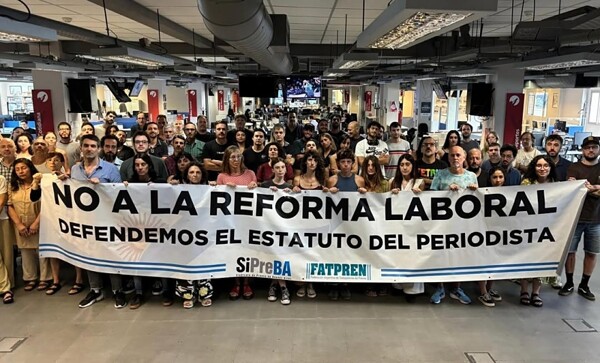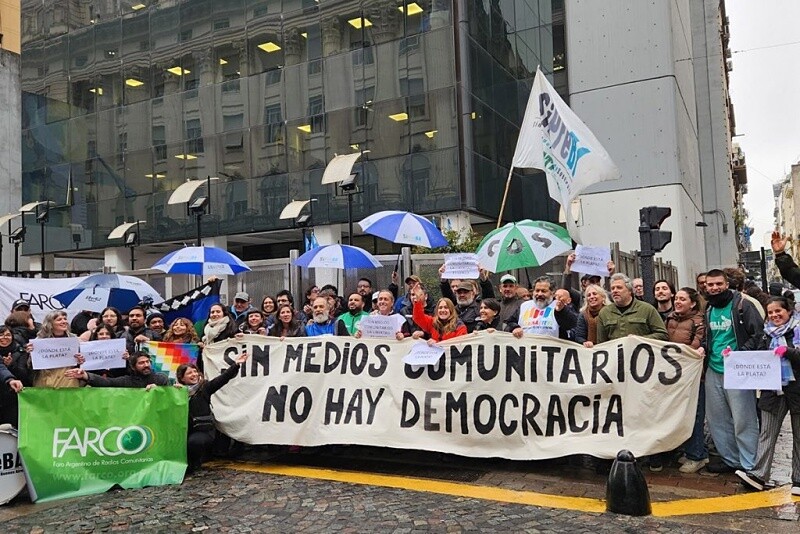
The National Coordinator of Alternative Televisions (CONTA) denounces that this is a strategy to 'benefit allied media,' as it 'incorporates for-profit media, opening the door for sector companies to receive state funding under a false 'equality of conditions,' which ignores the structural asymmetries between non-profit projects and concentrated media conglomerates, harming plurality of voices and favoring media concentration. The National Communications Entity (ENACOM) officially repealed the General Regulation of the Contestable Fund for the Promotion of Audiovisual Media (FOMECA) through Resolution 11/2026, signed by the intervening authority, Juan Martín Ozores. CONTA maintains that the new scheme 'incorporates for-profit media, and opens the door for sector companies to receive state funding under a false 'equality of conditions''. By redefining the rules for accessing state funding and opening the game to actors with for-profit interests, the resolution seeks to deepen structural inequalities in the Argentine media ecosystem, weakening spaces for autonomous expression and limiting the plurality of voices, at a time when these principles are central to the effective exercise of press freedom and democratic expression. From the National Coordinator of Alternative Televisions (CONTA), they expressed their rejection of the measure in a statement released this week, in which they classify the elimination of FOMECA as a strategy to 'benefit allied media' under the administration of President Javier Milei and his intervening authority in ENACOM. However, the change also implies leaving without effect ENACOM Resolution N° 1436/20, which regulated the prior registration for contests to access FOMECA funds, considered a 'bureaucratic requirement'. 'Technical modernization' or ideological adjustment in communication? The replacement of FOMECA with FOPROA once again shows the State's priorities in communication matters. The decision directly impacts the economic sustainability of community and alternative media, which have historically sustained informational diversity in the face of a concentrated market. The norm published in the Official Bulletin states: 'the General Regulation of the Contestable Fund for the Promotion of Audiovisual Media (FOMECA) is repealed,' originally approved by ENACOM Resolution Nº 735/20. In its place, it approves the General Regulation of the Fund for the Promotion of Audiovisual Projects (FOPROA), conceived as 'a mechanism aimed at the implementation of public policies for the promotion and development of the audiovisual sector'. The text of the resolution states that the regulatory transformation seeks to adapt to the 'constant technological evolution' and the need to 'attract investment in the sector' to generate 'quality content, capable of meeting local audience demands and competitively inserting itself in the global market'. Signed by its intervening authority, Juan Martín Ozores, the National Communications Entity eliminated the Contestable Fund for the Promotion of Audiovisual Media (FOMECA) and replaced it with the Fund for the Promotion of Audiovisual Projects (FOPROA) through Resolution 11/2026. The measure redefines the state funding scheme and places community, alternative, popular, and self-managed media on the same plane as traditional commercial media, many of them large companies in the sector. Furthermore, they denounce that the government 'mocks the spirit of Law 26.522, which sought to democratize communication and foster plurality of voices,' indicating that the retained resources—estimated at more than 15 billion pesos—will be used in media politically aligned with the administration. 'With the false premise of an 'industry modernization,' as it plans to approve an enslaving labor reform, the libertarian government takes another step against communication as a human right, attacking the community sector with the elimination of FOMECA,' add from CONTA. And they sentence: 'without community media, freedom is just a verse,' concludes the CONTA statement, which also tags the Press Union of Buenos Aires (SiPreBA) and the Argentine Federation of Press Workers (FATPREN). Thus, going beyond the merely normative sphere, Resolution 11/2026 is a reconfiguration of communication policy that favors a commercial vision over the definition of communication as a human right.