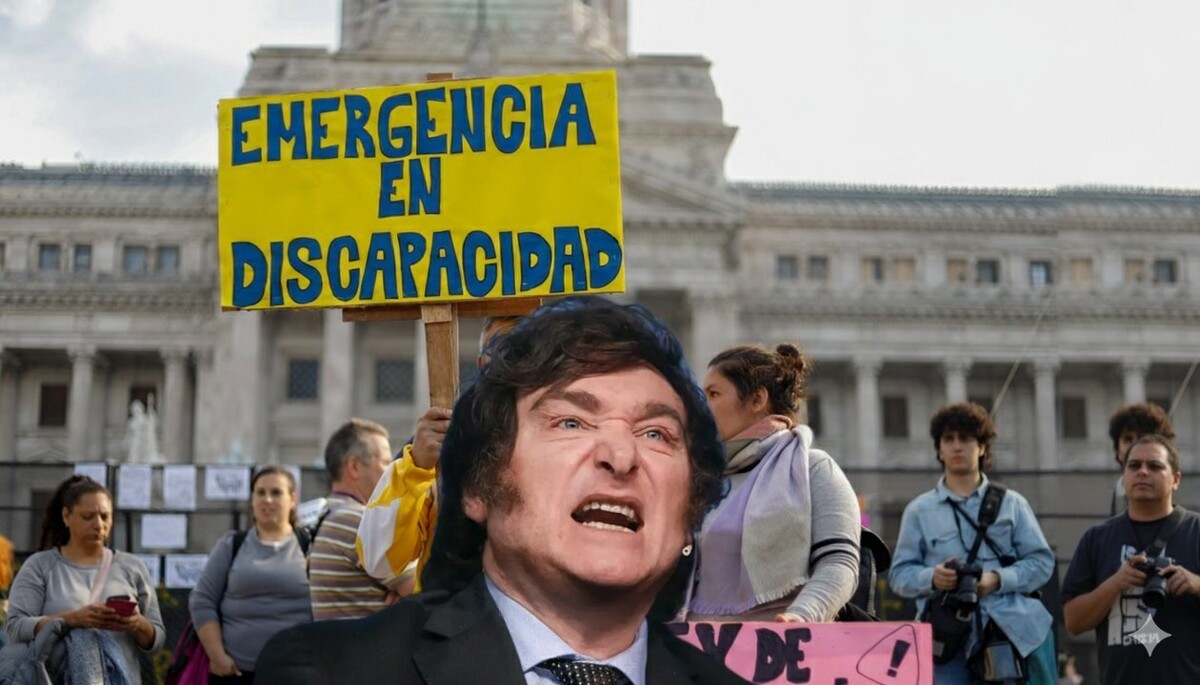
The Argentine government unexpectedly faced a setback in the 2026 budget debate. After appearing to be in control amid a wave of triumphalism, a political storm caused it to lose a key chapter. This chapter included the repeal of emergency laws on disability and university funding. Despite the Executive Branch not enforcing current laws under dubious pretexts, the budget bill aimed to resolve an issue causing significant political and judicial headaches. For the Casa Rosada, the increased public spending outlined in these two laws represented a Damocles' sword over the sacred libertarian rule of zero deficit. However, a detailed analysis shows that this spending is not of an impossible magnitude, as the government claims. This is especially true since the 2026 budget itself validates much larger revenue losses from tax cuts for large corporations, a substantial reduction in the Personal Assets tax, a drop in internal taxes on electronics and cars, lower export duties on certain grains, reduced employer contributions (as outlined in the labor reform), the elimination of the PAIS tax and the Real Estate Transfer Tax, and various tax amnesties. Beyond the fiscal resources the government has decided to forgo, let's examine the fiscal impact of the emergency disability and university funding laws, which were passed by a large majority and later re-insisted upon by both chambers of Congress after President Javier Milei vetoed them. The Emergency Disability Law proposes changes to benefit eligibility, a pension update mechanism, and increased tariffs for service providers. According to a rigorous report by the Congressional Budget Office (OPC), this could increase the number of beneficiaries by between 493,000 and 946,000 people, requiring additional fiscal spending of between 1.89 and 3.63 trillion pesos. The University Funding Law, according to the OPC's estimates, would have had a budgetary impact of 1.96 trillion pesos (0.23% of GDP) in 2025. The parliamentary proposal includes a budgetary reallocation for operating expenses, periodic updates based on the Consumer Price Index, a recomposition of teacher and non-teaching salaries, and the automatic adjustment of student scholarships.