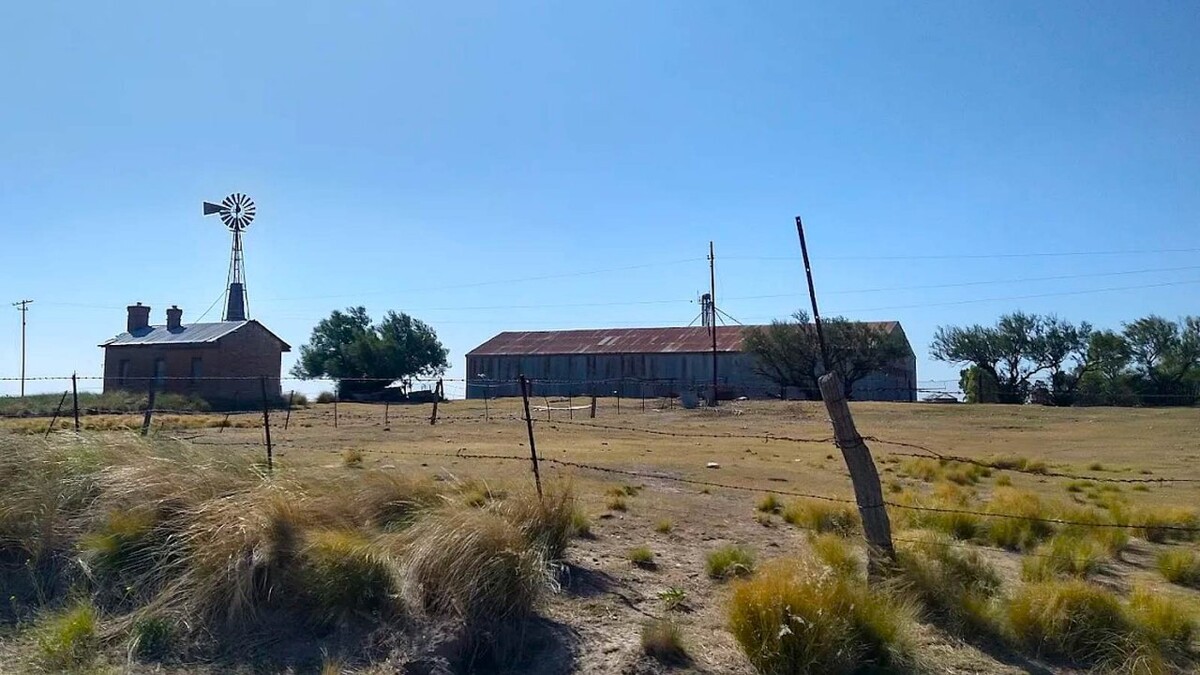
Buenos Aires, March 18 (NA) — More than 600 kilometers from the city of Buenos Aires, in the district of Puán, there is a place that summarizes the history of the Buenos Aires interior like few others: Estela, a town that grew with the train, had its moment of boom and ended up completely abandoned. Today, uninhabited since 2022, it has become one of the best-known ghost towns in the province, according to the Argentine News Agency. The case of Estela reflects a phenomenon that is repeated in different parts of the country: localities that depended on the railway and, after the closure of the lines in the 90s, began to lose population steadily. Photo: Agencia NA (Google Maps) Currently, what remains standing—its houses, rural structures, and the open environment—has started to attract visitors looking for different experiences. Photo: Agencia NA (Google Maps) It is not a destination to go to exclusively for the day, but it can be integrated into a broader getaway through the region, combining it with other nearby points that do have services. Among the nearby options are the Puán lagoon or small rural localities that maintain the gastronomic tradition of the interior, which allows for a complementary experience. From a productive town to an uninhabited place Estela was born thanks to the Roca Railway, which was key to the region's economic development. Photo: Agencia NA (Google Maps) But the closure of the railway lines marked a before and after. Photo: Agencia NA (Google Maps) The value of the place is not in traditional activities, but in the experience it offers: walking through a space that has been frozen in time, where silence and the landscape have total prominence. That is why, in recent years, it has begun to gain interest among photographers, travelers, and the curious who want to discover another side of the province of Buenos Aires, far from the best-known circuits. Where it is and how to get there Estela is located within the district of Puán, in the southwest of Buenos Aires. Finally, in 2022, the last couple living there decided to leave after more than 30 years, leaving the town completely empty. What can be seen today in the ghost town of Estela Although it has no services or tourist infrastructure, Estela offers a very particular experience for those who decide to visit it. Among the main attractions are: The house where the last inhabitants of the town lived Silos and structures linked to agricultural activity Remains of the railway passage, key to its history Dirt roads and constructions frozen in time The train not only transported production but also people, generating a constant flow that sustained the town. Estela is a town that belongs to the Municipality of Puán. At its best, it housed about 100 people, but the decline was rapid and progressive. Thanks to connectivity, the town managed to consolidate itself as an active point within the agricultural-livestock circuit of the southwest of Buenos Aires. During its years of greatest movement, it had basic services and community life: a school, a police station, a general store, and a flour mill that boosted local activity. Without a train, isolation grew and opportunities began to reduce. Migration to larger cities became inevitable. The numbers show this process: in 2001 only 25 inhabitants remained, and in 2010 only two.