Bad Bunny's performance at Super Bowl LX, taking place this Sunday at Levi's Stadium, marks the culmination of a long journey for Latin music at the biggest sporting event in the United States. According to the Argentine News Agency, Benito Antonio Martínez Ocasio will make history by becoming the first solo Latin artist to headline the show, singing predominantly in Spanish, thus differentiating himself from his predecessors. That show was symbolic for including rhythms like salsa and champeta, and featured the "new guard": J Balvin and, curiously, a young Bad Bunny who participated as a guest.
Six years after that cameo, the "Bad Bunny" returns as the absolute protagonist to transform the stadium into a global nightclub. The artist arrives at the final between the Seahawks and the Patriots after winning the Grammy for Album of the Year for his album "Debí Tirar Más Fotos".
The Pioneers: The Push of the 90s
The path to the main stage was paved by Gloria Estefan, who opened the doors long before reggaeton dominated the charts. 1992: Estefan was the first major Latin star to perform at Super Bowl XXVI. 1995: She returned in an Indiana Jones-themed show with the Miami Sound Machine and Cuban trumpeter Arturo Sandoval, adding Latin jazz to the event. 1999: She shared the stage with Stevie Wonder, solidifying herself as the Latina with the most appearances in the event's history.
Pop of the New Millennium
With the arrival of the year 2000 (Super Bowl XXXIV), the NFL sought a more global sound. Enrique Iglesias and Christina Aguilera performed "Celebrate the Future Hand in Hand" with Phil Collins, demonstrating that pop with Hispanic DNA was already an integral part of American culture.
The 2020 Revolution
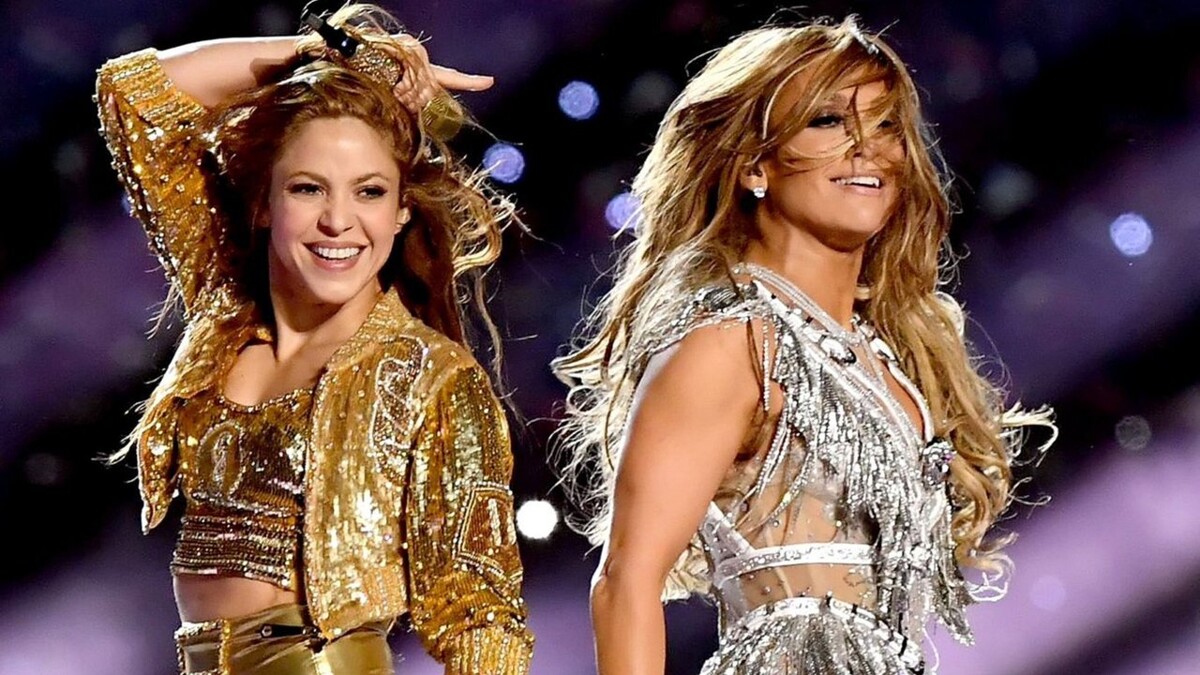
The most powerful direct precedent occurred at Super Bowl LIV in Miami, when Shakira and Jennifer Lopez led the show.