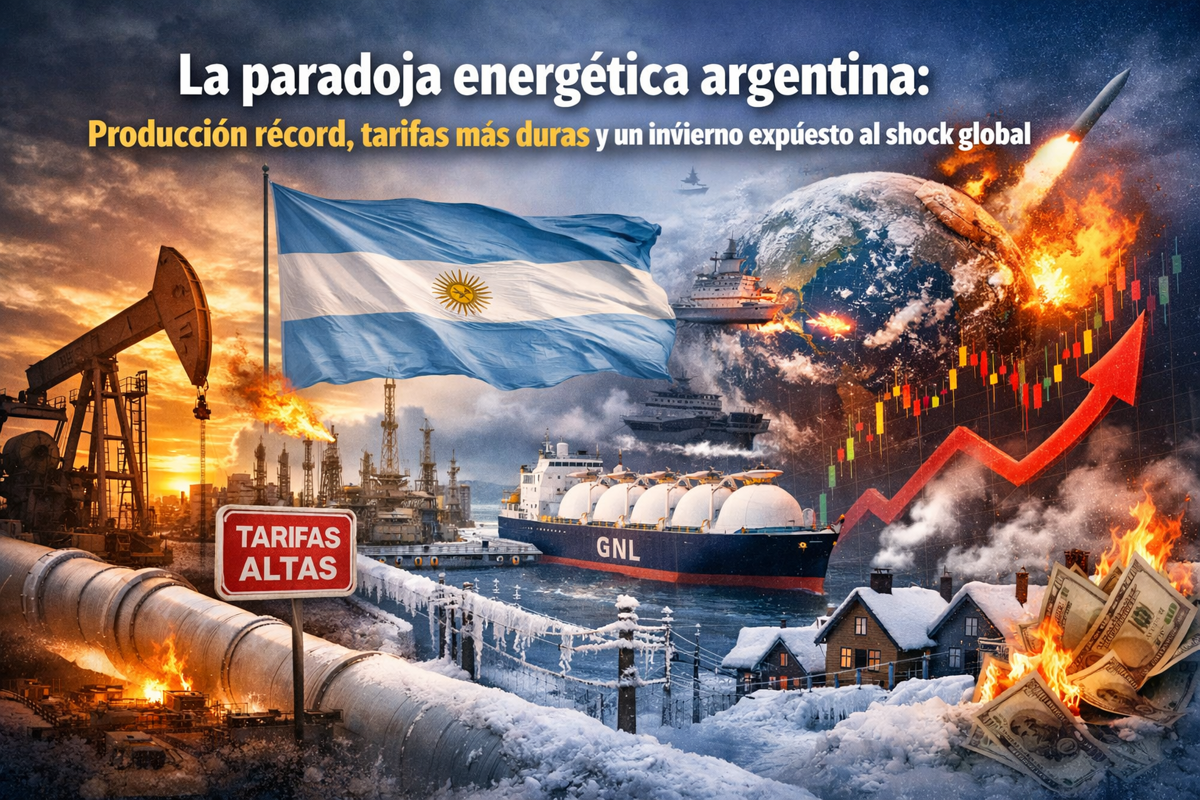
Argentina heads into the winter of 2026 with a structural paradox that summarizes its strengths and vulnerabilities. The gas supply system will operate under stress but without a breakdown in residential supply, concentrating the impact on industry and dispatch. The main problems are logistics, prices, and regulation. The international crisis, triggered by the conflict in the Middle East, has caused LNG prices to soar and disrupted logistics. Within the country, the main complexity is bottlenecks in transportation, especially in the Norte gas pipeline, which prevent record production from covering peak demand alone. As of May 2026, the state will withdraw from LNG imports, making this market fully private. This creates financial pressure on distribution companies due to the gap between rising costs and tariff adjustments. The situation will affect the three main gas distribution companies differently: GASNOR will be in the most critical position due to its high import dependency, Ecogas will face significant but manageable challenges, and Litoral Gas will be better positioned due to better access to domestic gas and its role as a system buffer.