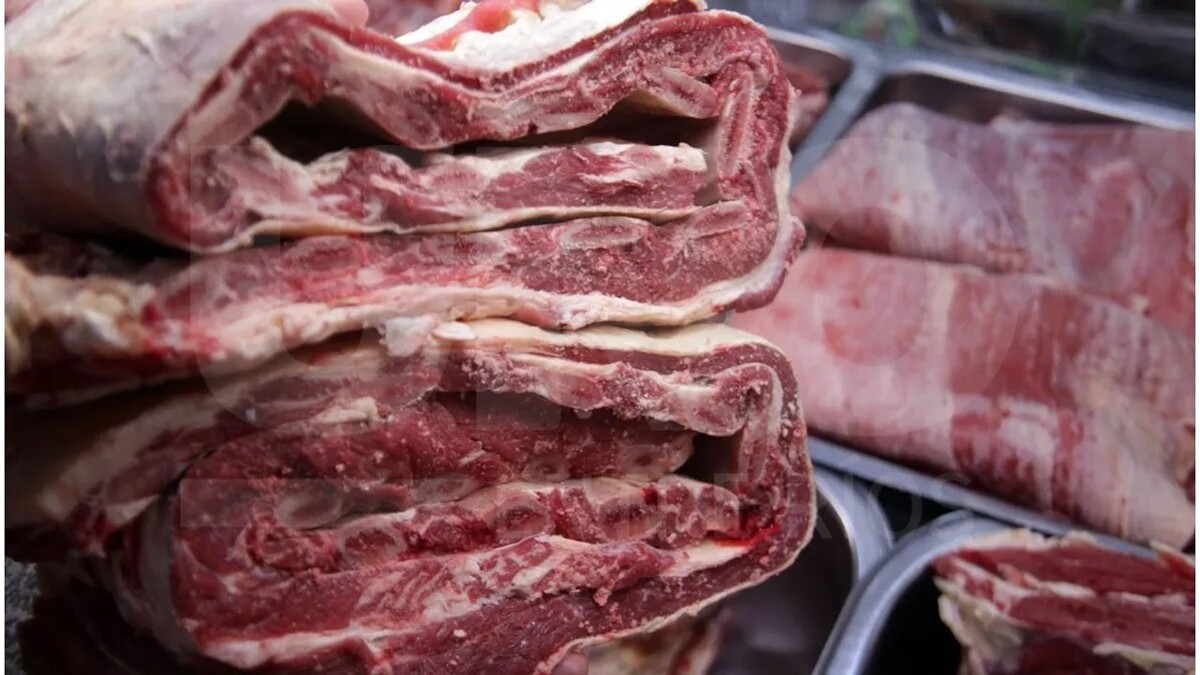
The municipality, which receives about $167 million monthly between national and provincial coparticipation, also faces embargoed accounts due to inherited lawsuits, which led to the issuance of these food vouchers for use in local stores due to the inability to make cash payments. The food voucher that the mayor delivered. According to the Argentine News Agency, in the town of Sauce de Luna in Entre Ríos province, due to a lack of liquidity, Mayor Alcides Alderete had to replace a non-remunerative bonus of $30,000 with a $50,000 food voucher to be able to complete the salaries of municipal workers. 'Nobody pays a tax; everyone chooses to eat,' sentenced the Peronist community leader, who detailed that 94% of the population did not pay municipal taxes. Photo: Agencia NA/Redes. The acceleration in the cost of living in Buenos Aires City, which accumulated 8.9% in the first quarter of 2026, was also explained by the Education sector, which rose 8.6% due to the start of the school year, and by Transportation, which recorded a 6.0% increase due to fuels and bus fares. Meanwhile, in the alternative protein market, fresh chicken showed a 10.9% increase and pork chop a 6.3%. In this regard, the technical entity stated that 'in the third month of the year, an average of 3.86 kg of chicken could be bought with 1 kg of steak', setting the pattern for a consumption shift due to the inability to maintain the traditional beef diet in the face of an annual inflation that already reaches 32.1% in the country's capital. Beef prices increased by 10.6% during March in the Buenos Aires Metropolitan Area (AMBA) and accumulate a rise of 68.6% in the last year, according to a report from the Institute for the Promotion of Beef (IPCVA). According to the Argentine News Agency, this dynamic had a direct impact on the Consumer Price Index (IPC) of Buenos Aires City, which accelerated to 3% in the third month of the year, compared to the 2.6% recorded in February. Within the Food and non-alcoholic beverages category, which increased by 2.6%, the official IDECBA report indicated that 'the main push came from Meats and derivatives (6.3%)', a jump that was partially offset by seasonal drops in fruits and vegetables. The pressure on consumers' pockets varied depending on the sales channel, as beef increased less in supermarkets (7.1%) than in neighborhood butcheries, where the monthly increase rose to 12.2%. Beef rose 10.6% in March with greater pressure in butcheries than in supermarkets. According to the IPCVA, 'with one kilogram of average supermarket beef, you can buy 0.92 kilograms of average beef in butcheries', reflecting a price gap where cuts like steak are 16.8% more economical in large chains. Regarding specific cuts, common ground beef led the increases with 20.4%, followed by common chuck with 17.7% and flank with 13.4%. In the per-kilo comparison, skirt steak averaged $18,617, while sirloin was positioned as the most expensive cut, reaching $27,711. Food vouchers. This scenario of high inflation and loss of purchasing power translates into critical situations for local public administration.