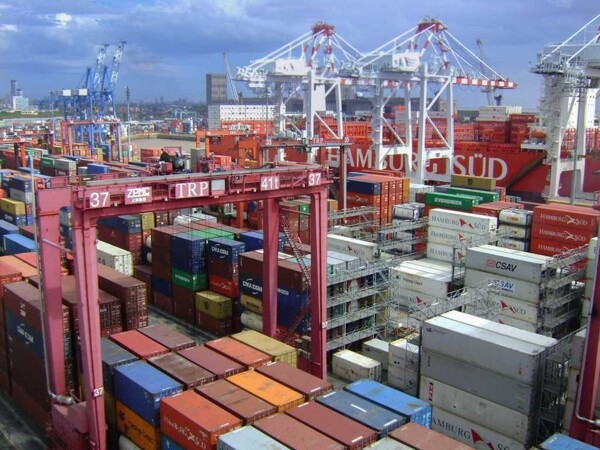
The data confirms that the agribusiness complex continues to be the main source of foreign exchange for the country and that, despite setbacks in some sectors, it maintains the capacity to sustain the export flow at the start of 2026. In fact, the start of 2026 had already anticipated that strength: only in January were agribusiness products exported for $4,152 million and 10.63 million tons, the best monthly record of the decade for that month. Buenos Aires, March 21, 2026 - Total News Agency - TNA - Argentine agribusiness exports grew 7% in the first two months of the year and reached $7,463 million, an improvement of $489 million compared to the same period in 2025. The novelty is that it now begins to coexist with another heavyweight player, and that coexistence could redefine a large part of the Argentine economy in the coming years. That is, the first two months do not show an isolated jump, but the continuity of an export structure in which agribusiness continues to be the backbone of foreign exchange income. But the other relevant data is that energy is no longer appearing as a marginal complement. INDEC reported that in 2025, fuel and energy exports totaled $11,086 million, an interannual increase of 12.8%, while imports in the sector fell to $3,271 million, which allowed the year to close with a record energy surplus of $7,815 million. In relative terms, the most dynamic sectors were tobacco, sunflower, and pork, with particularly striking data for sunflower, whose biannual growth reached 220% year-on-year. The picture is eloquent: agribusiness continues to lead, but energy is gaining volume and share in total exports. In other words, energy has ceased to be just a promise from Vaca Muerta and has already become a structural contribution to Argentina's external coffers. This advance is also already seen in 2026. In the first two months, the fuels and energy sector accounted for 11.8% of total goods exports, while agro-industrial manufactures represented 31.1% and primary products 29.1%. The Ministry of Agriculture, Livestock and Fisheries itself recalls that agribusiness represents around 60% of the country's external sales and that in 2025 it exceeded $52,000 million in exports, in addition to reaching a historical record of 115 million tons. Argentina is entering a stage where agribusiness continues to be the main generator of foreign exchange, but it no longer carries that responsibility alone. At the same time, the picture begins to show another structural novelty: energy has ceased to be a secondary actor and is consolidating as a second major external engine, to the point of disputing the leading role with agribusiness in the formation of the trade surplus. The survey by the Argentine Agribusiness Council shows that the good start to the year was supported above all by the wheat, sunflower, and beef and leather complexes, which drove the accumulated improvement between January and February. The strengthening of crude oil and gas sales to markets such as the United States, Chile, Brazil, and Uruguay is beginning to modify the composition of Argentina's foreign trade and to give the country a second strong source of dollars, something that until a few years ago seemed distant. The underlying political and economic data is that one. More so: the official report on export complexes placed the oil-petrochemical complex as the second most important in the country, with $11,772 million, equivalent to 13.5% of total goods exports. Even so, the balance remains in favor of the field: by volume, by territorial rooting, by federal impact and by capacity for immediate reaction, agribusiness continues to be the great support of the external front. The detail also leaves a signal to be read with caution: February alone marked a 4.5% drop compared to the same month last year, which indicates that the positive balance of the bimestre was based above all on the very good performance of January. This weight of agribusiness is no surprise. Within that block, 81.1% corresponded to oil, 11.7% to gas and 7.2% to petrochemical products. The expansion of energy opens up an unprecedented possibility for export diversification, improvement of the trade balance and relief from external constraint. In contrast, the corn, soybean, and peanut complexes showed a contraction that moderated the overall result.