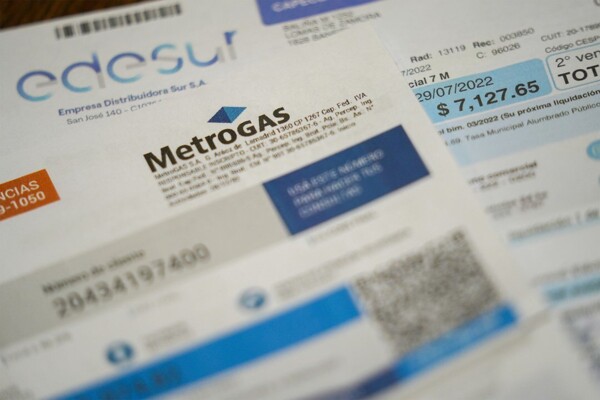
Inflation in February stood at 2.9%, matching January's level, and thus accumulated a 5.9% increase in the first two months of 2026, according to data released this Thursday by the National Institute of Statistics and Censuses (INDEC). This figure once again shows that a significant part of the inflationary pressure continues to come from regulated prices or those linked to updates of basic services, a factor that has a direct and persistent effect on the household budget. By category, Regulated prices led the increase with 4.3%, followed by the Core CPI, which rose 3.1%. This combination sends a clear signal: even though some transitory components have offered some relief, the hardest core of inflation remains active with enough inertia to prevent a more marked drop in the general index. In the regional analysis, the largest monthly increase was observed in the Northwest, with 3.5%. The continuity of 2.9% monthly sends a clear message: inflation is no longer running at the speed of other periods, but it resists falling from a floor that is still too high for an economy that needs to rebuild wages, predictability, and consumption. Beyond a certain slowdown compared to past peaks, the problem persists with sufficient intensity to continue eroding incomes, ordering consumption downward, and keeping millions of households under pressure that face repeated increases in sensitive items. The division with the greatest impact in all regions of the country was Food and non-alcoholic beverages, a central chapter for measuring the real impact on daily life. In contrast, Seasonal items showed a 1.3% drop during February. The inflation for February was 2.9 percent, according to a report by INDEC this Thursday. Therefore, although some sectors have shown less dynamism or even specific drops, the February data once again shows an inflation that remains high in terms of domestic and social economy. With this result, the Government adds another month without achieving a more substantial slowdown in the CPI. In the year-on-year comparison, the Consumer Price Index (CPI) advanced 33.1%, in a scenario where increases in tariffs and food prices once again strongly pushed up the cost of living. The data confirms that, at least for now, inflation has not clearly broken the 3% monthly threshold. This territorial disparity reflects that the inflationary process maintains common characteristics throughout the country, although with different intensities depending on the consumption structure and the relative weight of certain services and foods in each region. Among the divisions that were above the general level were Housing, water, electricity, gas and other fuels with 6.8%, Food and non-alcoholic beverages with 3.3%, Miscellaneous goods and services with 3.3% and Restaurants and hotels with 3%. Below average were Equipment and household maintenance with 2.6%, Health with 2.5%, Recreation and culture with 2.3%, Transport with 2%, Communication with 1.8%, Education with 1.2% and Alcoholic beverages and tobacco with 0.6%. Regarding the year-on-year variation, it was 33.1 percent, according to the institute's survey. The division with the greatest impact on the monthly regional variation was Food and non-alcoholic beverages, mainly due to the rise in Meats and derivatives, with the exception of Patagonia, where the greatest impact was observed in Housing, water, electricity, gas and other fuels. The two divisions that recorded the smallest variations in February 2026 were Alcoholic beverages and tobacco (0.6%) and Clothing and footwear (0.0%). At the category level, Regulated prices (4.3%) had the highest increase, followed by Core CPI (3.1%) and Seasonal (-1.3%). The publication of February's CPI comes amid a rise in the oil barrel price due to the armed conflict in the Middle East, although this phenomenon should only be reflected in a possible price increase in next month's index. INDEC's inflation was above the index released in recent days by the City, with an increase of 2.6%, lower than January's 3.1%. Thus, it accumulates a 5.7% rise in the first two months of the year and a year-on-year trajectory of 32.4%, according to data from the Buenos Aires City Institute of Statistics and Censuses. The 2.6% of February this year is higher than the 2.1% of the same month in 2025. Despite this acceleration, President Javier Milei has assured in various speeches and interviews that by August of this year, 'inflation will begin with zero,' that is, it will be almost nil. In turn, the Pampeana and Patagonia regions recorded increases of 3%, while the Greater Buenos Aires area was below the national average with 2.6%. Increases were also verified in products such as whole chicken, various beef cuts, and oils, all items with a strong weight in the family basket. The sector that registered the largest increase of the month was Housing, water, electricity, gas and other fuels, with a jump of 6.8%, consolidating the weight of regulated services and tariffs on the general index. It was followed by Cuyo, with 3.4%, and the Northeast, with 3.1%. Within that category, increases in Meats and derivatives stood out, with relevant increases throughout the national territory. Meanwhile, Clothing and footwear showed no variation. That last data does not modify the general picture. The stability in clothing contrasts with the growing pressure in essential services and food, that is, in those expenses that families cannot easily postpone.

Argentina's Inflation: Rise in Services and Food Prices
Argentina's inflation rate for February was 2.9%, matching January's figure. The primary increase was in regulated prices and basic services like utilities, while clothing prices remained stable. This continues to exert direct and persistent pressure on household budgets nationwide.