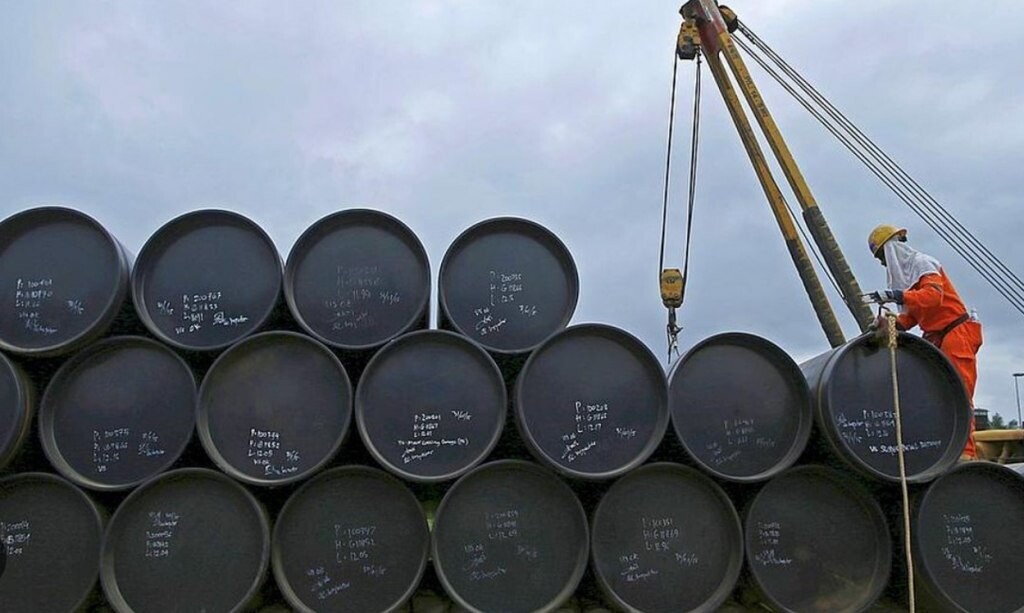
Collectively, IEA countries hold over 1.2 billion barrels in emergency reserves, to which another 600 million in government-mandated industrial stocks are added.
Although the intervention aims to cool prices and signal stability, the market reaction was cautious: according to Reuters, oil prices rose by almost 5% this Wednesday amidst new concerns about the continuity of disruptions in the region.
The IEA warned that the conflict also cut global liquefied natural gas supply by about 20%, while between February 28 and March 10, Brent crude prices rose by 20% and the European TTF gas index surged by 50%, reflecting the tension in energy markets.
In this context, the agency reminded its members that they are required to maintain reserves equivalent to at least 90 days of net oil imports. According to the IEA, these flows fell by less than 10% from pre-war levels.
The impact is not limited to oil. Before the conflict, about 20 million barrels of crude and products were passing through the area daily, equivalent to nearly a quarter of the oil transported by sea worldwide.
Buenos Aires, March 11 (NA) – The International Energy Agency (IEA) activated the largest coordinated release of reserves in its history in response to market disruption caused by the Middle East crisis and disruptions to shipping through the Strait of Hormuz.
The IEA's 32 member countries unanimously agreed to release 400 million barrels of crude from their strategic reserves to the market, an unprecedented decision since the agency's creation in 1974.
This is also the sixth coordinated action of this type in the agency's history, as reported by Noticias Argentinas.
The measure seeks to compensate for the sharp cut in supply caused by the crisis in the Strait of Hormuz, a key step in world energy trade.