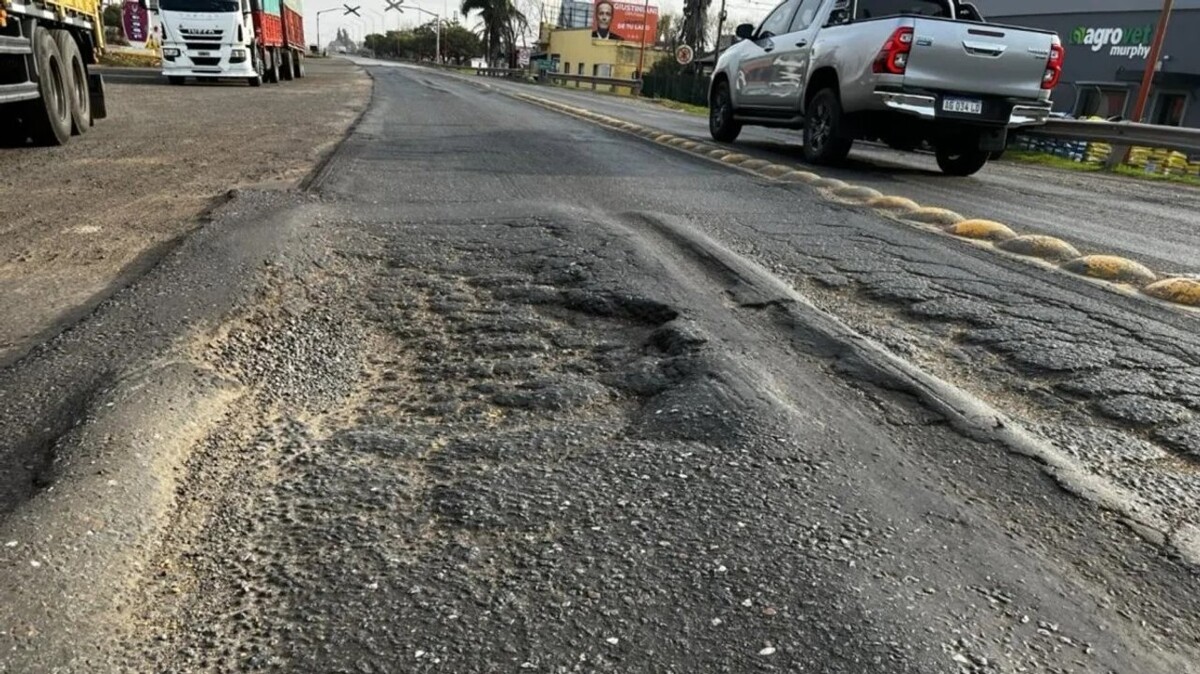
Buenos Aires, March 3 (NA) -- Only between 10% and 11% of the total length of Argentina's road network, which exceeds 600,000 kilometers—including national, provincial, and municipal roads—is paved and in high-traffic condition. This means that more than 500,000 kilometers will eventually need repair or reconstruction. These figures, extracted from the World Bank and other sectoral sources, are gaining relevance amid the debate on public works and the condition of roads, which is crucial for the development of regional economies, as highlighted by the Argentine News Agency. According to a report published by the Federation of National Roadway Personnel (FEPEVINA), between 65% and 70% of national roads are in regular or poor condition, affecting traveler safety and productive logistics. The document from the entity, whose Secretary General is Julio Aralde, titled 'Institutional Dismantling and Road Emergency,' denounces that the neglect of preventive maintenance has increased accident rates, leading to a 14% year-on-year increase in fatal victims, reaching 4,369 deaths. 'The progressive deterioration of the road infrastructure occurs mainly due to the lack of execution of construction, reconstruction, mitigation, conservation, and maintenance works on the main carriageways, shoulders, side margins, obstacle-free zones, drainage ditches, horizontal and vertical signage, lighting, bridges, and other components, making it cumulative and progressive until it leads to partial or total failure,' the report, updated as of last December 31, details. Budget Overspending The report also denounced that President Javier Milei's administration overspent half of the budget in 2024 and 2025, which caused the deterioration of the roads, a drop in average traffic speed, an increase in logistics costs for companies transporting goods, and a rise in road accidents. Only now has the Ministry of Economy advanced in the privatization of Corredores Viales SA by calling for a public tender for the 'Federal Concessions Network - Stage III,' which includes eight sections of national roads under the public works concession regime via tolls. 'According to these data, it is evident that tens of thousands of kilometers still need to be paved, both on main roads and rural roads, highlighting the gap between the total length of the road network and the portion effectively paved,' stated Víctor Guajardo, general manager of Amanco Wavin. 'Paving roads improves road safety, reduces logistics costs, boosts regional economic development, and ensures connectivity and access to services, among multiple benefits,' he concluded. New Technologies New technologies offer materials much more economical than traditional ones, which can alleviate the necessary investment to bring roads up to date. Thus, the use of geosynthetics is gaining prominence as an efficient, economical, and sustainable alternative, as it can reduce costs by up to 50% and, at the same time, minimize the environmental impact. Its application helps to extend the life of pavements and reduce maintenance tasks, avoiding major interventions on deteriorated roads. Geosynthetics are materials made from industrial polymers that allow improving the behavior of soils in key aspects such as drainage, filtration, and waterproofing. Their incorporation in road works translates into more durable roads, shorter execution times, and a significant reduction in machinery use. Additionally, by optimizing construction processes, they contribute to decreasing carbon dioxide emissions. Among the recognized advantages are ease of construction, durability, soil reinforcement, separation and filtration, drainage, erosion prevention, and reduction of greenhouse gas emissions.