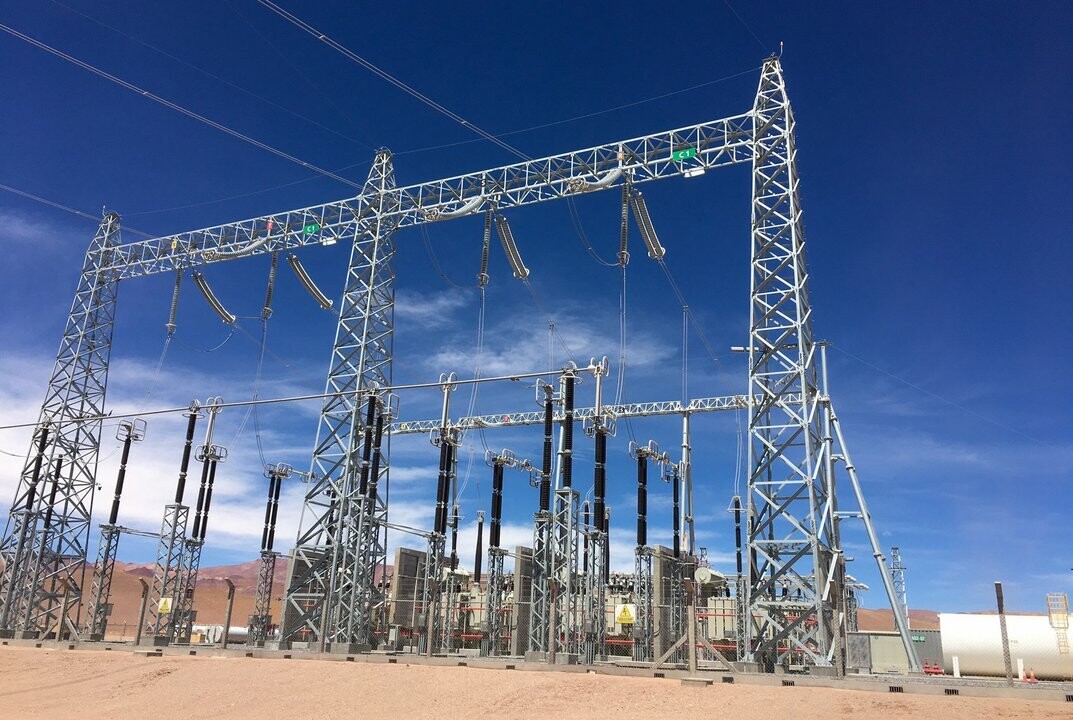
The National Electricity Regulatory Entity (ENRE) approved the change of control of the main energy transporters in northern Argentina, a move that gives entrepreneurs Diego Hector Castro and Meliton Lopez strong influence over the high-voltage system in the NOA and NEA regions. The decision, formalized through Resolution 83/2026 and published in the Official Gazette, validates the share purchase agreement made on September 3, 2025, which reconfigured the ownership structure of Elecnorte S.A., the controlling company of Transnoa S.A. and a significant shareholder of Transnea S.A. According to the resolution, the key to the change was the sale of 100% of the share capital of Asisnort S.A. to CO Desarrollo S.A. and Latam Inversores S.A., corporate vehicles linked to Castro and Lopez. The ENRE regulation also details that CO Desarrollo and Latam Inversores acquired stakes in Norte Grande Eléctrico S.A., although the agency clarified it cannot comment on that part of the transaction as the previous sequence of transfers had not been duly authorized. The core of the leadership change lies in Elecnorte: by controlling Asisnort and adding the participation of other partners, Castro and Lopez now take the helm of the company that sets the course for Transnoa and has a say in Transnea. The ENRE evaluated the operation under two main axes: the technical capacity of the new players and the effects on competition. With the ENRE resolution, the regulatory part of a business that has been under the microscope of state agencies for months is closed. The background is a power map in energy transport that is becoming increasingly concentrated in a few hands. The internal technical report concluded that the acquirers have sufficient background in the sector and that the transaction does not violate the restrictions of the electricity regulatory framework, in particular Articles 30, 31 and 32 of Law 24.065 or the incompatibilities of the concession agreements. At the same time, the agency stated that the change of control does not affect the principle of competition nor does it generate an 'improper' increase in the concentration of the electricity transport market, a particularly sensitive point given the regional weight of Transnoa and Transnea. The regulator's intervention was activated following a request from the National Commission for the Defense of Competition, within the framework of the economic concentration file identified as 'Conc. 2058'. Through these companies, both acquired Asisnort in equal shares and, through that, a majority stake in Elecnorte, which owns 57.76% of the capital of Transnoa and 27.43% of the Class A shares of Transnea. This move grants them indirect control over two strategic electricity transport concessionaires in the north of the country. The operation also had implications for other parts of the corporate chain. Transnoa operates the trunk network in the Argentine Northwest, while Transnea performs an equivalent role in the Northeast, with a direct impact on the quality of service in provinces where power cuts and voltage collapses have become a constant in recent years. The fact that the threads of indirect control are in the hands of the same corporate nucleus raises questions about the State's ability to condition investments, demand maintenance plans, and prevent the weight of the negotiation from tipping excessively towards the private side. Different provincial governments and user defense agencies have long been pointing to the northern transport companies for recurrent failures and insufficient investments in infrastructure. In this context, the consolidation of Castro and Lopez as leaders of the high-voltage business in the north occurs on a terrain already marked by judicial conflicts, administrative claims, and warnings about the fragility of the system. But for users, provinces, and regulators, the movie is just beginning: the true measure of the impact of this change of command will be played out in the next wave of investments, in the response to failures, and in how a small group of entrepreneurs uses its new dominant position on the northern electricity board. The challenge now will be to see if the new shareholder structure will translate into an effective change in management or if it will only imply a rearrangement of economic power behind the same transmission lines. For the ENRE, the formal picture is clear: the operation respects the legal framework, does not improperly increase concentration, and the new owners have the minimum required technical capacity.