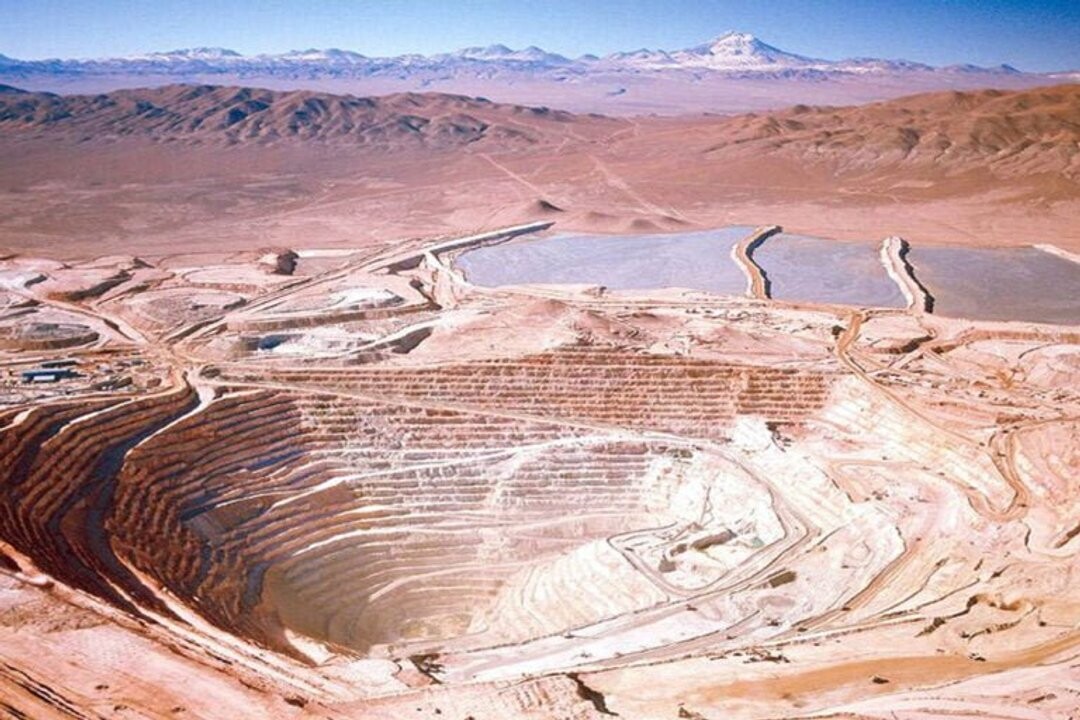
Argentina has estimated copper reserves of 90-116 million tons and 18 projects in development, mainly in San Juan, Salta, and Mendoza. It has the largest investment under the RIGI scheme (Filo del Sol in Vicuña), but it has not yet solidified its position in the national large-scale mining industry nor overshadowed Chile, its main exporter. Among the 18 large-scale projects, José María, Los Azules, El Pachón, Taca Taca, and MARA stand out, according to a report by the Argentine News Agency. Investments of over $35 billion are projected for the coming years, which would make copper the main export mineral, with a launch expected between 2026 and 2028. The Filo del Sol deposit in Vicuña (San Juan/Chile) has become one of the most important copper and gold discoveries of the last 30 years. With an initial investment of at least US$2 billion under the RIGI, the project driven by BHP and Lundin Mining could require up to US$15 billion and begin exporting copper, gold, and silver starting from 2030. Argentina has not produced copper on an industrial scale since the closure of Bajo de la Alumbrera in Catamarca in 2018, but it hosts world-class projects. Mining timelines, lack of infrastructure, and regulatory uncertainty explain why the potential is not yet translated into operational mines. Short-term logic. The copper mining industry does not operate on a short-term logic. Between the discovery of a deposit and the start of production, two or three decades may pass. Geological studies, engineering, environmental permits, financing, and construction form a long and costly sequence. According to an S&P Global analysis, in countries like the United States, one of the most developed markets with extensive historical data, the development of a mine from discovery to production can take almost 29 years, with specific cases exceeding 35 years. Similarly, the International Energy Agency notes that the traditional development of critical minerals projects usually takes an average of about 17 years from discovery to production. In large-scale projects, the investment decision is not based solely on the quality of the deposit. Companies evaluate whether the country offers minimum support conditions: railway networks, access to electricity, water availability, roads, ports, and integrated logistics. Infrastructure. In competitive markets, a significant portion of that infrastructure is provided or facilitated by the state. In Argentina, however, these costs usually fall directly on the projects. “If a company faces a US$ 2 billion project in Argentina and another of the same magnitude in Chile, but in the second case, routes, ports, and energy access already exist, while in the first, everything must be built by the investor, the comparison becomes obvious,” this is the most telling example, which refers to the experience of Vaca Muerta. Among regulatory factors, the Glacier Law appears as a relevant constraint for a large part of copper projects. Unlike other countries with glaciers and mining activity, the Argentine framework establishes a presumption of automatic incompatibility in periglacial zones, which restricts the progress of projects even before a specific environmental assessment.