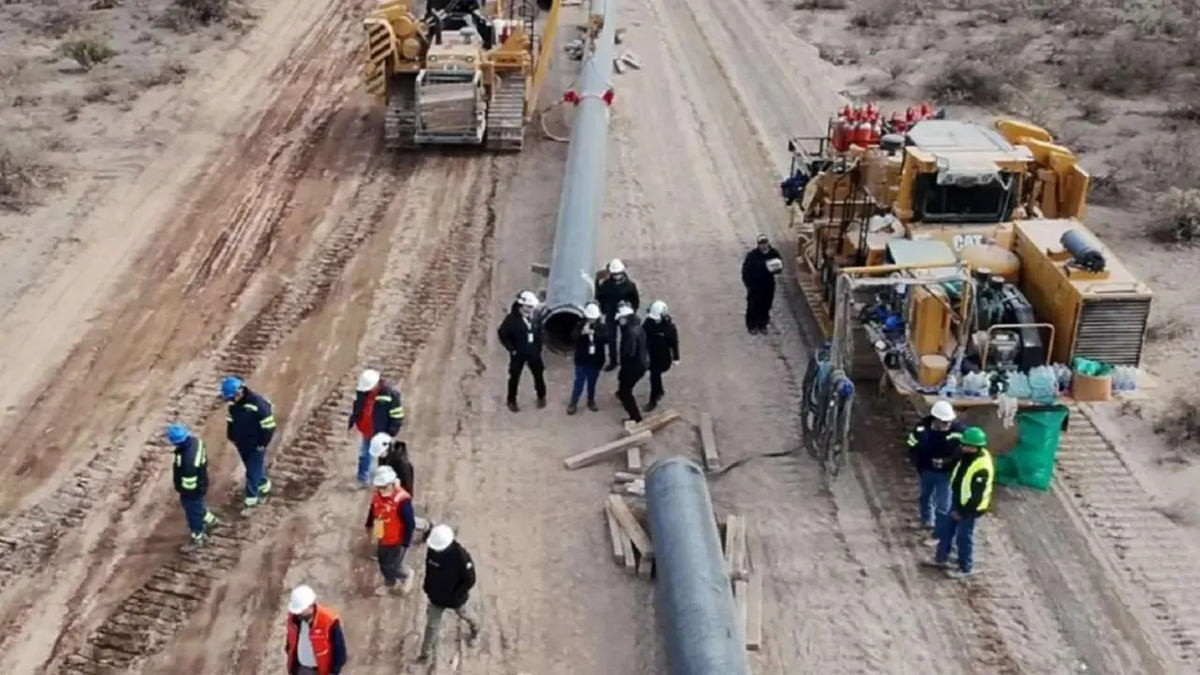
The international tender for the supply of steel pipes for the construction of a gas pipeline crucial for evacuating gas from Vaca Muerta to global markets became a turning point for the Argentine energy and metallurgical industries. For the first time in such strategic projects, Techint, through its subsidiary Tenaris, was left out of the award, displaced by a considerably more competitive offer from the Indian company Welspun. The project involves a 480-kilometer pipeline that will transport gas from the Neuquén basin to liquefaction vessels, with the aim of boosting exports of liquefied natural gas. After the technical evaluation and international homologation of the products, only six companies remained in the running, with the final decision being dominated by the criterion of economic competitiveness. Welspun's offer, totaling $203 million for the supply of 480 kilometers of ducts, was the lowest and ultimately prevailed clearly. Subsequent attempts by Tenaris to re-enter the process with new offers presented after the deadline were dismissed as incompatible with the integrity and transparency of the procedure. The opening of competition, discipline in processes, and prioritization of price and efficiency fit into a broader climate of changes driven by the government of Javier Milei. The call for bids opened in October and formally concluded on December 23. In total, 15 bidders from different countries participated, including Argentina, Spain, China, India, Colombia, Mexico, Japan, Greece, and Turkey. The tender process was organized by Southern Energy, the private consortium responsible for the work, integrated by Pan American Energy, Pampa Energía, YPF, the Norwegian Golar, and the British Harbour Energy. In contrast, Tenaris had initially presented a proposal close to $290 million and then offered a 5% discount, insufficient to reverse a difference of around 40% compared to the Indian proposal. The most delicate moment of the process occurred at the December 23 board meeting of Southern Energy, when the YPF representative pushed for a motion to reconsider the award and give Tenaris a new opportunity. For its CEO, Paolo Rocca, the episode transcends a simple tender and touches on a sensitive point: the historical place of the Argentine industry in major energy projects. The political background is also significant. Even a proposal to equalize the commercial conditions of the winner, presented weeks later with the contract already signed, was flatly rejected. Although Techint bills around $38 billion annually globally and the loss of this contract does not compromise its financial strength, the symbolic impact is significant. On the political front, the President maintains a wide lead over his immediate second in all support indicators, which reinforces his ability to advance with decisions that break historical inertias and generate resistance from traditional economic power sectors. The “war for the pipes,” as it is already being called in the sector, left a clear signal: in the new Argentine scenario, even the most powerful actors can lose if they fail to adapt to stricter rules and a global competition without privileges. This stance was supported by Pampa Energía, but the rest of the partners rejected the initiative, noting that the Techint group company had already had room to improve its offer and that, in any case, a review should consider the closest price bidders. The final decision was unanimous: to award the contract to Welspun.