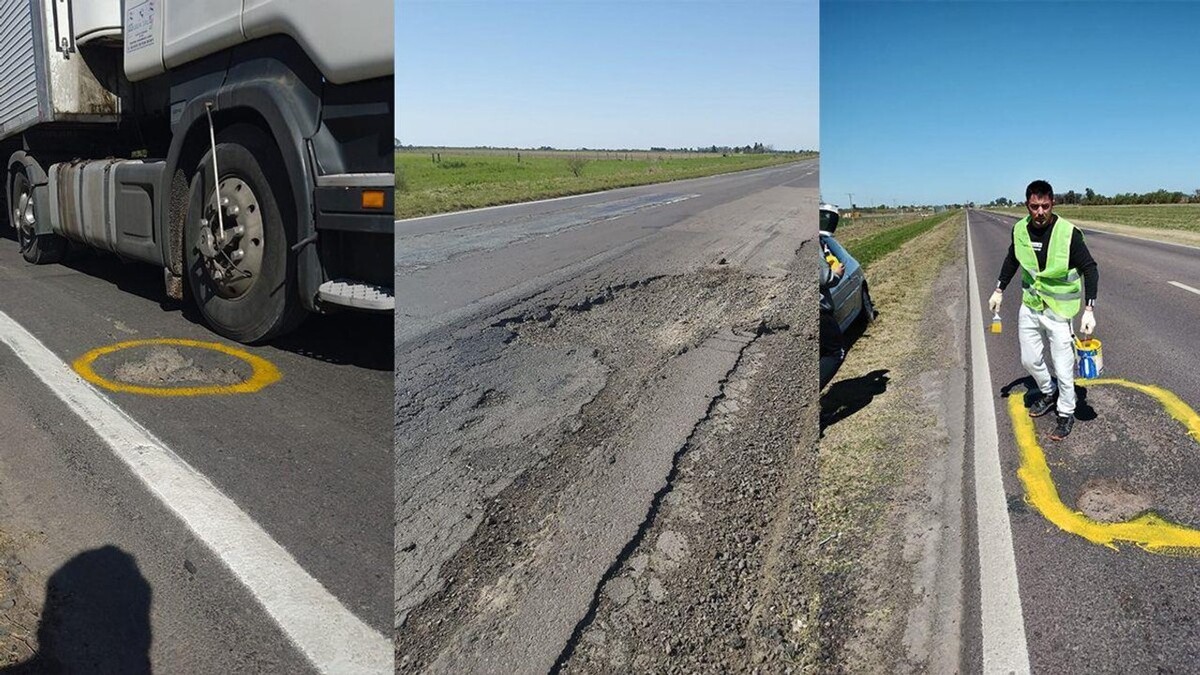
A large part of Argentina's road network has become a deadly trap due to a lack of maintenance and the paralysis of construction works. According to a technical survey by the Federation of National Road Personnel (FEPEVINA), 65% to 70% of national roads are in regular or bad condition, directly affecting traveler safety and logistics. The report, titled 'Institutional Dismantling and Road Emergency,' states that the abandonment of preventive maintenance has led to a surge in accidents: fatalities increased by 14% year-on-year, reaching 4,369 deaths.
Detailed condition of the country's main roads:
Central and Southern Regions: 'Russian Roulette' National Route 33 (Buenos Aires - Santa Fe): Considered one of the most critical cases, where traveling is 'playing Russian roulette.' Current patches last less than six months due to heavy traffic from the harvest. National Route 151 (Río Negro - La Pampa): Vital for Vaca Muerta, it is in a state of 'total abandonment' with 'crater-like' potholes forcing drivers onto the shoulder. National Route 119 (Corrientes): A 'red spot' for road safety, especially near Curuzú Cuatiá, due to the mix of trucks and tourists on a road with 'crocodile skin' and broken edges. National Route 3: Construction is paralyzed, especially on the San Miguel del Monte - Gorchs stretch. It is the access for grain production to the port of Bahía Blanca and reports a high rate of head-on collisions.
The Northwest: Abandoned Works National Route 34 (Jujuy - Salta): Classified as 'High Risk.' Works funded by the World Bank to turn it into a highway were left unfinished after contractors abandoned the project and the loan expired.
The Northeast and Border Crossings: Logistics Collapse The situation in the northeast is alarming, affecting international trade with Brazil and Uruguay. National Route 121 (Corrientes): Connects to the Santo Tomé-São Borja bridge.
The Littoral and Border Crossings: Logistics Collapse National Route 1V11 (Santa Fe): It crosses the port area with chronic deterioration that recurrent patching cannot solve. National Route 5: Named by users as the 'toll to death' due to fare increases without improvements. Traffic from the forestry industry has destroyed the pavement, leaving some sections impassable. National Routes A015 and 136 (Entre Ríos): These are the accesses to the Salto Grande and Fray Bentos bridges. The technical diagnosis indicates that patching is no longer sufficient and requires a total reconstruction to support oil equipment. National Routes 35 and Patagonian Corridors: Sections are reported with a completely granulated surface and loss of aggregates.