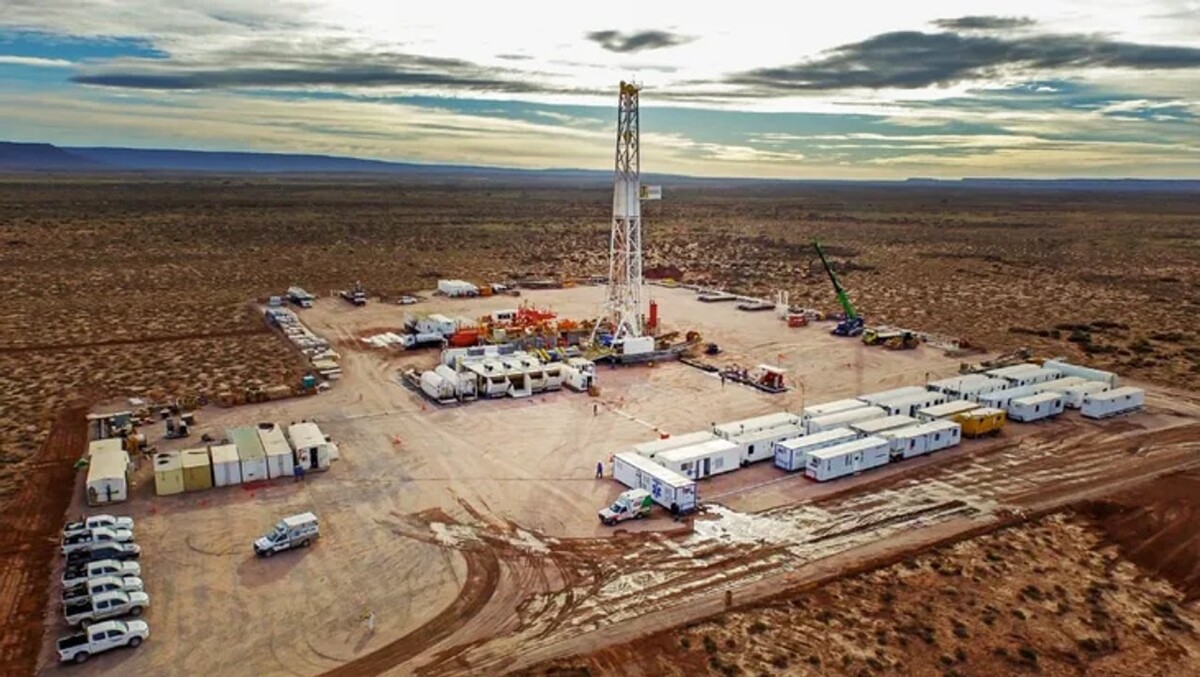
Neuquén, the province where the unconventional crude oil mega-field Vaca Muerta is located, received lower-than-expected oil royalties in 2025 due to lower crude oil barrel prices. Oil revenues represent 70% of the province's income. According to the specialized site Econojournal, the Neuquén government closed the year with accumulated current resources of 5.03 trillion pesos, with a 46% predominance of royalties from gas and oil extracted in the province. The Neuquén provincial administration explained that December was “the worst month,” with a price ending 5% below November's, but they hope it will represent a “floor” for 2026. “It will be a year similar to last year in that we will have to look at the cash flow quarter by quarter,” said Neuquén's Secretary of the Treasury, Carola Pogliano. She explained that the decrease in 2025 royalties was due to a crude oil barrel price lower than expected. Official data published by Neuquén's Public Revenue Subsecretariat showed that from January to December, hydrocarbon royalties contributed 2.32 trillion pesos, 46% of the year's current resources. The result was much lower than expected: about $100 billion below what Governor Rolando Figueroa's team had projected in the Budget Law. It was expected to enter 1.8 trillion in the year, and the result was 1.7. Although there was a clear predominance of these revenues, which contributed more than triple the gas in most months of last year, fluctuations in oil prices conspired against the final result, explained from the Governor's Office. The Province had used a value of $71.5 per barrel for the calculation of its oil royalties, but the average sales price oscillated around $67 for the year. Fortunately, the data on production in Vaca Muerta was good, as the budget had estimated an annual growth of 8%, sustained “exclusively” by unconventional oil production, with an average of 517,000 barrels per day, and that goal was achieved with the production jump that began in September. That month was also the best for oil royalties, with resources reaching 174.441 billion pesos. The worst was March, with the entry of only 108.4 billion for the same concept. As for gas, the 2025 budget had estimated royalty income of almost 561.2 billion pesos for the whole year, and 570.5 entered, barely above expected. For January, the provincial government expects the barrel to end oscillating between $62 and $64: although there was a small drop after the capture of Nicolás Maduro and US intervention in Venezuela, the protests in Iran caused the trend to reverse upwards a few days later. Rolando Figueroa's budget for this year was drawn up with a crude barrel price of $63 and a royalty settlement value of $55. Total current income is estimated at 7.5 trillion pesos, with hydrocarbon royalties as the protagonists with almost 4 trillion.