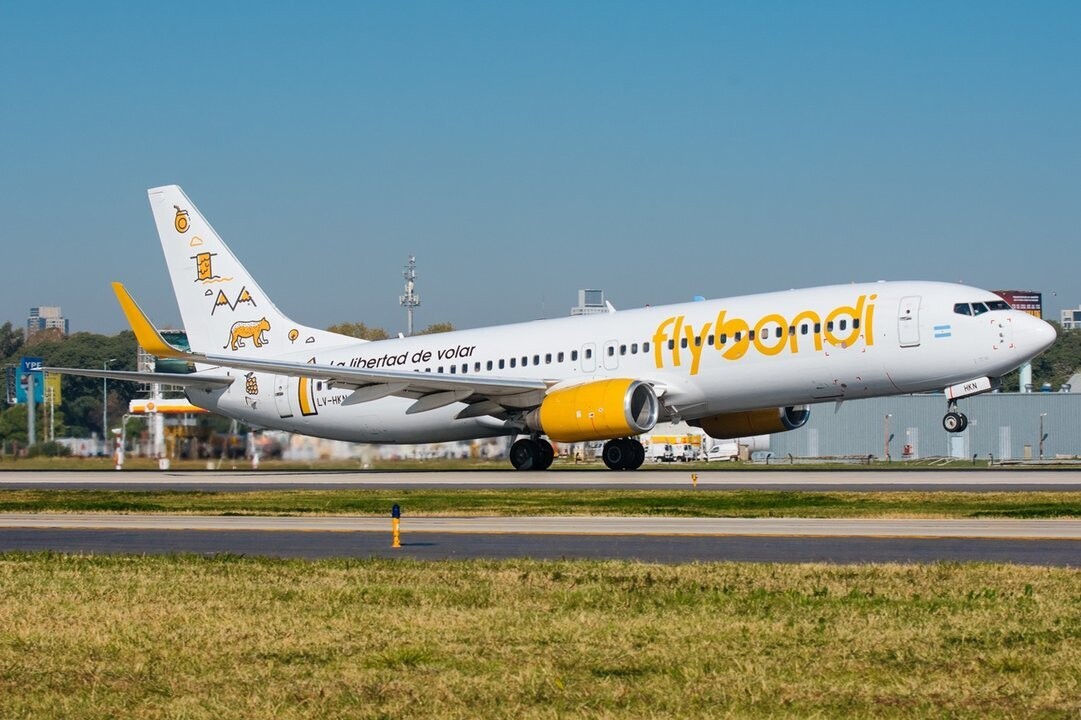
In a dynamic and challenging aviation market, the low-cost airline Flybondi is consolidating its growth strategy for the summer period by incorporating aircraft under the ACMI (Aircraft, Crew, Maintenance, Insurance) model. This model allows for the integration of foreign-registered aircraft and international technical crew, facilitating an immediate expansion of seat availability without the lengthy training and certification times required for a own fleet. In this way, the company seeks to mitigate operational bottlenecks and capture the record demand projected for the first quarter of the year, as reported by the Argentine News Agency (NA).
Historically, Flybondi has operated a standardized fleet of Boeing 737-800 NG aircraft under dry lease contracts. However, the liberalization of aviation regulations and the need for an agile response to high seasonality have led the company, led by CEO Mauricio Sana, to opt for the wet lease model. In this sense, the current week marks a milestone in the company's logistics with the arrival of the last units destined for the peak season. On January 4th, an Airbus A320 (registration PR-MLD) from the Brazilian firm Avion Express Brasil was integrated, while the arrival of four additional Airbus A320 aircraft from Avion Express Lithuania is expected in the coming hours.
For the January-March 2026 quarter, the operator will have a deployment of 11 aircraft under wet lease (4 Boeing 737-800 NG and 7 Airbus A320), which will be added to its 14 regular fleet aircraft. The projection for this summer points to transporting approximately 2.8 million passengers, which would represent a growth of over 50% in international traffic, especially towards Brazil.
Currently, Flybondi operates a network of 32 routes, broken down into 22 domestic connections (covering key destinations in airports managed by Aeropuertos Argentina) and 10 international ones. Among the highlights and reinforcements are the increase in frequencies from Córdoba to Ushuaia, El Calafate, and Puerto Iguazú, and the consolidation of routes to Asunción (Paraguay) and Brazilian destinations such as Rio de Janeiro, Florianópolis, Salvador de Bahia, and Maceió.