Argentina has earned another world title: the highest level of fiscal pressure on the formal sector, both national and subnational, among 30 OECD countries. But it also holds another distinction: it is the only country where the municipal tax burden is as onerous as the provincial tax. Both the Gross Income Tax (ingresos brutos) and the Security and Hygiene Tax are calculated on the taxpayer's income, a conclusion drawn by the Argentine News Agency from the exposed data.
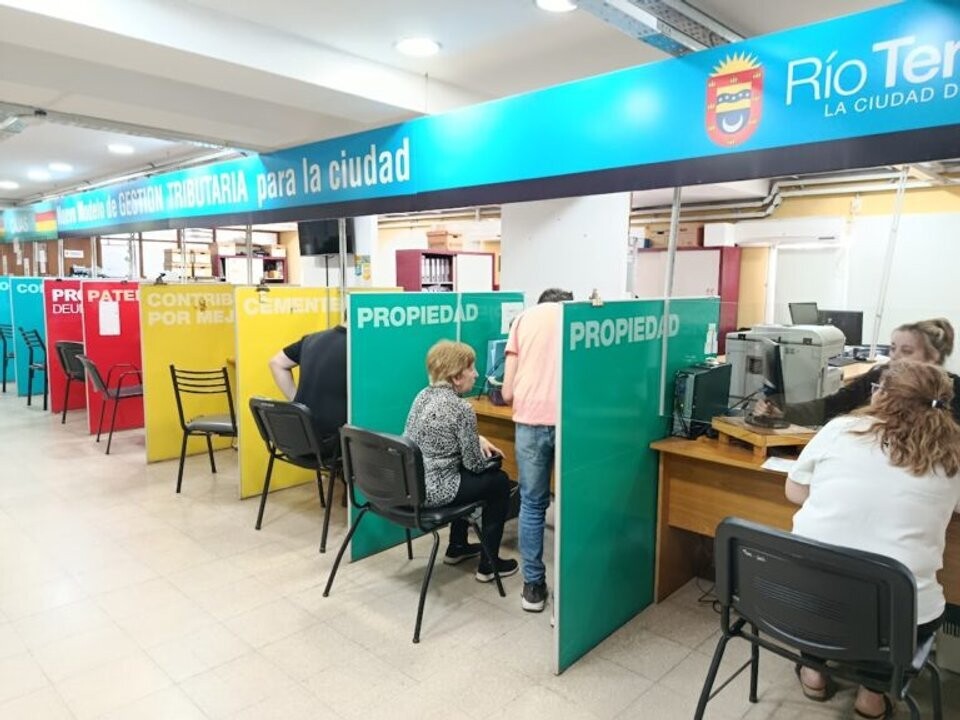
Focus Market, led by Damián Di Pace, calculated, based on UIA data, that taxpayers must pay 85 municipal taxes within their jurisdiction, often overlapping with provincial taxes. In this way, 35% generate double taxation with the Gross Income Tax (IIBB).
According to the consultancy linked to the Argentine Chamber of Commerce and Services (CAC), industrialists pay an average of 7.4 taxes. The breakdown shows that 1.4 taxes are paid in each municipality and in over 30, 2 or more are paid. But even more serious is that 81% have no service consideration, and in 51%, they are not proportional to the services received.
The provinces with the most municipal taxes per company are: Buenos Aires, Entre Ríos, La Pampa, Misiones, Jujuy, Catamarca, Córdoba, Santa Fe, and Corrientes. There are taxes like the fuel tax, which is collected by 20 municipalities in the Greater Buenos Aires area. But outside this area, it is applied in at least 89 more municipalities: Junín, Chivilcoy, Castelli, Marcos Paz, General Rodríguez, Luján, San Vicente, Rojas, Salto, Bragado, Alberti, Carmen de Areco, Ramallo, General San Martín; Pinamar, Mar del Plata, Campana, and others in coastal or rural regions.
CAC's Message With these numbers in view, the CAC exhorted subnational jurisdictions to avoid new tax increases and to reverse those recently implemented. At the same time, it called on them to maximize their efforts in terms of expense efficiency and combating tax evasion, in order to allow a progressive reduction of the burden, in line with the provisions of the Central Government. In this way, it argues, a more favorable environment for investment, the generation of private employment, and the growth of the value added of companies will be created, indispensable elements of the social and economic progress that we desire for our country.
In this sense, the entity expressed its rejection of the increase in fiscal pressure being carried out by various subnational jurisdictions. Although the "Environmental Protection Fee", imposed by the Pilar Municipality—which in some cases reaches 2% of business turnover—recently gained public notoriety, the CAC warns that fiscal voracity is unfortunately a widespread phenomenon that harms economic activity across Argentina.
A few days ago, the Lanús branch of the Changomás chain included on its receipts the impact of the 3.3% increase in the Security and Hygiene Tax applied by the municipality.
Informality The business chamber entity denounced the simultaneous existence of a significant portion of the national economy operating in the informal sector, which aggravates the situation of the compliant taxpayer, making that in many cases productive activities become unviable, with the consequent adverse effects on companies and the jobs they generate.
"It should be noted that this suffocation sooner rather than later ends up eroding the very tax revenues it sought to increase, in a vicious circle of collective impoverishment," the statement says.
Finally, it indicates that "since taking office two years ago, the national administration has been making successive reductions in the tax burden, through the elimination or reduction of various taxes." It adds that this is a necessarily gradual process—in order not to risk the fiscal balance, an indispensable pillar of macroeconomic stability—but that fortunately it is being carried out without pause.