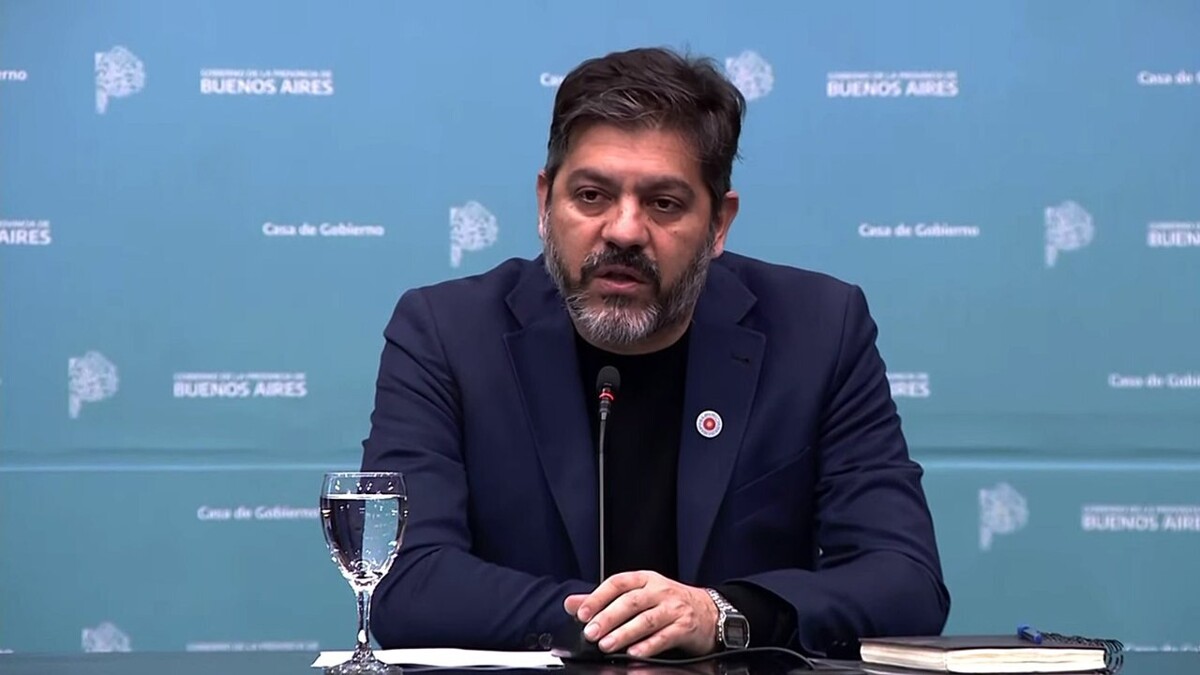
The Minister of Government of the Buenos Aires Province, Carlos Bianco, referred to the country's economic situation and stated that "people don't make it to the end of the month" and "go into debt to buy food".
At his usual Monday press conference, accompanied by the President of Banco Provincia, Juan Cuattromo, and the director of ARBA, Cristian Girard, he assured that this "recession" is impacting his district in a "very strong" way, while releasing indicators that confirm the drop in economic activity and wages and the rise in unemployment.
"This economic recession is strongly impacting the province. All data shows a fall in production, consumption, and income," the official stated.
In the same vein, he expressed the need to obtain "additional" resources through certain "financing instruments" and spoke of a possible creation of a fund for municipalities within the provincial debt project; in addition, he confirmed that the Executive sent a proposal in which "a percentage of the planned debt" is "tied" to a municipal fund.
"The province needs this borrowing to strengthen its treasury, and from that, it can allocate a part to the municipalities, as is planned. That is what is proposed, and now we enter a framework of negotiation. One of the sectors most harmed by Javier Milei's policies is industry, and half of it is in our territory.
"If a fixed fund is established, which is not linked to any additional resource, those funds should come from the province's own revenue," Bianco assured.
He also differentiated this economic crisis from previous periods because it is accentuated by "the fall in coparticipation" and "more than 13 trillion pesos in cuts" carried out by the National Government.
"For that very reason, we propose that it is possible to form a fund for municipalities insofar as the provincial government can obtain additional resources through financing instruments. We will continue to support workers, productive sectors, and municipalities so that the crisis does not turn into despair," he concluded.