This decline was a consequence of the continuous appreciation of Argentine bonds, a process that began after Javier Milei's victory. Additionally, it was influenced by the government's announcement of a bond buyback plan. The imminent communication about a trade agreement with the United States also contributed.
At the start of trading this Monday, public securities advanced by up to 1.4% (AL35 and GD35), continuing the bullish rally that began on October 27th. Consequently, the indicator compiled by JPMorgan reached its lowest level since January 14th of this year (at that time, it reached 579 points).
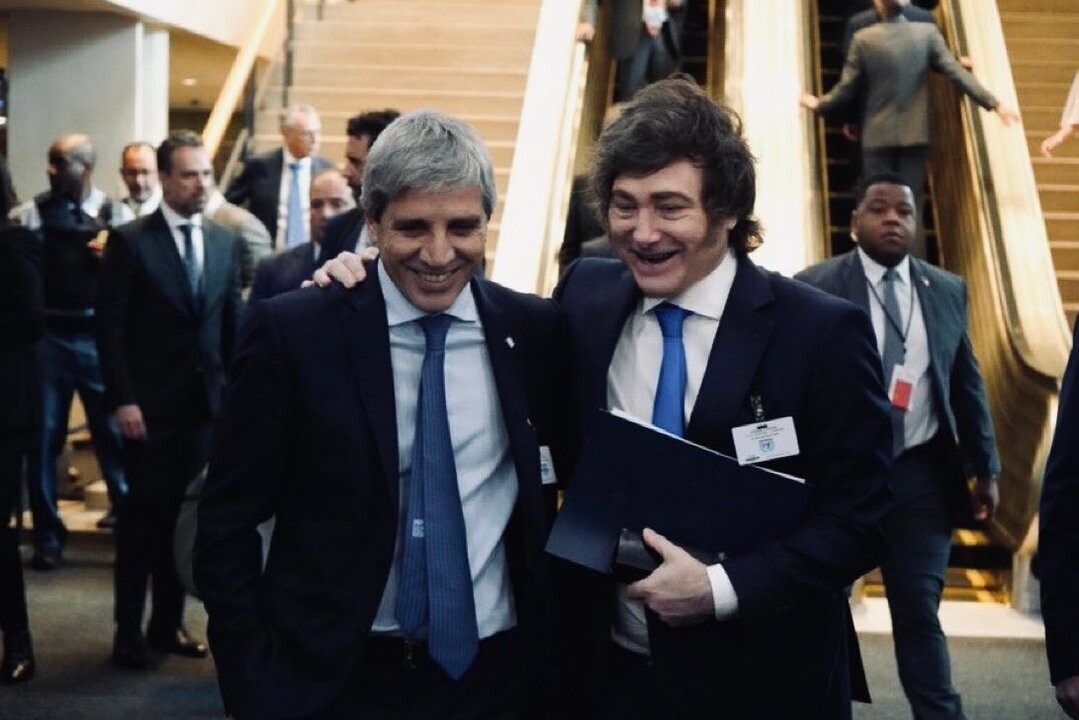
During his visit to the United States, Minister of Economy Luis Caputo reiterated that the government would proceed with a sovereign bond buyback plan, which was well-received by investors.
Shares also followed suit, as the MERVAL index of the Buenos Aires Stock Exchange advanced by 2.8%, again driven by the banking sector.
The situation was different at the opening of American Depositary Receipts (ADRs) trading on Wall Street, where declines predominated, at least in this initial phase of trading.
The Country Risk fell to 596 points, the lowest value since January of this year.