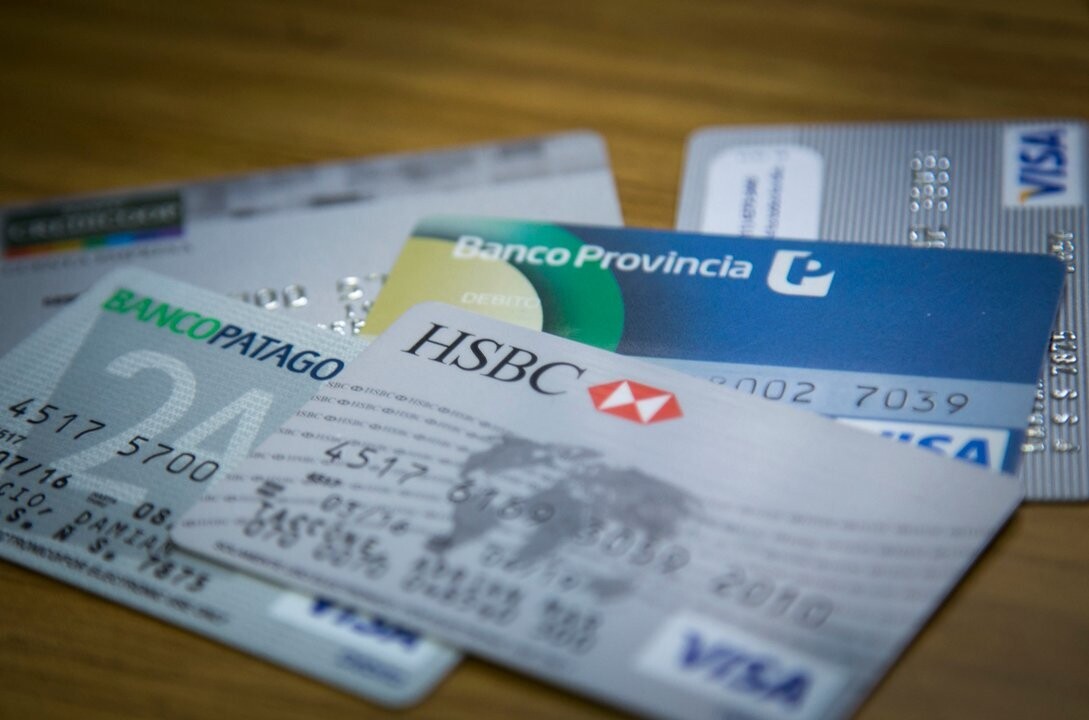
In cases where even the minimum payment cannot be made, punitive interest is added. The Total Financial Cost (CFT) is the total amount paid for financing a credit card debt and is composed, among other variables, by the basic interest rate (TNA), which determines the pure installment (fixed or variable), and VAT. The TNA is the rate used to calculate the interest payments on a loan or credit card. The TNA is charged on the capital lent for a year and varies proportionally to the repayment term, meaning that the longer the credit term, the higher the TNA. For example, at Banco Macro, the TNA for financing expenses with credit cards is currently 105.30%, and the Annual Nominal CFT with VAT reaches 127.41%. The financing of Argentines through credit cards remains high, reflecting a notable increase in the use of plastic so far this year and the alternative of covering expenses through the minimum payment, with the risk of accumulating exponential interest. In a scenario of loss of purchasing power, the credit card gains strength as a financing mechanism for daily expenses and puts pressure on the personal economy when settling the bank statement. Operations in pesos with credit cards in October rose by 1.3% monthly in nominal terms, with the balance reaching $21.9 trillion for the total accumulated, showing a year-on-year growth of 63.4%, compared to $13.4 trillion at the close of the same month the previous year, as detailed in a report by First Capital Group. The report, prepared based on data reported by the Central Bank (BCRA) as of 10/31/2025, emphasized that “in terms of real variations, there is a monthly decrease of 1.2% and a year-on-year increase of 24.2%”. In line with this, the most recent data revealed by the monetary authority in the Retail Payments Report highlighted the greater use of credit cards over debit cards, showing that in August, there were 180.4 million operations with credit for $9.4 trillion versus 178 million with debit for $4.7 trillion. Credit has been gaining ground in recent years, as in 2022 operations by this medium represented only 13.3% of the total, while in this calendar year they already reach 46.2% of the total. This trend was also exposed in the BCRA's October Financial Inclusion Report, which stated that the credit card continued to be the main credit instrument, with 14.6 million debtors, and registered a 4% increase in the first half of 2025, representing 39.6% of the adult population. In the face of this scenario, the attention of bank customers is directed to the cost of using credit cards in a context where in recent months interest rates have been raised due to the lower circulation of pesos during the electoral process. While expenses that are paid in installments with interest and the minimum payment face a financing interest rate. Following the victory of the ruling party, the Government is proceeding with a gradual reduction of rates, but the impact is still felt in the financing of plastic. Purchases with a single payment on a card have no interest, although other financial costs, such as taxes or administrative expenses, must be taken into account. Meanwhile, punitive interest in TNA is 52.65% and the CFTNA with VAT reaches 63.70%.