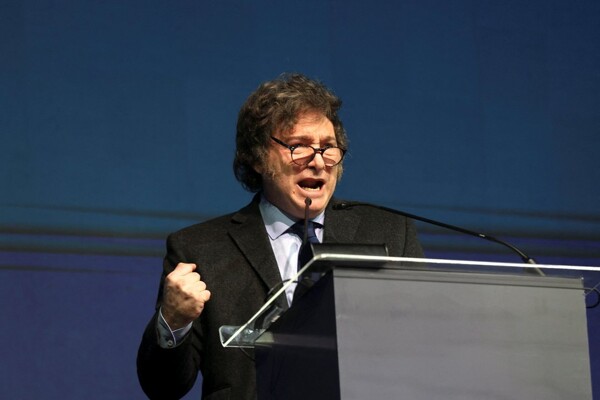
The Organisation for Economic Co-operation and Development (OECD) weighed the reforms being carried out by the government of Javier Milei but warned that they could lead to a weakening of the industrial sector.
«Argentina has adopted a liberalization model by drastically reducing state participation, eliminating subsidies, lowering trade barriers, and privatizing state-owned companies with the aim of prioritizing macroeconomic stability,» the OECD highlights in its report on economic prospects for Latin America. The Paris-based organization described Milei's economic plan as a «model of radical liberalization,» where «the nature and objectives of this strategy make its classification as a Productive Development Plan (PDP) in the traditional sense difficult».
Among these objectives were listed «fiscal consolidation, market liberalization, and the withdrawal of the State from productive affairs».
Warning for the Industry Despite the praise, the organization warns that the «chainsaw» plan faces «significant challenges» in its implementation, highlighting that the industrial sector along with its accumulated productive capabilities «risk being weakened rather than strengthened under the current trajectory».
However, the international body states that the structural reforms have served to «stabilize the economy and foster long-term growth».
«Stabilization efforts included specific fiscal adjustments to improve the efficiency of public spending, particularly through discretionary cuts in capital spending. As a result, Argentina recorded primary budget surpluses in almost every month of 2024,» the OECD assured.
And it concluded: «By improving macroeconomic stability and encouraging large-scale investment, Argentina is laying the foundations for a more dynamic and diversified productive base».