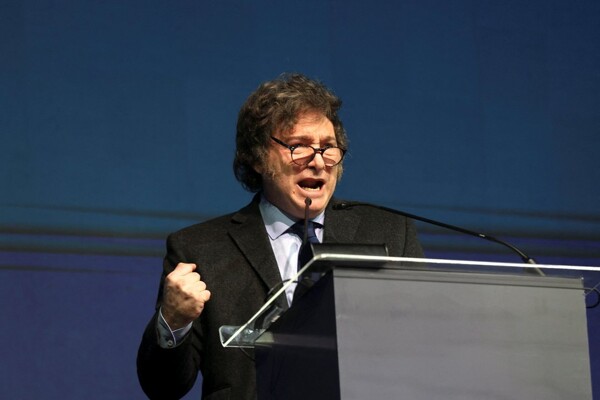
This position has been backed by several forum participants and reflects greater alignment between the Argentine government and major global market players. For the Argentine government, the potential arrival of these capitals represents a dual challenge: on the one hand, the opportunity to accelerate key reforms and/or schedule international debt issuances; on the other, the need to guarantee credibility, transparency, and continuity of the transformative plan. The forum serves as an international platform for Milei to present his economic reform agenda, financial opening, and attraction of foreign capital. Dimon described Milei as a "force of nature" and stated that his inflation-reduction and growth-stimulus policies could transform the Argentine economy if they are sustained through institutionalization and predictability. This scenario also positions Argentina as a high-risk, high-return focus: the gains will be proportional to the speed of the reforms and the political sustainability of the liberal agenda. In summary, the combination of an official opening discourse, the president's presence at the world forum, and the implicit backing of a banking giant like JPMorgan creates a turning point for Argentina. At the same time, he mentioned that the U.S. Treasury Department, led by Scott Bessent, is working with banks and investors to structure a fund of approximately $20 billion to support Argentina's sovereign debt. In his speech in Miami, Milei emphasized the urgency of "opening Argentina to the world" and reiterated his commitment to a free-market model, eliminating labor and fiscal rigidities to attract global companies. The fund announced by the U.S. Treasury seeks to provide a financial cushion for the country, but the fact that Dimon speculates that Argentina might not ultimately need a bank loan suggests that the combination of direct private investment and access to public debt could change the pattern of external financing. However, they warn that Argentina's real access to external credit will depend on structural variables such as reserve accumulation, fiscal discipline, and a regulatory framework. The fund announced by the U.S. Treasury is intended to provide a financial cushion for the country, but Dimon's speculation that Argentina might not need a bank loan suggests that the combination of direct private investment and access to public debt could alter the pattern of external financing. Nevertheless, they warn that Argentina's actual access to external credit will depend on structural variables such as reserve accumulation, fiscal discipline, and the regulatory framework. In an interview published by Reuters in Detroit, Dimon added that the country "might not ultimately need a bank loan" for its refinancing, as investment expectations grow thanks to an improvement in macroeconomic fundamentals. The CEO of JPMorgan's statement coincides with the Argentine president's tour in the United States, where he is participating in the American Business Forum in Miami, sharing the stage with figures like Donald Trump and Lionel Messi. His participation in the forum marks a new diplomatic phase that seeks to reinsert the country into the capital markets and awaken the interest of the international private sector. Traders and analysts on Wall Street interpret the figure of $100 billion as a latent volume of investments that remain expectant in the face of stability signals. However, whether these expectations translate into real and sustained capital will depend on the materialization of the conditions that investors—as Dimon expressed—demand to return to the country. In particular, they highlight the recent drop in country risk, the renegotiation of maturities, and a more favorable climate for foreign business.

Argentina Attracts Global Investor Attention Amid Reforms
JPMorgan's CEO Jamie Dimon stated that up to $100 billion in foreign capital could return to Argentina if the economic reforms led by President Milei are consolidated. This marks a turning point for the country, aiming to re-enter global capital markets.