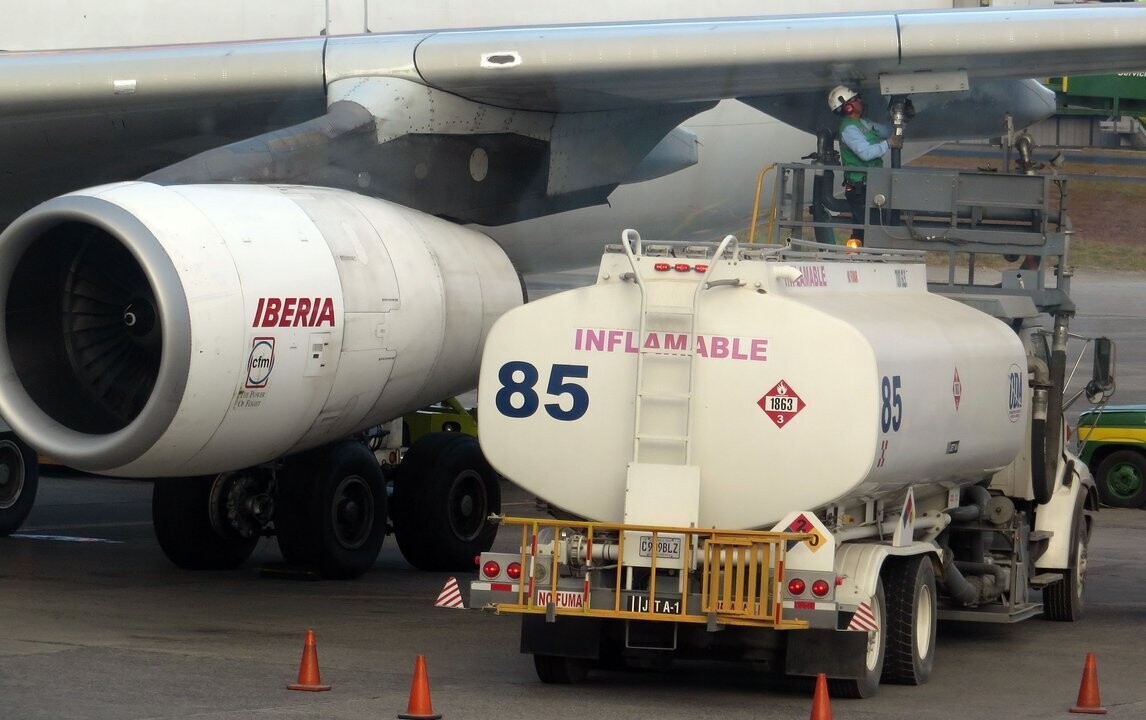
The escalation of tensions in the Middle East has begun to cast a shadow of uncertainty over the international aviation industry, manifesting through a reconfiguration of traffic flows and unprecedented economic pressure on basic supplies. As warned by the Director General of the International Air Transport Association (IATA), Willie Walsh, volatility in the region is already causing strategic adjustments in airlines to ensure the operability and safety of their routes. While this situation has already impacted ticket costs in several South American companies, the companies operating domestic flights in our country have not yet reflected the increase in fuel prices in their fares, according to what the Argentine News Agency (NA) was able to ascertain in consultations with various airlines.
Nevertheless, at a global level, one of the most immediate effects of the crisis is the alteration of traditional connection centers or hubs in the Middle East. For IATA, although the conflict represents an 'additional management challenge', it does not constitute an existential crisis. The resilience demonstrated by airlines such as Emirates, which has managed to maintain the core of its schedule, suggests that the sector is prepared for an accelerated recovery once diplomatic and military channels allow for the restoration of predictability in Middle Eastern routes.
Walsh recalled that the industry has already navigated high-price environments, as occurred between 2011 and 2013 when fuel reached levels close to 130 dollars without compromising the structural profitability of air transport. Currently, stabilization signals and an incipient decline in prices are already being observed, once the peaks caused by initial financial speculation have been surpassed.
The industry's expectation now centers on the normalization of the situation in Iran and the full reopening of the regional airspace. Faced with the risk posed by the use of affected airspace, especially after the start of hostilities with Iran, a significant portion of passenger and cargo traffic is being redirected towards alternative routes connecting with Asia. This logistical displacement seeks to avoid exclusion or danger zones, which entails longer routes and a temporary restructuring of the flight offer, despite the fact that global travel demand remains resilient.
On the economic front, the main warning signal is found in the energy market. Walsh emphasized that, while the price of oil has experienced increases, the cost of aviation fuel has grown with significantly greater intensity. This phenomenon is explained by the increase in the so-called crack spread or refining differential, which in some extreme cases has reached 100%, doubling the annual forecasts that were around 41%.