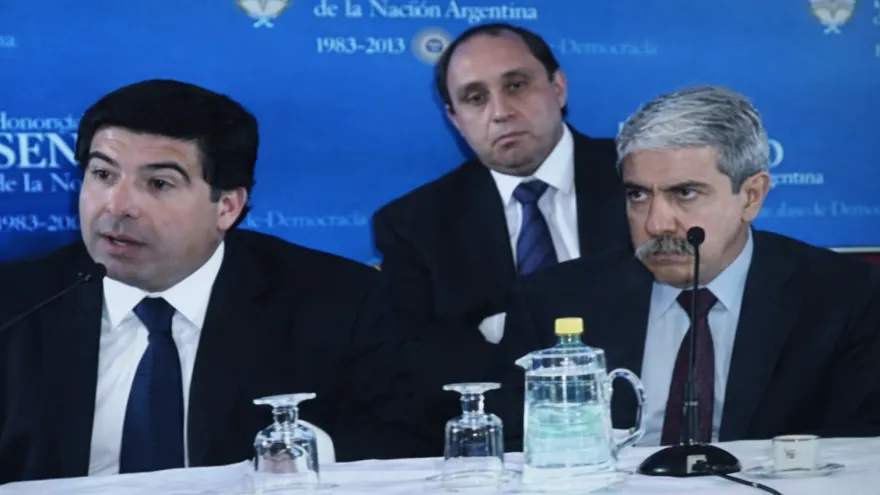
The decision by Javier Milei's government to appoint Julio César Nieto as head of the Campana Customs has an inevitable political reading. Campana and Zárate are not just collection and logistics enclaves; they are also sensitive points in the fight against smuggling and the international trafficking of narcotics. Milei kept only one official close to the old apparatus of Echegaray and gave him more power in a customs office decisive for foreign trade and in a corridor where the drug issue has already left heavy precedents. Various publications have placed him for years within the political and administrative web that orbited around Echegaray. In July 2025, Federal Justice ordered raids at the Zárate port terminal after 222 kilos of cocaine hidden in a rice shipment that had left there appeared in Belgium. The Campana Customs, under Nieto's control, is not a minor office: under its orbit pass terminals, fiscal deposits, and operational points of the Zárate-Campana corridor, one of the most important logistical and industrial hubs in the province of Buenos Aires. That is to say: the President who arrived promising to sweep away 'the caste' ended up reinforcing a leader identified precisely with one of the most corrupt and emblematic structures of kirchnerist fiscal and customs policy. The controversy does not end with his political past. The Recaudación y Control Aduanero (ARCA) agency formally appointed Julio César Nieto as the Interim Administrator of the Campana Customs in January. Nieto is not an unknown technician or a new figure in mileism. According to recent journalistic reports, Nieto also drags internal questionings and a cause in the Federal Justice of Quilmes for illicit enrichment and money laundering, a situation that has not been publicly settled and has re-entered the debate with his rise in Campana.