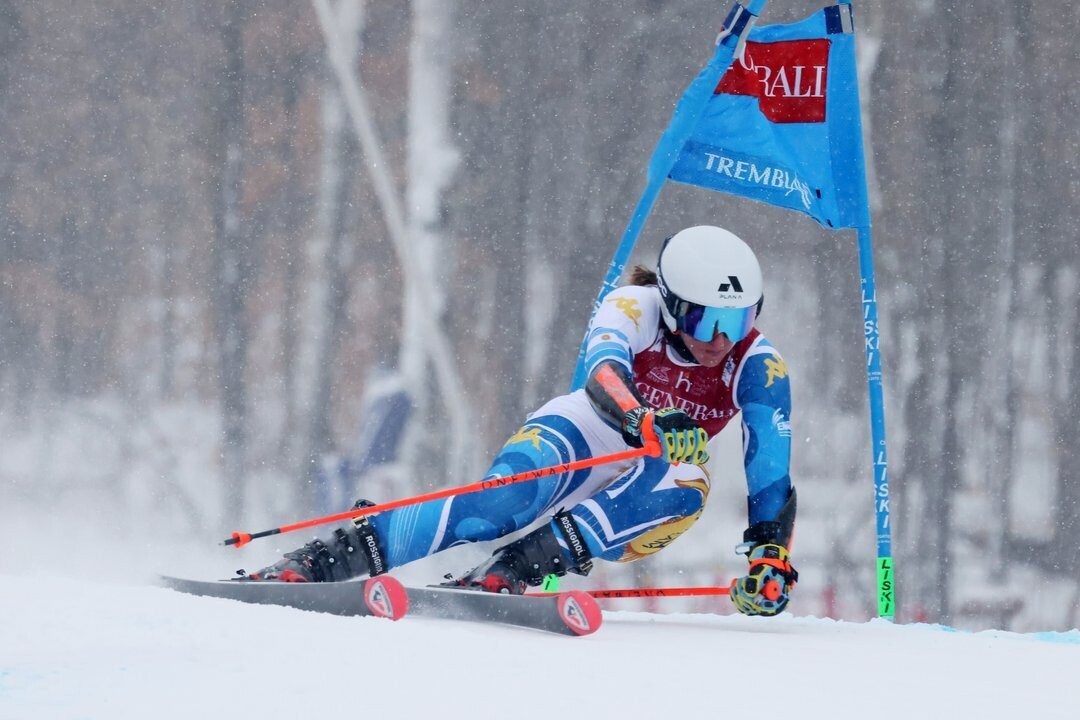
Alpine skiing will be one of the disciplines in which Argentina will be present at the Milano Cortina 2026 Winter Olympics, with Francesca Baruzzi, Nicole Begue, and Tiziano Gravier as national representatives. This is one of the most popular sports on the winter calendar and one that best captures the Olympic spirit of the snow: descending the mountain at maximum speed, making decisions in thousandths of a second, and maintaining balance, where every turn can mark the difference between the podium and retirement. According to the Argentine News Agency, alpine skiing has been part of the Olympic program since 1936, when it debuted in Garmisch-Partenkirchen with a combined event that included downhill and slalom. Over time, the discipline added specialties until forming the current menu: in 1948, downhill and slalom were separated as individual events, in 1952 giant slalom was incorporated, and in 1988 super-G appeared, one of the most recent but also most spectacular events due to its speed and course width. At Milano Cortina 2026, alpine skiing will be divided into speed and technical events, with completely different demands for athletes. Among the speed events, downhill and super-G stand out, which are run in a single round and usually take about a minute and a half to complete, with gates very far apart that allow reaching the highest speeds in the discipline. In both cases, the winner is the one with the best total time, and competitors perform timed training runs beforehand to find the ideal course before race day. In the technical category, slalom and giant slalom appear, where control, precision, and fine reading of the circuit are key. Slalom is the shortest and most explosive, with gates very close together and descents of 50 to 60 seconds, while giant slalom has wider curves, more sustained speed, and a run that lasts between one minute and a minute and a half. Both events are contested in two runs, and the final classification is defined by the sum of times between the two rounds, with the added twist that the starting order is reversed for the top 30 from the first descent, a format that usually raises the competitive tension until the end. Additionally, the program includes the team combined event, in which two skiers from the same country compete, one in downhill and one in slalom, and the result is determined by the sum of both times. In total, there will be 10 alpine skiing Olympic events between men's and women's competitions: downhill, super-G, slalom, giant slalom, and team combined, with women's races in Cortina d’Ampezzo (Tofane Alpine Ski Centre) and men's in Bormio (Stelvio Ski Centre), in a calendar that promises vertigo, tactics, and emotion at every gate on the road to Olympic glory.