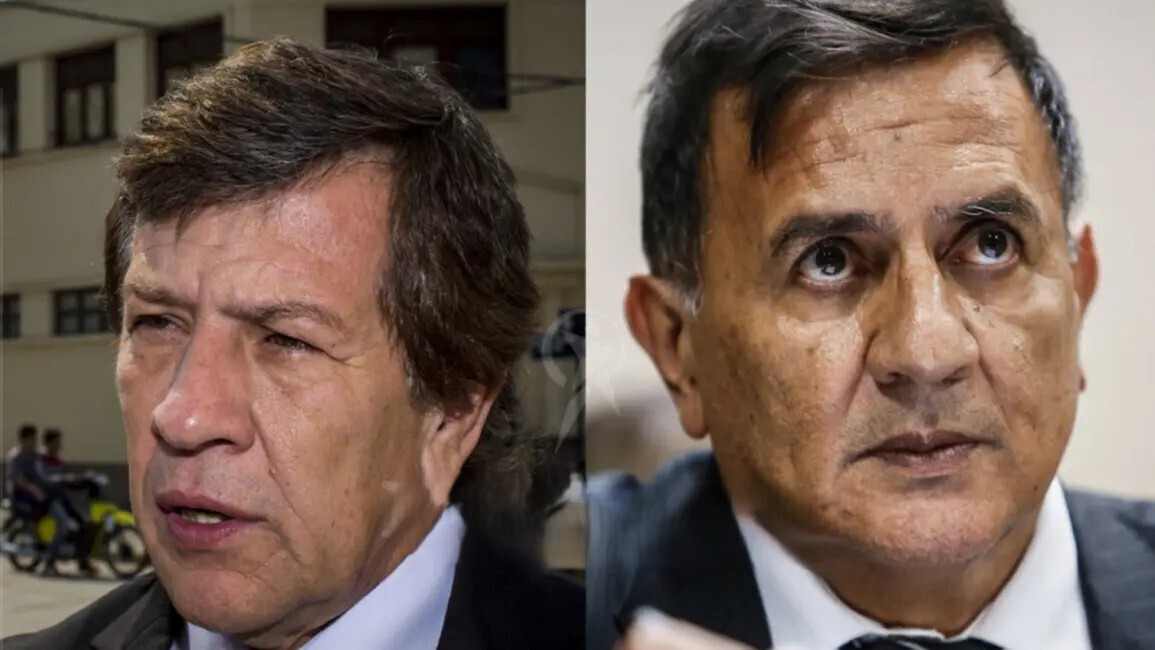
The new offensive by Raúl Reynoso's defense has again put the focus on a case that, far from offering full certainties, continues to exhibit gray areas, changes of criteria, and a striking procedural asymmetry. The defense put it bluntly: if there is not enough evidence on bribery for Bruno, there is none for Reynoso either. This turn, in itself, reshuffles the board. It also highlights that two key figures in that chain — Arsenio Gaona and Héctor Arancibia — remain at large and never testified. The abbreviated judgment rule incorporated into the National Criminal Procedural Code establishes that when there are several defendants in a case, that mechanism can only be applied if all give their consent. But the most delicate political and judicial point does not just pass through the technical discussion: it passes through the fact that the defense directly requested the partial dismissal of Reynoso for the supposed bribery, with a central and devastating argument: there is not enough evidence. And if the very foundations used to alleviate Bruno's situation, as the defense argues, are applicable to Reynoso, then the file again shows that something does not add up in a case that dragged suspicions from the beginning and that seems to have been pushed, at least in part, by oblique sectors of politics rather than by a uniform and solid accusatory line. The controversy grows because the agreement reached with Bruno, still subject to homologation, implies the withdrawal of the bribery charge and leaves lesser charges standing, with a agreed sentence of three years in prison suspended and six years of disqualification, in addition to his resignation from office. That is why Gutiérrez Pereano's writing is limited to protesting; it points to the marrow of the problem and denounces that an attempt is made to consolidate a new accusatory hypothesis 'without evidence of real value' and with a criterion that, if validated, would tint all subsequent proceedings with arbitrariness. Even more so: the defense emphasizes that neither the existence of the sum attributed in the accusation nor the supposed handover between intermediaries was concretely proven. And when the very engineering of the case is modified to benefit a co-defendant while trying to leave the other exposed to oral trial with the same narrative basis, the suspicion of unequal construction becomes inevitable. Justice cannot replace proof with climate nor fill voids with presumptions born from previous files. This is not a minor objection nor a procedural trick: it is equality before the law, due process, and the right to defense. That is why, more than an ordinary defensive maneuver, Reynoso's request again exposed the fragility of a trial suspected from its start and paved, in the eyes of many, by lateral interests that are now too visible. That is the key to his dismissal request. None of this erases that Reynoso carries a firm 13-year prison sentence in another cause, definitively confirmed by the Supreme Court, for favoring defendants in exchange for money and goods. It is there that the case ceases to seem like a simple legal dispute and begins to suggest an uncomfortable selectivity. The defensive argument has, moreover, no minor legal support. In that context, insisting on a bribery charge against the former judge while partially dismantling the same hypothesis for the former prosecutor opens an argumentative gap difficult to hide. And it adds an annoying fact: according to the records cited in the presentation, the only ones who had scheduled meetings with each other were Bruno and Gaona, not Reynoso. If the Public Prosecutor's Office considers that it cannot sustain the bribery charge against one of the co-defendants with the same firmness, the question is inevitable: on what basis does it intend to maintain that same hypothesis with vigor against the other, when both were inserted in the same factual platform? But precisely for that reason, the standard in this new case should be even more rigorous, not more lax. The official defender Matías Gutiérrez Pereano opposed the elevation to trial requested by the prosecution on March 11 and also questioned the abbreviated judgment agreement celebrated with the former federal prosecutor José Luis Bruno. The defense argues that in this file that requirement was circumvented with forced arguments and that the agreement with Bruno could generate a difficult-to-revert internal precedent in a subsequent oral debate. That precedent weighs and conditions any public reading. The strength of a criminal process does not lie in the notoriety of an accused, but in the verifiable consistency of the concrete accusation. Reynoso's defense denounced precisely that: a benefit for one defendant and a detriment to another, despite the original accusation describing a supposed common circuit of bribes.