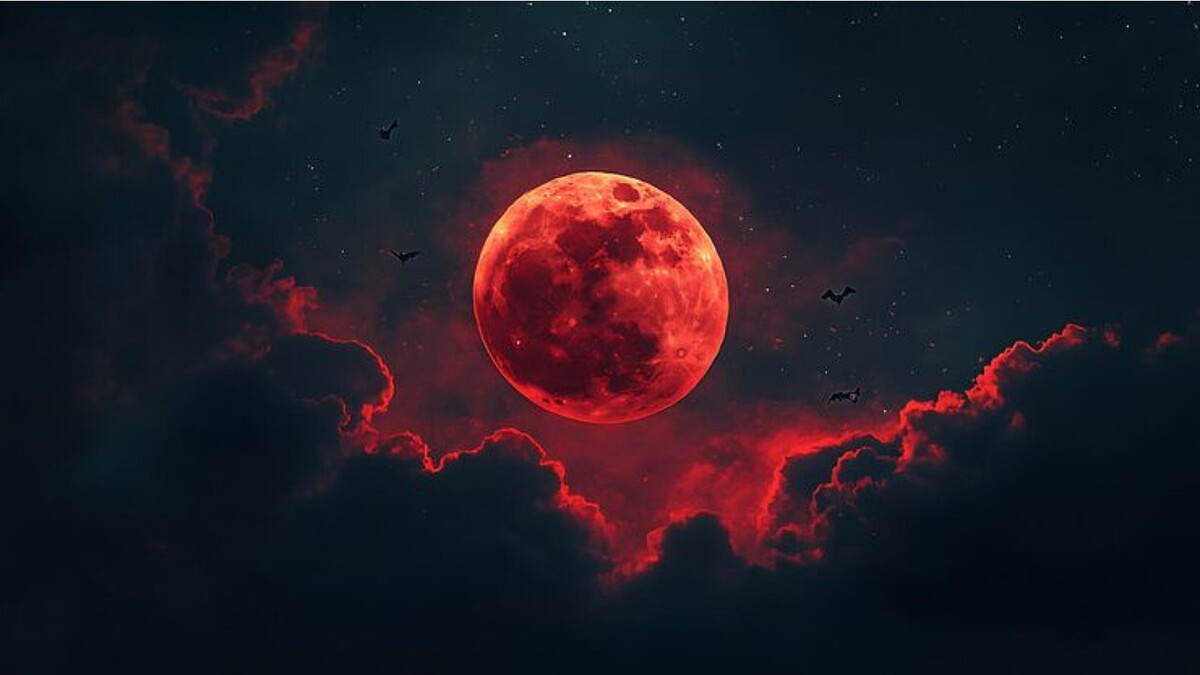
On the night of Tuesday, March 2, one of the most anticipated astronomical events of the year will occur—a total lunar eclipse, popularly known as a Blood Moon. During this event, the full Moon will be tinged with reddish tones for over an hour, and Argentina will be one of the best places to witness it. According to the Argentine News Agency, the Moon will remain red for up to 82 minutes, while the total eclipse, including partial and penumbral phases, will last over 5 hours. It will be visible from most parts of the planet and will not repeat with these characteristics for at least two years. In Argentina, the phenomenon can be observed in its entirety from almost the entire country, provided the weather conditions are favorable, making the national territory one of the best observation points in the world. During the event, the Earth will position itself between the Sun and its natural satellite. As a result, the Moon enters our shadow, known as the umbra, and scatters the shorter wavelengths of light, while the longer red wavelengths pass through it, creating tones ranging from dark red to coppery orange. “The totality will be visible at dusk from East Asia and Australia, throughout the night in the Pacific, and at dawn in North and Central America and the westernmost part of South America,” according to a NASA report. Recommendations for safely viewing the Blood Moon. Unlike solar eclipses, lunar eclipses pose no risk to vision, but it is advisable to consider a few suggestions: It can be observed with the naked eye. Using binoculars or telescopes allows for a better appreciation of color nuances. Finding a location with a clear sky and low light pollution enhances the experience. It is recommended to check the weather forecast to choose the best observation point. Key highlights include a total phase lasting over an hour; excellent visibility in the Southern Hemisphere; intense reddish tones on the lunar surface; and safe naked-eye observation without the need for eye protection.