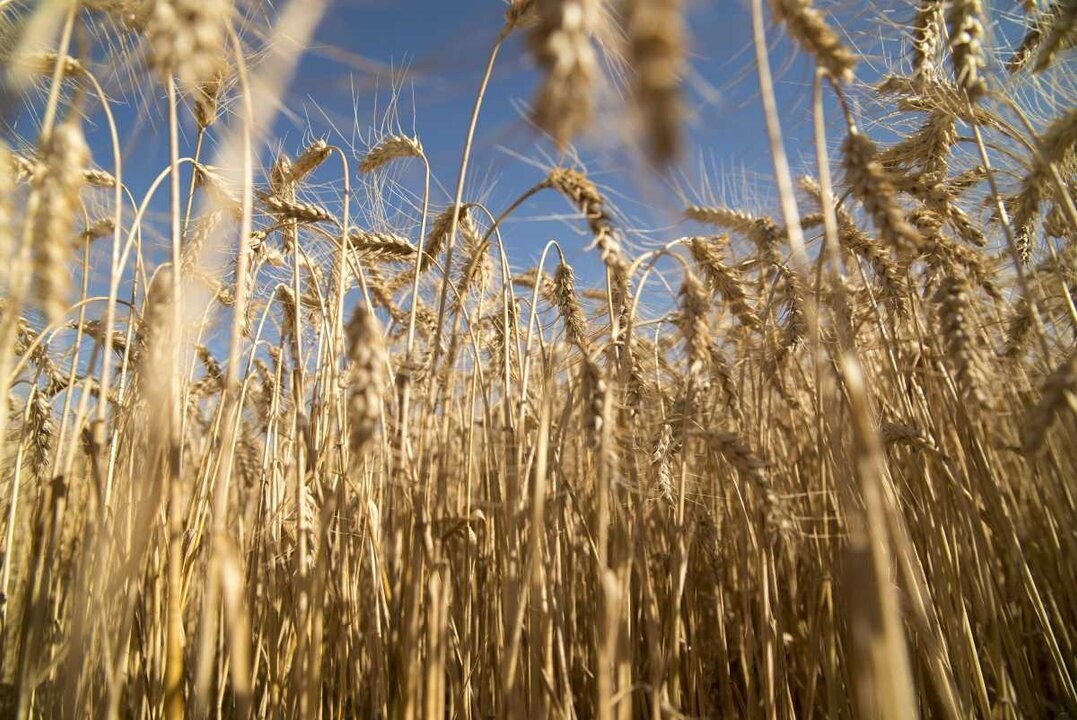
According to the latest official estimates, wheat production in Argentina would be around 27 million tons in the 2025/26 season, which would be a record. From a production standpoint, this would be a historic milestone for two reasons: on the one hand, it would be the largest volume since records began (1969/70); on the other hand, it would be achieved thanks to maximum crop yields, with a sown area relatively stable at the level of recent years. However, this physical record would not have its commercial counterpart, as the international price of the grain is at century lows, and the foreign currency income from wheat exports for 2025/26 would fall far from other records achieved in the past, explained Franco Artusso, from the agribusiness sector of the Mediterranean Foundation. According to the latest official forecast from the Ministry of Agriculture, with 76% of the area already harvested by mid-December 2025, wheat production would stand at 26.8 million tons nationally in the 2025/26 season. Compared to the 2024/25 season, the produced volume would increase by nearly 50% (from 18.5 to 26.8 million tons), driven mainly by a jump of almost 40% in average crop yields (from around 30 to 40 qq/ha) and, to a lesser extent, by a 4% increase in the sown area (from 6.5 to 6.8 million hectares). Compared to the previous series high, reached during the 2021/22 season, production would be approximately 20% higher, and the improvement would be explained almost entirely by higher yields, since the cultivated area would remain at similar levels to then (6.7–6.8 million hectares). Taking into account that around 65% of the production would be destined for export (about 17.5 million tons) and using an average price of around USD 200 per ton of wheat for shipments (average based on FOB Argentine ports, Dec-25 to May-26), foreign exchange income from wheat exports in the 2025/26 season is estimated at USD 3.5 billion. Compared to the 2024/25 season, the exported value would grow by 17% (from USD 3 billion to USD 3.5 billion) even though the quantities exported would be 37% above those of then (17.5 M versus 12.8 M tons, according to estimates). Compared to the series high in value (2021/22), foreign exchange income for 2025/26 would be 26% lower in real terms (USD 4.7 billion versus USD 3.5 billion) with quantities 25% higher than then (17.5 M versus 14 M tons, approximately). From the above, it follows that the 2025/26 record is far from being a high from a historical perspective, something that can be clearly seen in Chart 2. As mentioned before, the reason why the production milestone does not have its counterpart in a record of foreign currency income is found in a weak price situation for the cereal. To get an idea of the magnitude, in Chart 3 it is observed that in 2025/26 the average price of wheat exports would constitute the third worst record in the current century (almost tied with 2004/05, only slightly better than in 2000/01) and would have a negative gap of more than 30% with respect to its historical average (USD 201 versus USD 295 per ton, respectively). The record production of the 2025/26 wheat season is supported by favorable climatic conditions that allowed for exceptional yields; but also by policy signals aimed at building a more business-friendly arena (less tax pressure, progress in the normalization of the exchange front and a declared agenda of cost reduction and administrative burdens), which contributed to sustaining the crop within the rotation even when price prospects were not the best at the beginning of the season. Looking ahead, he noted that the challenge is to deepen this agenda, particularly by moving towards the elimination of export duties on wheat, so that the productivity jump of the last year is not a transient episode but a sustainable process. In a scheme without export duties, the sector would have more 'backing' to sustain investment in technology, fertilization, and management, key factors to mitigate adverse price scenarios (like the current one), or negative productivity shocks that may arise from the inherent risks of producing in the open.