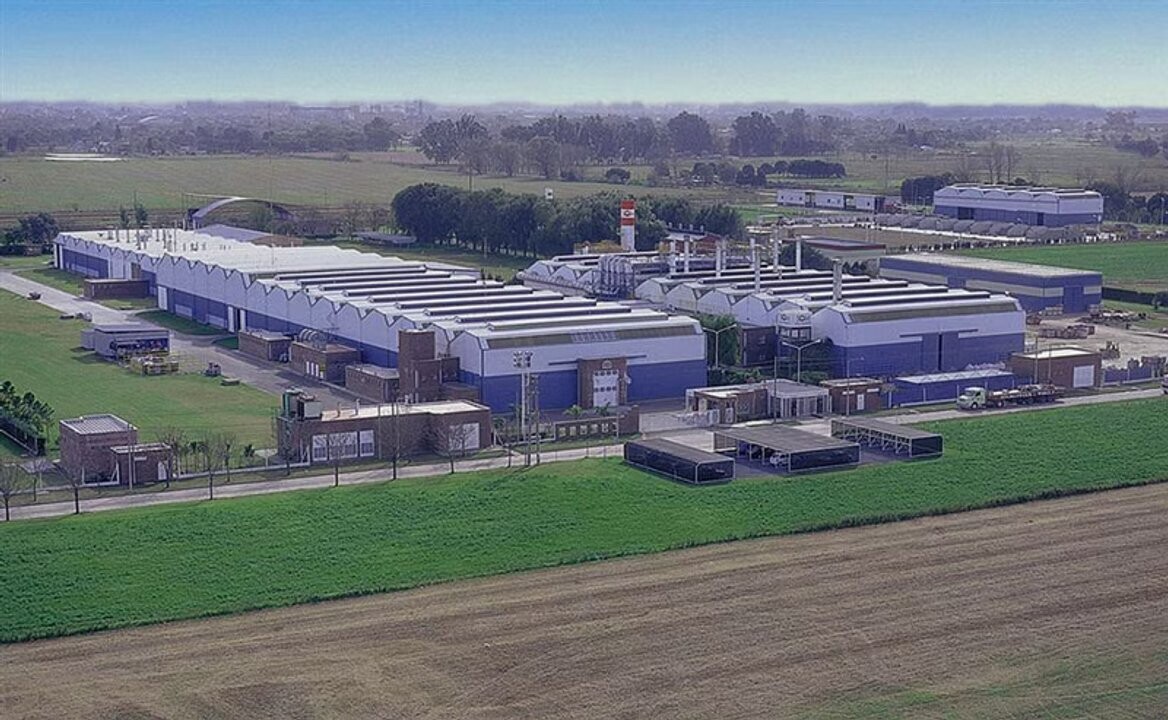
The Essen factory, based in the city of Venado Tuerto in Santa Fe province, has reduced its workforce by 10%. This move coincides with a similar trend at other metallurgical companies in southern Santa Fe, with the UOM union attributing it to the indiscriminate opening up to imports.
According to the Argentine News Agency, business leaders in the sector have been complaining about a loss of competitiveness due to the free import of products, while union leadership specifically points to goods coming from China as the culprits.
The Essen firm, one of the most important in the sector, began production in 1954 and daily processes about 15 tons of aluminum for an annual output of around 600,000 pots and pans.
"The situation at Essen is complicated, just like in all the companies we have in our region, which are registering many layoffs," said Diego Olave, general secretary of the Metalworkers' Union (UOM) of Venado Tuerto, in dialogue with Splendid AM 990 today.
The union leader specified that "in the last six months, in addition to 34 layoffs at Essen, we also had 30 departures at Corven Amortiguadores, and at Corven Moto, where 700 workers are employed, we had about 120 layoffs." He acknowledged that in conversations with business owners, they are anticipating that, due to free imports, the situation will lead to "instead of manufacturing in many factories, they will dedicate themselves to assembling imported parts, and this is going to generate a lot of unemployment."
Olave affirmed that this is a consequence of "a deindustrialization policy by the government" and stressed that the metallurgical sector "is the second most affected after construction."
He emphasized that Venado Tuerto is "a city of 100,000 inhabitants, with a very important industrial park, but all sectors are in the same situation, which means that when a worker is left without a job, it is then very difficult for them to find an alternative."
"This is the result of a government deindustrialization policy," Olave reiterated. "The metallurgical sector is the second most affected after construction."