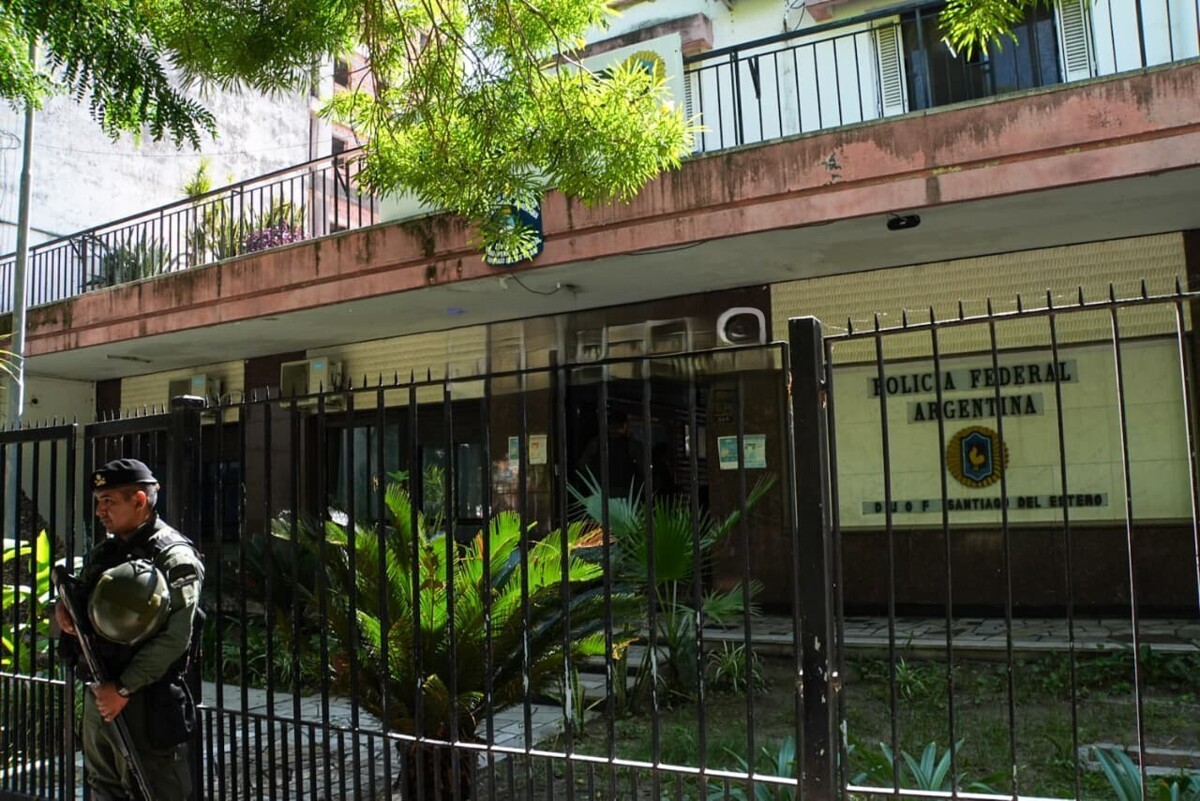
The judicial inquiry scheduled for this Monday, March 30, could begin to define whether the case is limited to a group of officers or escalates to a broader structure. Local media added that the investigation focused especially on the DUOF, the Federal Operational Unit, a key structure of the PFA in the prevention and investigation of complex federal crimes. The hypothesis being pursued by the Justice is particularly explosive because it is not an abstract accusation of police corruption, but rather the possible recycling of evidence seized in drug trafficking cases. If the accusation is confirmed, the scandal will not only be due to the presence of federal police in criminal schemes, but also due to the possibility that drugs seized in state operations were diverted and resold with the protection of those who were supposed to guard them. A judicial source cited by that newspaper described a case in which 16 kilos of cocaine would have been seized, but only 8 appeared in the records and in the seizure report. The procedure, ordered by Federal Judge Guillermo Molinari and Federal Prosecutor Pedro Simón, included raids on the local PFA delegation, on the Las Termas de Río Hondo facility, and at various private homes in the Santiago del Estero capital and La Banda. The most consistent journalistic reconstructions agree that, as of this Sunday, there were at least eight detainees: six Federal Police officers and two civilians. Politically, because the case directly strikes the official narrative of a frontal fight against drug trafficking and the purification of the forces. The judicial information identifies the core of the file as an alleged operation where part of the drugs seized in raids was not fully recorded in the records and then returned to the illegal market with the cover of the very agents investigated. The intervention of personnel from the Argentine National Gendarmerie in the headquarters of the Argentine Federal Police in Santiago del Estero uncovered a case of enormous institutional gravity that investigates members of a federal force for alleged drug manipulation operations in official raids. Among the criminal figures mentioned by the media covering the case are criminal association, smuggling, failure to perform official duties, abuse of authority, and violation of Law 23.737 on narcotics. This combination describes a scenario that, if consolidated in the investigation, could compromise not only direct executors but also an eventual network of protection, logistics, and collection. Another element that aggravates the episode is the location where the judicial blow occurred. The fact that the same unit is now suspected of declaring less drugs than actually seized multiplies the impact of the case and erodes the credibility of one of the operational pieces that the government exhibits in its security policy. The image of a federal force raiding the headquarters of another is not common, and in this case, it exposes a particularly delicate fracture in the heart of the drug trafficking persecution system. This repetition was reportedly one of the keys that triggered wiretaps, surveillance, and the contribution of informants to sustain an investigation that, according to reports, had been under reserve for months. The file also expanded its dimensions and shows that the case began under an axis of alleged smuggling, but with the advancement of the investigation, it derived into a more complex plot also linked to drug trafficking. According to the reconstruction of the facts, several defendants in previous cases began to notice during their statements that the amount of narcotic reported in court was less than the one actually seized from them. This data explains why the weekend operation in Santiago del Estero was read as something more than a police raid: it was a high-voltage intervention on a state apparatus that was supposed to assist the Justice and ended up under the magnifying glass of that same Justice. For the national government, the episode opens a serious problem on two fronts. The DUOF is not a minor office: the PFA itself presents it in its official communications as part of the federal structure that intervenes in investigations of drug trafficking, money laundering, organized crime, and other complex crimes throughout the country. On March 9, for example, Argentina.gob.ar reported a procedure by the DUOF Santiago del Estero in La Banda with the seizure of more than 3 kilos of cocaine, money, a weapon, and other items. The investigation advanced, according to available reports, under strong secrecy precisely because those carrying it out coexisted institutionally with personnel from the same suspected force.