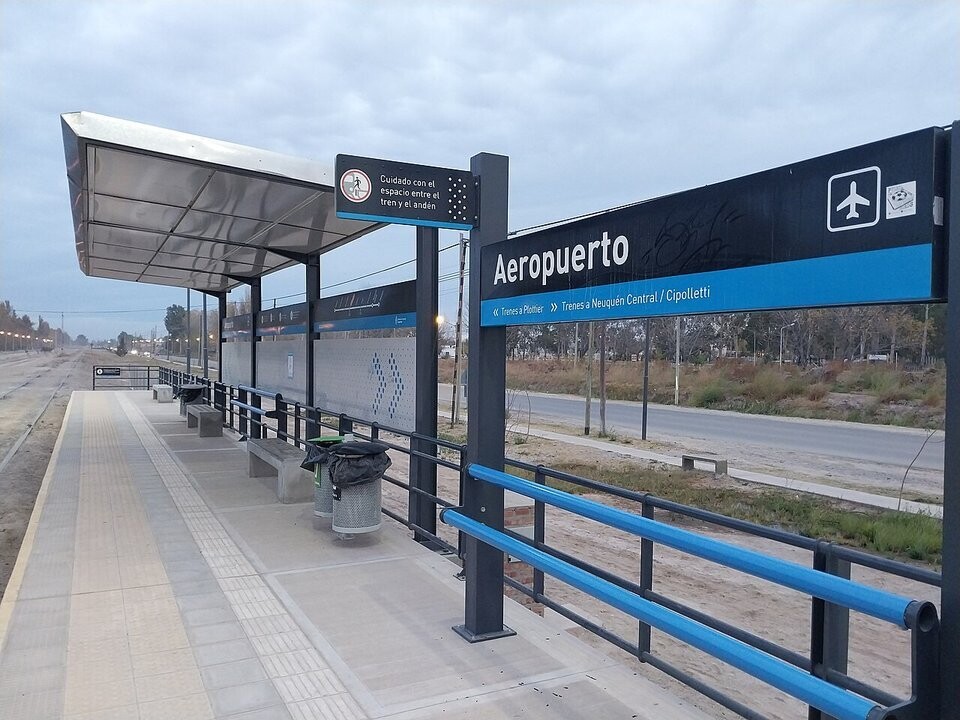
The Minister of Government and Justice, Reg Amado, highlighted that Public-Private Partnerships (PPPs) are the key alternative to improve infrastructure and boost provincial competitiveness. The initiative is backed by a 'virtuous triangle' composed of: Provincial Government (Ministry of Government and Justice). Business Sector (Federation of the Economy of Tucumán, FET). Academic Sphere (National University of Tucumán, UNT). The dean of FACET, Miguel Ángel Cabrera, stated that historical projects like this, along with dam and road works, can be rebuilt with the right investment and a forward-looking vision. The train, whose preliminary technical design has already been developed by the Faculty of Exact Sciences and Technology (FACET-UNT), would connect the airport with Mitre Station in less than 20 minutes. The 'Virtuous Triangle' for Investment The viability of the project, which had been frozen, is based on the application of the PPP scheme to leverage private investment with greater administrative efficiency. Due to the current restrictions on national public works, provincial authorities and the Tucumán business community are seeking to finance the project through the Public-Private Participation (PPP) scheme, inspired by a German model. According to what Argentine News Agency (NA) learned, the project was the centerpiece of a conference led by the German expert Alexander Hofmann. Buenos Aires, November 30 (NA) -- the project for a commuter train that would link the Teniente Benjamín Matienzo International Airport with the center of San Miguel de Tucumán has gained new momentum.