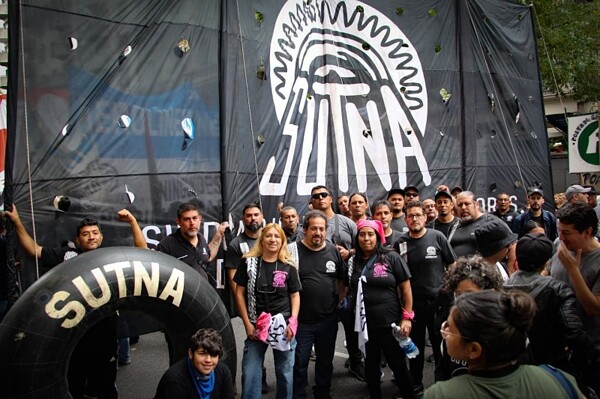
The initiative aims to guarantee productive continuity and preserve jobs while a definitive solution to the conflict is found, a proposal also backed by the union. The SUTNA is promoting a law to guarantee production at FATE and preserve a thousand jobs. The judicial ruling represents a setback for the company and strengthens the workers' position in a conflict that has become one of the most important in the industrial sector in recent months. The judges stated that the strike and direct action measures are part of rights recognized by the Constitution, especially when linked to the defense of the source of work. In its ruling, the court emphasized that the conflict must be processed in the labor sphere and not in the penal one. In this way, the ruling enables the workers to remain inside the plant while a solution to the conflict is sought. In parallel with the court ruling, different political sectors are promoting a project for the provincial government of Buenos Aires to assume temporary control of the plant. The workers' struggle began after the announcement of the plant's closure and the dismissal of approximately 920 workers, which led to the occupation of the factory and the Single Union of Argentine Tire Workers (SUTNA) to defend job continuity and prevent a possible asset-stripping. With the mandatory conciliation deadline approaching, the future of the plant and nearly a thousand jobs (and another five thousand indirect jobs) remains open, while discussions grow about possible solutions ranging from reopening under state control to different forms of productive continuity.