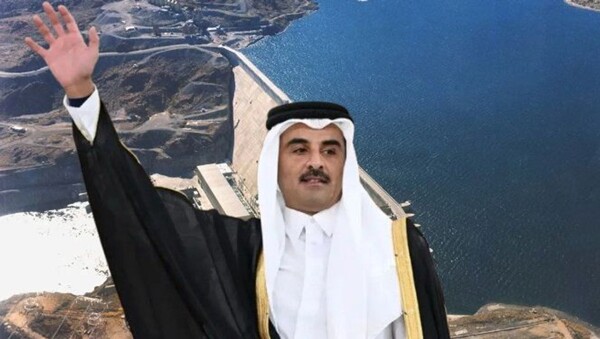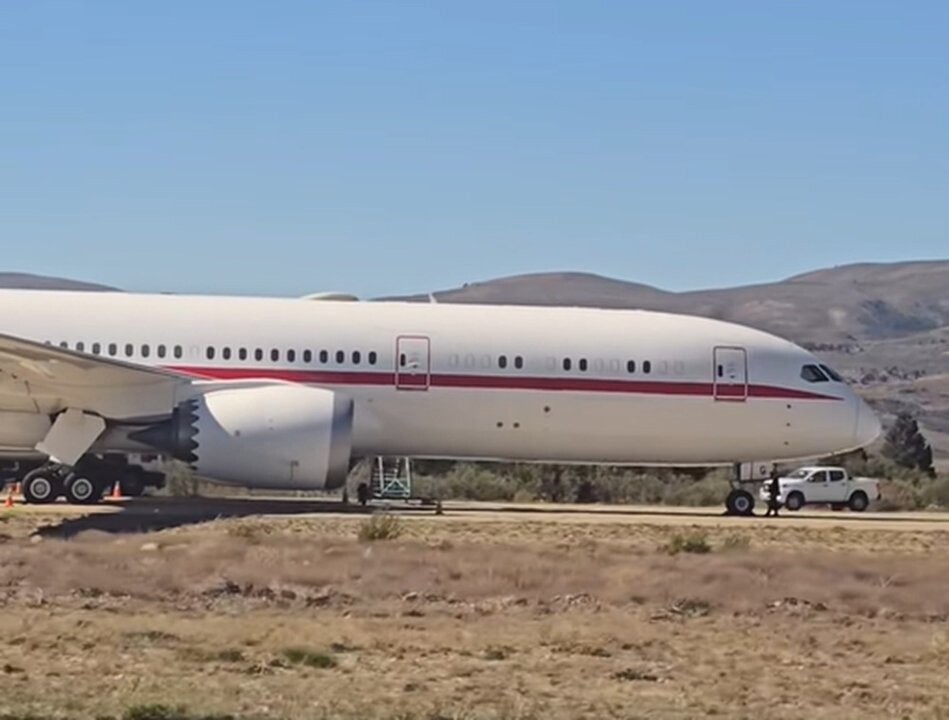
The arrival of the President of the United Arab Emirates and ruler of Abu Dhabi, Mohamed bin Zayed Al Nahyan (known as MBZ), to the city of San Carlos de Bariloche this Monday, February 23, 2026, has been a landmark logistical and diplomatic event for the Patagonian region. The operational deployment for this private visit, but with significant geopolitical implications, involved a series of large aircraft operating under a strict security protocol, as reported by the Argentine News Agency (Agencia Noticias Argentinas) from airport sources. On one hand, a Boeing 787-9 Dreamliner, which constitutes the main aircraft and in which the Emir traveled, is exclusively used by the ruler of the United Arab Emirates, operated under the exclusive Abu Dhabi Amiri Flight fleet (commonly identified with registrations A6-PFE or A6-PND). It is not a conventional commercial aircraft, but an ultra-luxury command and aerial residence platform. This aircraft made a journey with a stopover in Rabat, Morocco, before landing at Teniente Luis Candelaria International Airport. It was a historic event, as it is the first time a Dreamliner of these characteristics has operated at that terminal. The Dreamliner 787-9 is the extended fuselage variant of the 787 family, designed to offer a superior balance between capacity and range. It has a length of 62.8 meters and a wingspan of 60.1 meters. Its wings feature an advanced aerodynamic design with curved wingtips (raked wingtips) that reduce drag and optimize fuel consumption. It is equipped with two state-of-the-art engines, typically Rolls-Royce Trent 1000 or General Electric GEnx-1B. These engines are distinguished by their toothed (chevron) coverings that reduce the noise footprint by 60% compared to previous aircraft. 50% of its structure is made of composite materials (carbon fiber), making it lighter, more corrosion-resistant, and allows for a much more comfortable cabin pressurization. In its VIP configuration (Boeing Business Jet - BBJ), its range extends up to 17,000 kilometers, enabling non-stop flights of up to 18 hours, connecting Abu Dhabi with any point on the globe, as has been the case with its recent arrival in the Argentine Patagonia. The technology of the Dreamliner revolutionizes the passenger's biological experience, a critical factor for a head of state who must be operational upon landing. Unlike conventional aircraft that simulate an altitude of 8,000 feet, the 787 maintains a cabin altitude of 6,000 feet. This, combined with an active humidification system, drastically reduces the effects of jet lag, fatigue, and dry eyes. It lacks physical blinds; instead, it uses smart glasses that darken through a five-level electronic system, allowing light control without losing the view outside. It is equipped with hospital-grade HEPA filtration systems and a gas-based purification system that continuously eliminates odors and contaminants. Although the exact details of the interior are treated as a state secret, the configuration of the Emirati royal fleet follows the highest standards of customization. A Royal Suite (Master Suite), located at the front for maximum privacy, includes a bedroom with a king-size bed, a private bathroom clad in noble materials with a continuous-flow shower, and a personal study. It features a main salon (Majlis) designed for diplomatic audiences, banquet dining rooms, and conference rooms equipped with projection technology and ultra-high-definition screens. While a commercial 787-9 carries nearly 300 people, this unit is configured to accommodate between 25 and 50 passengers, ensuring unprecedented living space for the Emir and his inner circle. As a mobile office for a world leader, the aircraft is a technological fortress. It is equipped with encrypted broadband satellite communication systems that allow the Emir to direct state affairs, hold secure video conferences, and manage armed forces in real-time from any altitude. It is presumed that these units have Direct Infrared Countermeasure (DIRCM) systems to neutralize anti-aircraft missile threats, in addition to military-grade weather and proximity radars. The equipment also includes a high-complexity medical suite with vital monitoring, defibrillators, and supplies for emergency interventions, attended by chief physicians who are part of the permanent entourage. A Boeing B777-313 ER also arrived, which arrived prior to the main aircraft, fulfilling the function of transporting high-ranking personnel and advanced communication and security equipment. To these was added a Boeing C-17 Globemaster III, a heavy military transport aircraft of the United Arab Emirates Air Force. The function of this delegation was strictly logistical: transporting armored vehicles, high-complexity medical supplies, containers of provisions, and technical equipment necessary for staying in remote areas. Once on Bariloche soil, the delegation had at least three or four helicopters (one of them white, specifically destined for the Emir's transfer) to connect the airport with the exclusive establishments in the area, thus avoiding land transit on National Route 40. The magnitude of the escort reflects the hierarchy of the visitor, considered one of the most influential leaders in the Arab world. The delegation is estimated to be made up of more than 200 people, including high-level advisors, elite security personnel, private medical teams, and personal service staff of the Emir. At the time of landing, the entry of a motorcade composed of approximately 15 vehicles into the runway was observed, among which were high-end SUVs with diplomatic plates and trucks destined for the movement of containers. The operation was coordinated jointly between the Airport Security Police (PSA) and the private security team of the Emirates, which has maintained a deployment in the region since February 17, 2026. This visit has been classified as 'unofficial' and is carried out under a near-total hermeticism.