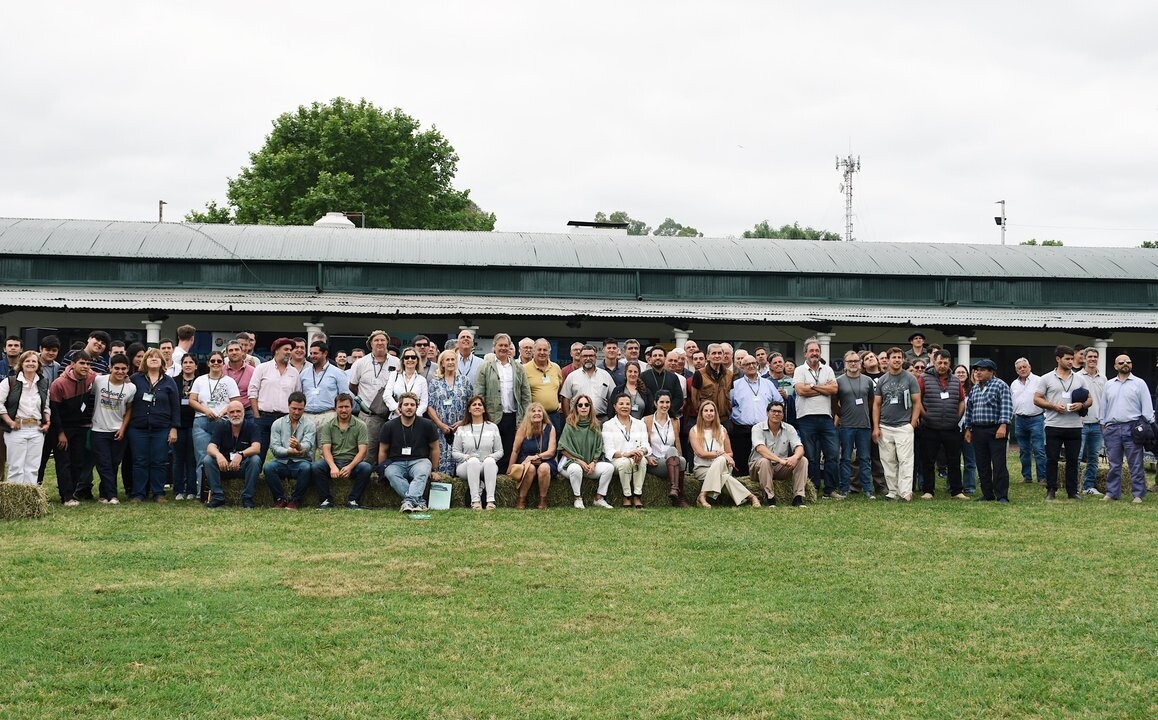
Buenos Aires, December 1 (NA) – Livestock producers demanded the completion of works in the Salado Basin, warning that the funds to finish them are available but are not being executed. The account assigned to the program has around 190 billion pesos, while the completion of the works would require approximately 30 billion, they explained. More than 120 producers, technicians, and agricultural leaders participated in an event at the Rural Society of Saladillo to debate the main challenges and opportunities of the Salado Basin, focusing on water infrastructure, climate, livestock production, and the rules necessary to sustain the sector's growth, according to the Argentine News Agency. The event was attended by and supported by the Mayor of Saladillo, Engineer José Luis Salomón; the President of the Rural Society of Saladillo, Ignacio Bustingorri; the Vice President of the Rural Society of Argentina, Marcos Pereda; and Larranaga, President of the Advisory Council of the Master Plan of the Salado River of CARBAP. Marcos Pereda, Vice President of the Rural Society of Argentina, warned that “there is no possible livestock growth without a concrete plan, clear rules, stability, and predictability.” He pointed out that “the role of the entities is not to give speeches, but to build real conditions for the producer to invest, produce more and better, and transform the sector's historical claims into concrete results.” In this context, they highlighted that it is the producers themselves who are driving a sustained growth in certification requests, as a strategic decision to get organized, differentiate themselves, and capture greater value. In this sense, he emphasized the need for a unified voice from the countryside, capable of setting priorities and sustaining a long-term agenda that allows for growth in herd size, production volume, and added value, with stable rules that support the development of the livestock business. The event left a clear conclusion: the Salado Basin has the conditions to be one of the engines of Argentine livestock growth, as long as water infrastructure, climate adaptation, productive efficiency, and a solid institutional framework converge, with a unified union agenda oriented towards results. The event was made possible thanks to the organization of the producers of the Salado Basin, led by Gladis Yanzi of Estancias Caraytá, together with the Rural Society of Saladillo and its president Ignacio Bustingorri, in a joint effort that brought together technical, productive, and union perspectives with a common objective: to transform the territory's structural constraints into sustained livestock growth, combining more stock, higher average slaughter weight, and production oriented to the best-paying markets. Engineer Guillermo Jelinski presented a diagnosis of the hydrological functioning of the Salado Basin and explained the scope of the Salado River Master Plan, highlighting the progress made and the pending works necessary to reduce productive vulnerability and improve predictability in a region of low natural slope and high sensitivity to excess water. Furthermore, both Jelinski and agronomist engineer Eduardo Sierra agreed on the convenience of advancing in the creation of a specific authority for the administration of the Salado River, which would allow for the management of resources and guarantee the execution of works with continuity over time. Later, Eduardo Sierra analyzed the climatic evolution of the region and warned about the impact of the greater frequency and intensity of extreme events. He emphasized that the productive challenge is not only about the volume of rainfall, but also about its concentration in shorter periods, which forces the planning of more flexible and environment-adapted livestock systems. The productive analysis was in charge of engineer Rodrigo Troncoso, who pointed out that the growth in beef exports is the result of a long-term process, initiated between 2016 and 2018 and consolidated by the economic advances of recent years. In this framework, he stated that the next step for Argentine livestock is not only to produce more, but to sell higher-value meat, combining an increase in stock with more kilograms per animal and better commercial positioning. From the production side, Ricardo Orazi, from Cabaña La Pastoriza, and Alejandro Aznar, from Cabaña La Esencia, national references in genetics and cutting-edge livestock, agreed that the productive model to come for the Salado Basin must be based on rustic and fertile animals, adapted to the environment, but with a meat production oriented to the demands of the markets that pay the most.