The suicide of Sergeant Oscar Eduardo Valdez in front of the headquarters of Regional Unit II of the Rosario police exposed an internal crisis that had been growing silently within the Santa Fe force and that now threatens to erode one of the few concrete results the province had shown in terms of security: the drop in homicides in the city most affected by drug violence in Argentina.
What seemed like an isolated incident led to a protest by officers, demands for better salaries, complaints of extreme exhaustion, and a deeper discussion about how much pressure on the police base can risk the stability of the control scheme that Santa Fe has tried to consolidate in the last two years.
The shock was significant. The difference between sources reflects that the decrease in violence exists, but also that the balance remains fragile and can be altered if the police enters a new phase of internal disorder. Part of this change in the security scenario was associated with the application of the so-called Microtrafficking Law, sanctioned in Santa Fe at the end of 2023, which allowed the province to assume competence to investigate and prosecute drug dealing.
The conflict forced Governor Maximiliano Pullaro to intervene quickly to defuse the protest and avoid a more serious fracture in a force key to sustaining the security operation in Rosario. The government ended up yielding on a sensitive point. Pullaro announced that no police officer in the province would earn less than 1,350,000 pesos, in addition to providing specific bonuses and improvements for prison staff and for those in critical functions, such as patrol car drivers.
In a city where organized crime has already demonstrated its ability to take advantage of any crack in the State, the greatest risk is not only police discontent: it is that an exhausted, fragmented, or demoralized police force may end up opening the door to a new stage of deterioration.
The case impacted not only because of the amount, but because it pierced the chain of command that the province was trying to rebuild and reinstated the suspicion that part of the police institutionality was still corroded by old practices. In this context, the crisis opened by Valdez's death leaves a warning that is difficult to ignore. According to official provincial data, January 2026 closed with 7 homicides in the Rosario department, compared to 21 in January 2025, while the preliminary balance of 2025 placed Santa Fe among the two least violent years of the century.
The Rosario security model showed the ability to reduce homicides and recover state presence on the streets, but it rests on a force that continues to drag along salary, emotional, organizational, and internal corruption problems. The decision allowed the protest to ease and for agents to return to their duties, but it did not completely solve the underlying problem: within the force, the feeling of wear and tear, precariousness, and lack of recognition persists, in an institution that has been subjected to a very high demand in the daily fight against crime and drug trafficking.
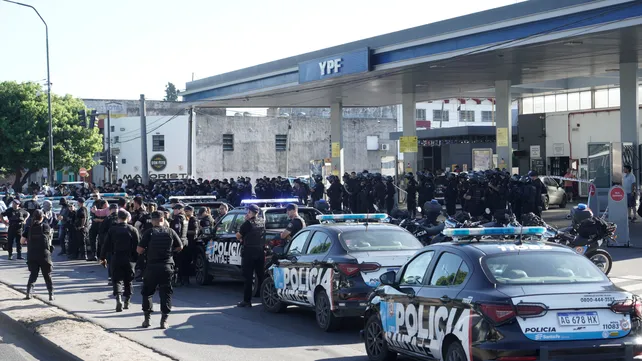
The tension is even more delicate because it comes at a time when Rosario was showing objective improvements in its lethal violence indicators. After Valdez's death, about a hundred patrol cars concentrated in front of the Rosario police headquarters in a protest that the provincial government read as a sign of strong internal discontent.
The immediate trigger was low salaries, long working hours, and a lack of psychological support, a demand that gained volume after it became known that hundreds of police officers in Santa Fe were under mental health monitoring. The judicial investigation initiated in 2025 revealed a supposed scheme of overbilling and ghost payrolls to divert funds intended for the supply of patrol cars for Regional Unit II, with an estimated monthly damage of tens of millions of pesos. There were former chiefs detained, accusations of illicit association, embezzlement, and fraud against the State, and new detentions months later.
That tool was presented by the provincial administration as a turning point to recover territorial control in areas where microtrafficking functioned as the economic base of organized crime. However, different analysts warned that the new operational capacity did not by itself solve the historical deficits of leadership, transparency, and cohesion within the police itself. To this picture was added another severe blow: the so-called "fuel cause".
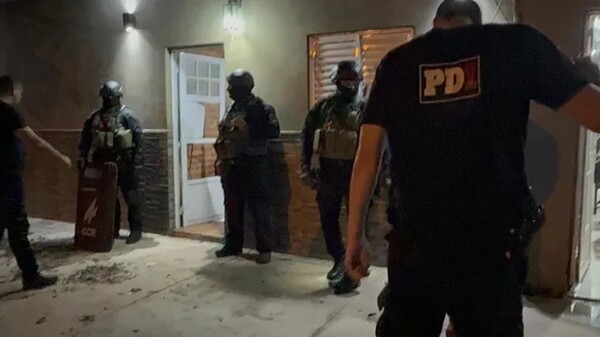
In parallel, other journalistic records indicated that the Rosario department closed 2025 with 115 homicides, above the 90 of 2024, although still far below the peaks of 2022 and 2023. If that structure is affected again, the improvement in the numbers may be less solid than the official discourse intends to show. Since then, the Public Ministry and the security forces have multiplied raids and operations on bunkers and neighborhood retail drug sales networks.