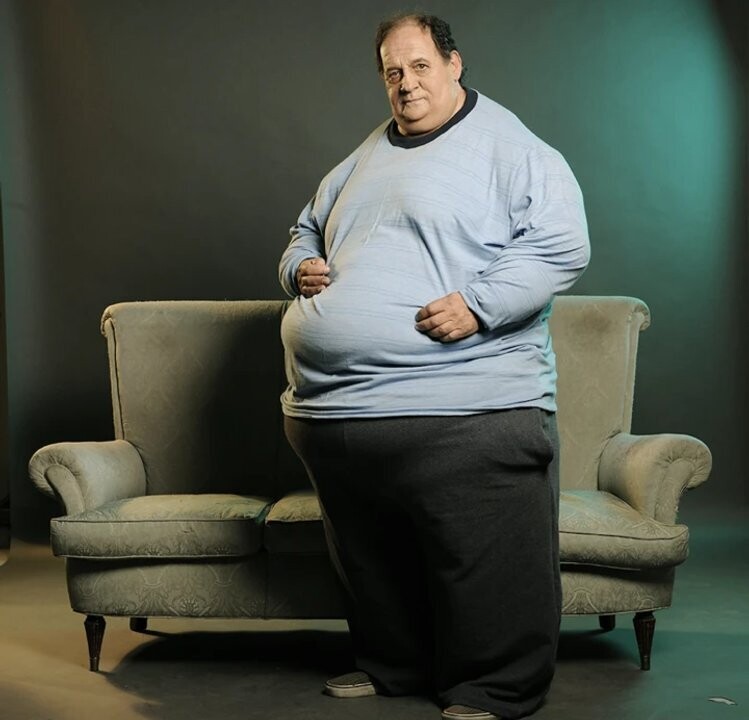
Actor Julio Chávez described the initial effect that the staging of the play 'The Whale' aims to generate: 'Morbidity, for me, was precisely the attraction of the show: the lights go up and you see a person of 230 kilos.' As stated in an interview with a Rosarian media outlet, he defined this tension as a 'constant ethical-aesthetic problem.' Along those lines, he emphasized that the conflicts the character faces 'do not belong to Charlie, they are problems that belong to humanity.' The actor also referred to the technical challenges of the role, especially the use of prosthetics: 'The creation of the costume was tremendous because we don't have the possibilities of cinema.' 'It's an element that says, 'Hey, let's be quiet; I want that thing out there to tell me a story.' 'We have a more empathetic piece than what they say the film is, in the sense that it places Charlie in a much more human, close, tender place, with humor, because for us, it has sordid aspects, but one doesn't have to communicate the drama through sordidness,' he continued, and admitted that he has not seen the film, as reported by the Argentine News Agency (NA) through the dialogue the actor had with the radio station Cadena 3. Regarding the impact on the public, Chávez stated that the goal is to move away from the merely physical: 'When the show is over, Charlie stops being just a man with a morbid condition in his body and becomes a human being... he joins humanity instead of remaining always as a phenomenon.' However, he highlighted the result: 'I was very surprised, because the costume is extraordinary.' Regarding the experience of inhabiting the character, he admitted: 'Sometimes you ask yourself how I'm going to live like this and then you say how am I going to stop living like this. So, that suit for me is Charlie, and if I don't have it on, I couldn't be him.' On the other hand, Chávez resumed his link with Rosario, a venue he defined as key in his beginnings: 'Rosario is almost one of the first venues I did when I started the theater tours.' And he remembered his first impression: 'When I arrived I said, 'my goodness what this theater is, because it's beautiful,' in reference to the Astengo. Finally, when asked about the relationship between prestige and popularity, the actor was blunt: 'The popularity I may have achieved stimulates me enormously to force myself to be better at my craft.'