Scioli's silence has not gone unnoticed and once again places the Government before the need to define to what extent it is willing to tolerate such behaviors.
Sources: Television coverage of "La Cornisa" (LN+); judicial information on the Argentine Football Association; national media.
Faced with the host's persistence—"Specifically, what do you think?"—the official once again dodged the question and appealed to broad concepts about his institutional role and his vision of Argentine football, without mentioning the investigated leaders or the ongoing cases.
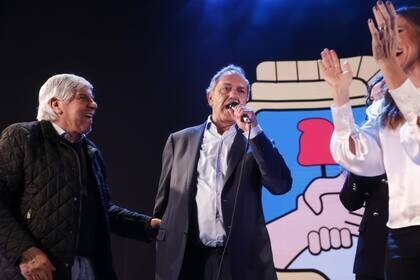
The scene took on an almost caricatured tone when, in response to another question from Di Marco, Scioli smiled, simulated audio technical problems, and abruptly ended the interview.
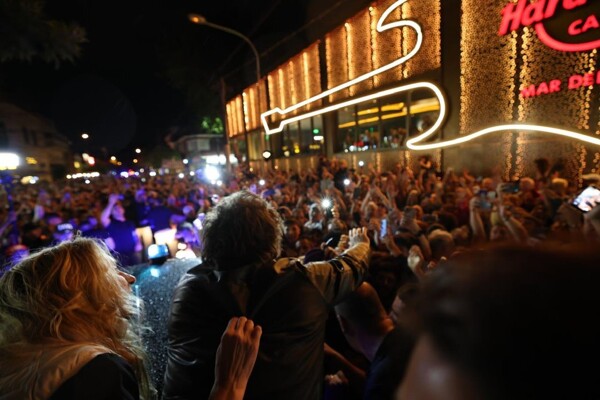
The episode, which occurred during a live broadcast from the city of Mar del Plata, once again put the evasive attitude of the current Secretary of Tourism, Environment, and Sports under scrutiny in the face of a high-impact institutional scandal.
In this context, Scioli was directly questioned by the host about the investigations involving the president of the AFA, Claudio "Chiqui" Tapia, and the treasurer Pablo Toviggino.
A third case involves a company linked to Ariel Vallejo, with a history of money laundering cases, irregularities in the purchase of official dollars in 2019, and business with professional football.
In this context, Scioli's attitude on "La Cornisa" reinforces inevitable questions.
Tapia, Toviggino, and other leaders are implicated in at least three cases for alleged corruption.
The Judiciary ordered raids on both AFA headquarters, 18 clubs, and various private homes, with the aim of clarifying financial movements and possible irregular maneuvers.
One case centers on a luxury property located in Pilar, where it is being investigated whether the true beneficiary would be Toviggino through alleged front men and what was the origin of the funds used for its acquisition.
"Laura, hello, the signal cut out... I apologize, my family is waiting for me, I have to go eat," he said before leaving the mobile unit and leaving the host without an answer.
The public evasion is particularly notable when considering the seriousness of the judicial investigations advancing against the AFA's leadership.
Is this a conscious political decision not to annoy the historical structures of sporting power?
President Javier Milei maintains a wide lead over his immediate successor in all support indicators, which reinforces his leadership and accentuates the distance from past practices associated with silence and ambiguity in the face of corruption.
Another case points to the alleged undue retention of pension contributions corresponding to AFA employees.
Far from responding with clear definitions, the official opted for a series of generic and evasive phrases, avoiding taking a position on a topic that Di Marco herself described as "hot".
"I already took a position at the beginning of all this, it is very clear," Scioli stated on "La Cornisa," without specifying when or how he would have expressed that position.
Or are we facing a personal difficulty in addressing corruption-related issues, a sort of automatic evasion reflex?
Buenos Aires, January 27, 2026 - Total News Agency - TNA - The repeated refusal of Daniel Scioli to comment on the serious corruption allegations shaking the Argentine Football Association was clearly exposed during a television interview on the program "La Cornisa," hosted by journalist Laura Di Marco, aired on LN+.
In an ironic tone, within the political and journalistic environment itself, the question began to circulate of whether there is also a psychological problem that explains his recurrent inability to answer when the topic becomes uncomfortable.
The contrast with the general political climate is marked.