


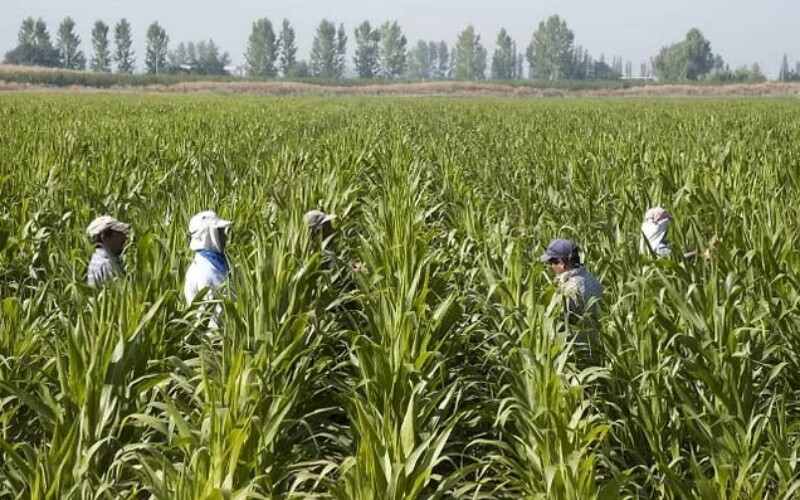
This report seeks to unravel the complexity of slave or servitude labor in the Argentine countryside, based on complaints received from rural workers who were employed in October 2023, in fields exploited by the company Satus Ager, in the locality of Lobería, province of Buenos Aires, analyzing the situation of the workers and the responsibilities of the State and the UATRE union in this serious situation. A grim reality remains latent. Today these drafts are summarized in the article in question. This report seeks to unravel the complexity of slave or servitude labor in the Argentine countryside, based on complaints received from rural workers who were employed in October 2023, in fields exploited by the company Satus Ager, in the locality of Lobería, province of Bs As, analyzing the situation of the workers and the responsibilities of the State and the UATRE union in this serious situation. A grim reality remains latent. Only in this way can respect for human and labor rights be guaranteed in the Argentine rural sphere. The recovery of workers' trade union organizations is fundamental, so that they assume their true task of defending the interests of those who work. The economic system that underlies this tragedy is questioned from a critical perspective, which seeks to highlight the inequalities and injustices inherent in capitalism. The concentration of land and means of production in the hands of a few, together with the ruthless exploitation of the workforce, are the pillars on which this modern form of slavery is based. Ultimately, the fight against slavery in the Argentine countryside is a battle for our dignity as a society, towards a freer and more human future. References Castro, N. (2013). Five cases of slave labor in the field so far this month. These people lived in degrading conditions, working long hours and receiving meager or non-existent wages. In San Juan, for example, 120 workers were found in precarious constructions, being transported in rickety buses to collect olives, always under the supervision of a foreman who paid them 60% of the corresponding salary (Stagnaro, 2021). The situation is not recent. The vulnerability of workers is exploited by employers to impose inhumane working conditions. As a society, we are collectively affected; if these practices persist, our country is less human, less free, less dignified, and democracy is revealed once again as the varnish of capitalist exploitation. Concluding Slave labor in the Argentine countryside is a scourge that persists. The lack of complaints and concrete actions suggests that the union is not fulfilling its role in protecting workers. Economic and social factors Poverty and inequality in the impoverished provinces of the north and northwest of Argentina facilitate labor exploitation. The State frees 360 workers subjected to conditions of slavery. These workers lived and worked in degrading conditions, with shifts of more than 12 hours and pay below the established minimum (Jefatura de Gabinete de ministros, 2021). An operation in La Rioja in 2013 found 360 workers subjected to conditions of slavery on an olive farm belonging to Mastellone Hermanos (Castro, 2013). In 2011, the firm Pioneer, controlled by the multinational Dupont, in Córdoba had 140 workers in subhuman conditions, and as many in Salto, province of Bs As, also in that year a Spanish capital forestry company in Entre Ríos was denounced for the same reasons. The living conditions of enslaved rural workers are horrifying. Researching we found that in 2011, the company Satus Ager has an open case in which its executives had to testify as accused, of being suspected of committing crimes of human trafficking and reduction to servitude of peons brought from the province of Santiago del Estero for the detasseling of corn. Their fields in Ramallo, San Pedro and Arrecifes were raided in the last weeks of that same year. They work long hours for miserable wages and, on occasion, they do not even receive a fixed salary, but are paid per kilo of product collected, violating agricultural employment laws (Castro, 2013). In some fruit and vegetable fields in Ezeiza and Cañuelas, workers lived in shacks without basic services, having to resort to a common tap for water and a homemade brazier for cooking (INFOBAE, 2023). These extreme conditions not only affect the physical health of the workers, but also their psychological well-being, plunging them into a situation of vulnerability and submission. Responsibility of the State, the UATRE union and all of society The absence of the State's inspective and preventive presence, which comes from years, has allowed employers to impose forced labor conditions in numerous establishments, the state recognizes “a weakening of inspections” (Jefatura de Gabinete de ministros, 2021), this we read as objective complicity. State Negligence: The insufficient coordination between state agencies has weakened the State's ability to carry out inspections and apply criminal penalties against employers who practice slave labor, to which we must add the power of companies and their influence on officials, read complicity. Inaction of the UATRE union: The factual complicity due to the absolute inaction of the UATRE union would be contributing to the persistence of slave or servitude labor. Recovered from [link to original source]. https://www.infobae.com/sociedad/policiales/2023/07/20/la-miserable-vida-en-chozas-de-las-victimas-de-trabajo-esclavo-de-las-quintas-de-ezeizBBCNEWS MUNDO. Despite labor regulations and the supposed advance in human rights, slave labor persists in the rural activity of our country, affecting thousands of workers. Despite labor regulations and the supposed advance in human rights, slave labor persists in the rural activity of our country, affecting thousands of workers. Enslaved workers in Argentina. https://www.bbc.com/mundo/video_fotos/2012/01/120124_fotos_argentina_trabajo_esclavoStagnaro, R. (2021). The miserable life in the shacks of the victims of slave labor from the farms of Ezeiza and Cañuelas. Meanwhile, the Milei government also promises to roll back the legal framework, to de facto legalize this slavery. Satus Ager, recruitment in Santiago del Estero, ordeal in Lobería As a desperate cry came to Karne de Máquina a series of testimonies from comrades who develop their activity in the detasseling of corn, from different places in Santiago del Estero, they were recruited by contractors from Loreto, a locality in the same province. The recent revelations about the exploitation of rural workers highlight the urgency of a coordinated, effective and solidary action that must undoubtedly come from below. It is fundamental that solidarity networks are strengthened to face this situation by uniting urban and rural workers. Recovered from [link to original source]. Source: https://karnedemaquina.wixsite.com/karne-de-m/post/esclavitud-moderna-en-el-campo-argentino-el-caso-satus-aguer At the same time, displaying the purest cynicism, the company Satus Ager provides medical equipment in each of the localities where it operates, delivering equipment to the Hospitals of Salto in the province of Buenos Aires, to Arrecifes, to the Saturnino Unzué Hospital in Rojas or for the Rawson Hospital of Chacabuco. The case we are dealing with today has many precedents, such as the summons made by Judge of San Nicolás Carlos Villafañe Russo, the accused are the president and vice president of the company, four directors and four Agronomists in charge of organizing the tasks. In the case, the following are accused of the firm Satus Ager: Félix Cirio, former Undersecretary of Agriculture of Felipe Solá; Félix Lanusse, Miguel and Juan Zimmermann, Ricardo Javier Cardinale and Martín Jarmoluk. With that desperate and disorderly cry, the migrant peons seek to make known the situation they are living. The current story we are describing is built from the complaint that some workers brought us, it is linked to a series of situations that happened in a field in the locality of Lobería, which is 48 km from Quequén and 49 km from Necochea, place where the Santiagueño peons were transferred. Corporate hypocrisy Navigating through the Satus Ager company page we can find that this company proclaims itself: “Member of the United Nations Global Compact”, but… What is the Global Compact? United Nations Global Compact Explained by the same company on its Web site: “It is an international initiative that promotes the implementation of 10 Principles aligned with sustainable development in the areas of human rights and business, labor standards, environment and the fight against corruption in the activities and business strategy of companies”. It also says it promotes the training and training of its CEOs aligned with these principles. The company disseminates that: “Since 2018 SATUS adheres to the ten principles, developing them within its sphere of influence and materializing them in the strategy, culture and daily actions of the company. With that desperate and disorderly cry, the migrant peons seek to make known the situation they are living. The current story we are describing is built from the complaint that some workers brought us, it is linked to a series of situations that happened in a field in the locality of Lobería, which is 48 km from Quequén and 49 km from Necochea, place where the Santiagueño peons were transferred. The ordeal of the migrant peon, from Santiago del Estero to Lobería By Omar Rombolá for Karne de Máquina. Previous words The present note originates in 2023. According to data from the Federal Administration of Public Revenues (AFIP), thousands of people are found every year in subhuman conditions, working long hours for miserable wages and living in deplorable situations. The magnitude of this problem is uncovered through the testimonies of the victims themselves and reports from state agencies and trade union organizations. In many cases, workers are recruited in impoverished provinces and transferred to the fields, where they are forced to work in unsanitary conditions and without basic labor rights. Behind this heartbreaking reality is a network of complicity involving businessmen, contractors, sector unions and prominent political figures with government responsibility. The lack of effective regulation and adequate supervision allows this scourge to persist, fueled by the voracity of those who seek to maximize their profits at the expense of human dignity. Recent cases of slave labor, inhumane working conditions. In March 2021, five cases of slave labor were discovered in Neuquén, Corrientes, Santiago del Estero and San Juan, affecting more than 200 workers, including adolescents and children (Stagnaro, 2021). Meanwhile, the Milei government also promises to roll back the legal framework, to de facto legalize this slavery. (Emilio Ruchansky, 2011) The Federal Prosecutor's Office of San Nicolás had requested the detention and questioning of all the accused, but the company's lawyers managed to get the Judge to grant exemption from prison. Satus Ager ensures it has 200 people under contract and 4000 temporary employees dedicated to harvesting corn and soybean seeds mainly. They were raided Santa Celestina, La Amalia and Doña Clementina, fields that Satus Ager exploits. In Doña Clementina, city of Arrecifes, it was verified that 101 people lived crowded together, without electricity, without showers, nor suitable places for food storage, warned by previous raids the company installed 7 chemical toilets and water drums. Slavery in the Argentine countryside extends from north to south, from east to west Through a series of investigations carried out in different provinces of the country, a heartbreaking reality is revealed that challenges the notion of social and economic progress, and that coarse cliché “that the market self-regulates”. A fact of reality is that many companies commit abuses and all kinds of atrocities against workers, who are subjected in the fields to the conditions imposed by the contractors, when they are there they can no longer defend themselves, before the complicit silence of the UATRE ( Argentine Union of Rural Workers and Stevedores) and the iron hand of companies. From Neuquén to La Rioja, passing through Corrientes, Santiago del Estero, San Juan or the Province of Buenos Aires, the cases of enslaved workers multiply, evidencing an entanglement of injustice and oppression that survives in the very heart of agricultural activity. In many cases, they live in shacks without access to basic services such as drinking water, electricity or adequate sanitation. Recovered from [link to original source]. https://www.elmundo.es/america/2013/03/13/argentina/1363131015.htmlINFOBAE. In February 2021, 132 victims of labor exploitation were rescued in Río Negro, La Rioja, Corrientes and Santa Fe. Others suffered health consequences from having consumed it. Sprayed A prominent issue is the exposure that some peons would have suffered to fumigations, that is, the contact of their skin with agrochemicals, said workers, according to the sources, were accused of having gotten sick from eating a mulita, however, analyses carried out at the Hospital of Santiago del Estero would be showing the presence of said agrochemicals, as the workers who denounce transmit to us. Antecedents of Satus Ager, a history of exploitation Satus Ager has a history of inhumane treatment, published by “La Izquierda Diario”, the peones denounced that they were only offered to take water from the irrigations, in a post-pandemic context they had only 10 chemical toilets, for 60 workers, the presence of vermin and rodents in the shacks, without any type of ventilation. In January 2023 migrant workers under contract with this Company denounced inhumane situations, through a video that went viral with the testimony of harvesters stranded in the locality of Pergamino, working in subhuman conditions for this multinational company, with the complicity of the UATRE, the national and provincial government. They also denounced the employer's neglect in the face of the presence of diseases, which went through different comrades. By Omar Rombolá, for Karne de Máquina. Satus Ager, recruitment in Santiago del Estero, ordeal in Lobería As a desperate cry came to Karne de Máquina a series of testimonies from comrades who develop their activity in the detasseling of corn, from different places in Santiago del Estero, they were recruited by contractors from Loreto, a locality in the same province. That year it was presented in the form of a radio editorial that we developed with Sebastián Díaz Infante, which was largely based on the present text and includes valuable data provided by Raúl Nudel. A key requirement to participate in the Global Compact is: the annual submission of a Communication on Progress (COP) that describes the practical measures (for example, the dissemination of policies, procedures, activities) that Satus Ager has taken to implement the principles of the Global Compact in each of the four thematic areas (human rights, standards, environment, fight against corruption) and A measurement of the results (i.e., the extent to which performance objectives/indicators were met, or other qualitative or quantitative measures of results)”. Immediately after, the company states that: “Regarding the Sustainable Development Goals, SATUS focuses its efforts within its sphere of influence supporting the following: Health and Well-being, Quality Education, Responsible Production and Consumption and Climate Change. In no line of the commitment to the UN does it talk about subjecting workers to servitude in Argentina, or about spraying them with agrochemicals, as the complaints against the company state. It also remains to be seen to what extent the UN monitors the fulfillment of the requirements that companies must meet to be members of the Global Compact. The traces of Satus Ager In the contracts signed by the comrades, the employer company is Satus Ager, a company that has its headquarters in Argentina, at Carlos Tejedor 2608/2612 in the locality of Boulogne, near the Panamerican Avenue, in the province of Bs As. The comrades stated that the modality is always the same, first the signing of the contract, the best definition for it is: a “fine print” document, many of the workers do not know how to read or write, in the contracts curiously it appears that there are days that they work 10 hours without pay, the first irregularity that is obvious, this is related by one of the peones who brought us his complaint. Recruitment in Santiago Sources from rural workers told us that, as of October of last year, they had traveled in groups of 20 people, so they arrived in Lobería, coming from the localities of Atamisqui, Loreto and other departments of Santiago del Estero such as Castellana. Nightmare working conditions The harvesters also informed us that the shacks where they had to live were in the lowest part of the field, an area that was completely flooded in the face of rains, so the peones lost practically all their belongings under the waters. This is how the containers where the peones slept looked like These same shacks, according to the comrades' accounts, were destroyed by the last major storm that hit the locality of Bahía Blanca and also swept through Lobería, receiving the impact of hail on their own bodies. Food in bad condition The issue of food deserves a separate paragraph, according to the account of the peones the chicken arrived spoiled at the place, due to the interruption of the cold chain and the workers who refused to ingest it had to work without eating. El Mundo. (2012, January 25). Tiempo Argentino. (2023).