Argentina, specifically in the province of Buenos Aires, is facing a systemic crisis in its child welfare system. A system currently in the news due to escapes and complaints, is simultaneously facing challenges: political debates on toughening the juvenile criminal regime, alongside strikes and salary demands in key sectors.
In practice, these issues are intertwined. When state salaries fall behind, vacancies go unfilled, leading to high staff turnover, absenteeism, internal conflicts, reduced control, and an overall fragility in daily management.
The problem is not only about internal security within the institutions but also the social impact: every escape triggers anxiety in neighborhoods and families, causes institutional wear and tear, and immediately creates a political rift.
In a parallel context, the child welfare system is part of a broader picture: the Buenos Aires provincial government is facing an increasingly tense front of union demands over wages. If the system is already under strain, what would happen if the universe of minors subject to a harsher criminal regime expands?
For example, in Mar del Plata, objections have arisen regarding physical and psychological evaluations in at least two directive cases, whose results—according to complainants—were either dismissed or directly altered to keep the individuals in their positions.
In sensitive bodies like the OPNyA, where every shift is a potential critical situation, the lack of staff and incentives comes at a high cost. Therefore, in La Plata, the concern is no longer limited to putting out media fires.
With salaries that unions describe as 'meager,' the rank-and-file have pushed the discussion back to its origin: the provincial collective bargaining and the erosion of purchasing power in Buenos Aires.
Buenos Aires judges are striking against Kicillof's government, despite Baradel's attempt to shift the focus to Milei. This thread connects stories that, at first glance, seem different. In recent hours, members of the Buenos Aires Judges' Association (AJB) have confirmed strike measures in rejection of the latest salary proposal from Axel Kicillof's government, and the episode revealed another political fact: Roberto Baradel attempted to prevent the strike from turning into a direct protest against Kicillof, or at least, he tried to shift the blame to President Javier Milei.
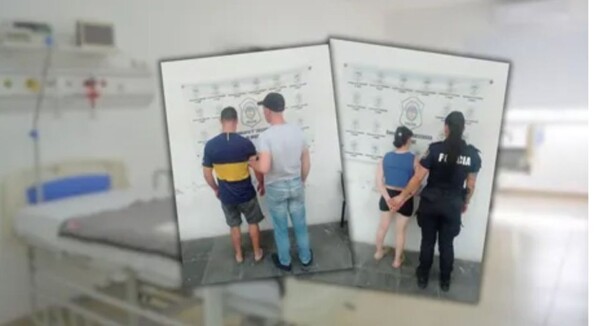
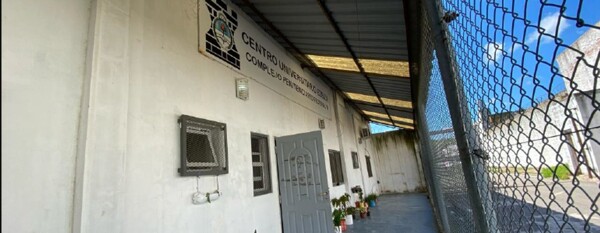
Buenos Aires - February 25, 2026 - Total News Agency (TNA) - While the debate to lower the age of criminal responsibility advances in Congress, a crisis deepens in the province of Buenos Aires that troubles politics and concerns those working on the ground: the child welfare system of the Provincial Agency for Childhood and Adolescence (OPNyA) has accumulated complaints of alleged administrative irregularities, serious incidents within its institutes, and a string of escapes that, due to their number and frequency, once again exposed a picture of operational disorder.
According to information known in provincial circles, the accusations range from supposed 'maneuvers' in psychophysical evaluations for positions, to staff who have allegedly been on service commissions in other state areas for years without verifiable tasks.
The most delicate accusation, however, points to incidents at the Pablo Nogués institute, where the presence of alcoholic beverages and meetings within the facility was allegedly detected, with supporting audio and photo evidence according to the complainants.
Beyond the scandal, a structural problem emerges: the provincial state has facilities operating with understaffing, complex tasks, and highly conflictive youth, but under conditions that, according to current and former employees, are far from a minimum standard.
In this context, they warn, escapes cease to be 'exceptional events' and become part of the landscape.
The OPNyA crisis becomes even more sensitive as it overlaps with the debate on criminal responsibility. Within the sector itself, they fear a scenario of even greater pressure: more admissions, more transfers, more conflict, and consequently, more risks.
This maneuver did not succeed. To this mix are added complaints about alcohol consumption and parties within detention facilities, plus a problem that repeats like clockwork: escapes. In recent days, around ten escapes have been reported in less than a week, with cases spread across institutes in Pablo Nogués, Legarra, Aráoz Alfaró, and Eva Perón, a number that, internally, is explained by a word that is heard more and more: 'overwhelm'.
At the center of some of the complaints appears the provincial director Claudio 'Momia' Otero, cited by sources within the system as a key figure in internal decisions now under scrutiny.
The testimony of Pablo Lenz, a former worker with two decades in the field, summarizes a diagnosis that has been circulating for some time: too few agents for too many adolescents, inadequate facilities, and salaries that, in his view, are below the poverty line.
At this crossroads—penal reform, facility crisis, state protest—the risk is that the provincial government will be too late for everything: too late to contain, too late to correct, and too late to rebuild trust.