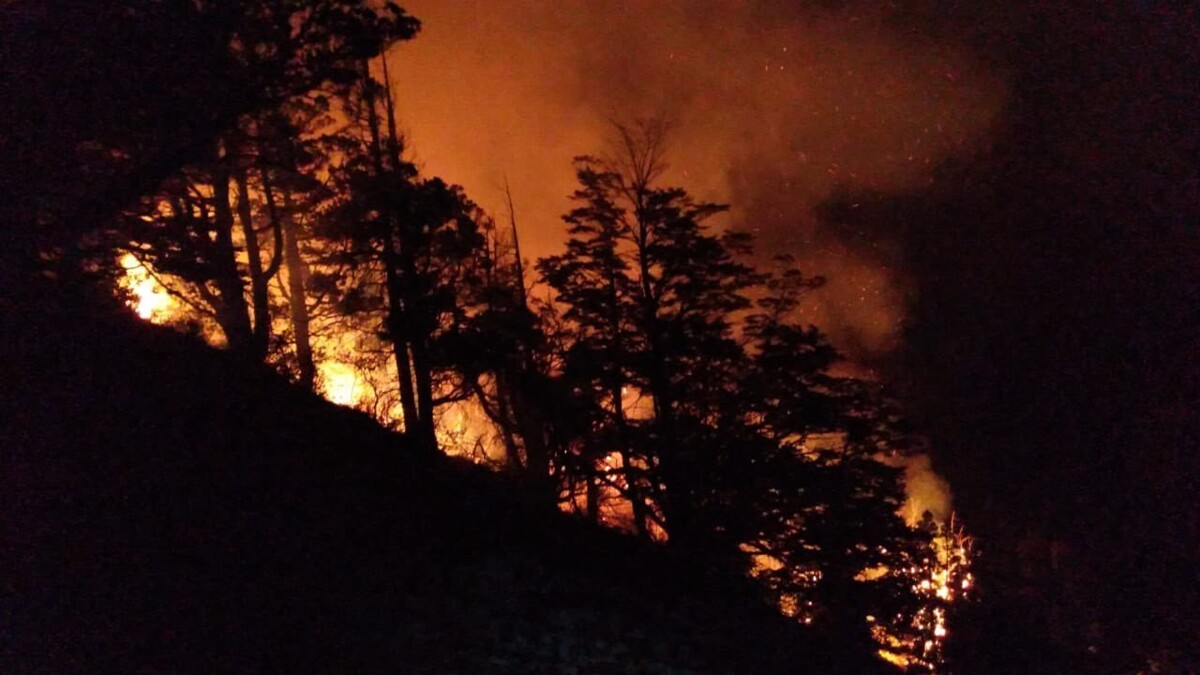
The operation to combat the fire in Los Alerces National Park entered a critical phase this Sunday, with the main focus on protecting lives, homes of residents, and tourist infrastructure. Under an interjurisdictional strategy coordinated with the Federal Emergency Agency (AFE) and the province of Chubut, more than 80 fighters are working on the ground to contain critical points. According to the Argentine News Agency, the meteorological conditions for today present an additional challenge, with maximum temperatures of 22°C, low humidity (35%), and gusts of wind from the West that will intensify from noon. So far, there are no forecasts of precipitation in the affected area. Deployment of resources and aerial assets The operation has a wide deployment of personnel and technology for fire management: Personnel on the ground: 83 fighters from various National Parks (Lago Puelo, Nahuel Huapi, Laguna Blanca and Lanín), volunteer firefighters from the region and Palena (Chile), along with groups of residents. The focus of work is between Futalaufquén and Rivadavia lakes, with patrols patrolling the trace to suppress scattered hotspots. National Route 40: after the total restriction imposed yesterday by National Roads due to the proximity of the fire to the roadway, circulation was normalized, although extreme caution is recommended when traveling. Tourism: despite the fire, tourist services in the Portada Centro and Quebrada del León area are operating normally and show a significant level of activity. The Operational Center installed in Lago Verde continues to monitor the progress of the disaster, while night guards are maintained to safeguard the populations and carry out preventive patrols with rapid attack kits.