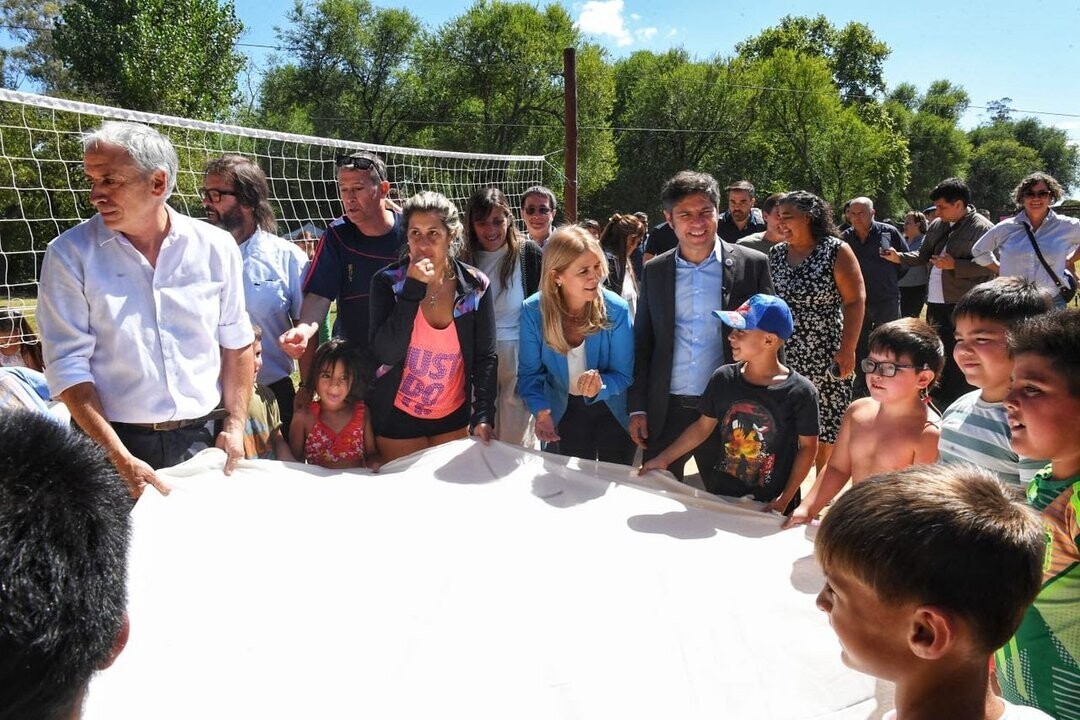
The Vice Governor of Buenos Aires Province, Verónica Magario, stated on Tuesday that “all productive economies are depressed, and this is part of a political decision, an economic plan” being carried out by President Javier Milei. Participating in the Second Productive Meeting of the 2026 Season in Chascomús alongside Governor Axel Kicillof, the official stated that “this is clearly a stage of crisis.” In this sense, she called to return “to the cycle of production, work, and wages.” “They can tell me that the macro has stabilized, that inflation has gone down and so on, but macroeconomics has never solved our microeconomics, which is the functioning of families,” added the Vice Governor.
Criticisms of the Management
On the other hand, Magario criticized Milei for the paralysis of public works. “We have a president who has forgotten that works exist not only to fix roads, to bring drinking water and sewers, but he has also forgotten that all those works also generate the path for production,” she pointed out. To conclude, she stated that it is not enough to “just resist” and that it is necessary to “build an alternative for 2027 and get out of this economic plan's stumbling block.” “We must recover the policies that allow our country to grow and to have more rights,” she concluded.
More than 250 representatives from industrial, tourism, gastronomic, commercial, and metallurgical sectors, among others, participated in the productive meeting in Chascomús, with the aim of analyzing the development of the summer season and the impact of the national government's economic measures on each of the productive branches. Kicillof and Magario were accompanied by the Minister of Production, Science, and Technological Innovation, Augusto Costa; the Minister of Agricultural Development, Javier Rodríguez; by a large part of the Buenos Aires cabinet, and by the local mayor, Javier Gastón.