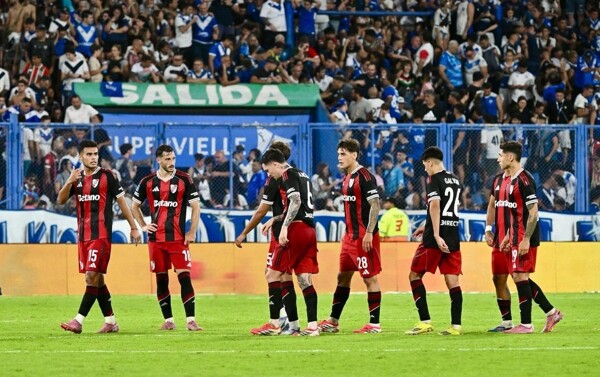
In a case that mixes global contracts, overseas companies and alleged financial triangulations, Guillermo Tofoni has argued that the money raised by the Argentina national team—boosted extraordinarily after the conquest in Qatar 2022—should have gone to the AFA and not, according to his complaint, ended up in opaque structures with branches outside the country. The complainant's proposal points to the heart of the business: the international commercial exploitation of the national team, which in recent years has become a premium asset in global football due to the combination of a world title, global visibility and the commercial magnetism of Lionel Messi. On the AFA leadership side, the public reaction in previous episodes included statements in which they spoke of 'defamation' and defended the contractual structure for the exterior, in an attempt to frame the controversy as a dispute of interest and not as a criminal fact. Beyond the political and media dispute, the case leaves one certainty: the money that moves the Argentina national team is today too large for internal control, public accountability and traceability to be left to partial explanations. Those who defend the scheme argue that the administration of collections and payments abroad can respond to an operational and contractual logic. This point is one of the most sensitive for public opinion: if the AFA collected figures of such magnitude, where are they registered, who collected them, who administered them and with what controls? The complaint states that part of this circuit would have operated through entities based abroad and that they would also have intervened financial structures based in Uruguay, with support points in Buenos Aires and New York. The complainant identified the leadership of the AFA as the central protagonists of the alleged maneuver, with a focus on its president Claudio 'Chiqui' Tapia and the treasurer Pablo Toviggino, to whom he attributed a decisive role in the administration and validation of agreements. The judicial investigation for alleged irregularities in the international income circuit of the Argentine Football Association (AFA) escalated again this Monday following the statements by businessman Guillermo Tofoni, one of the complainants in the case, who stated that there are documents capable of proving the diversion of funds of around US$400 million to 'ghost accounts'. In his view, the problem would not be the existence of contracts or the 'legal' origin of the collections, but the final destination of the money and its reflection—or lack thereof—in the financial statements. In this process, the spotlight falls on one firm: Tour Prod Enter LLC, a company constituted in the United States in 2021 that, according to the complainant's allegations and other previous journalistic reconstructions, was designated as the AFA's commercial agent for the exterior and was enabled to collect global income linked to sponsors, rights and events. Tofoni described the company as a vehicle that would have concentrated collections abroad and, from there, would have derived funds to third parties without real activity or without verifiable consideration. If the Justice manages to order the puzzle—contracts, banks, intermediaries, final beneficiaries and balances—the file can become a milestone on transparency in Argentine football, with institutional and reputational impact. In parallel, in another line of the case, payments to private aviation firms were mentioned and the need to determine if there were real services and who benefited from them was raised. In recent hours, moreover, a procedural aspect was added that fuels tension: presentations by the defenses to question the role of the complaint and request that Tofoni be removed as an accusing party, a move that, if successful, could reduce his ability to promote measures and provide material in the investigation. In his accusation, Toviggino appears as a key piece due to his executive function in the daily management of funds and the control of the financial operation, a condition that—according to the complaint—would have placed him in the position from which 'passed' the contracts and payments. The file, in practical terms, is based on a cross of elements: amounts collected by matches and contracts abroad, bank accounts in foreign jurisdictions, destination societies and, above all, the comparison with balances in which these income would not appear recorded. For Tofoni, the answer lies in the combination between effective collection and the absence of local registration, a mix that—he argues—leads to an obvious conclusion: the money 'is not' in the coffers of the governing body. At the center of the discussion, moreover, appears the way in which the AFA organized international commercialization since 2021, in a context of exchange restrictions and complexities for the entry of foreign currency. 'The brand and the prices multiplied', argued Tofoni, when comparing the volume under suspicion with the notorious FIFA Gate scandal. In journalistic reconstructions disseminated during the last months, it was mentioned that the agreement contemplated relevant percentages on what was collected abroad and that part of the funds would have been transferred to societies without clear traceability, under generic concepts of 'services' and 'logistics'. In previous investigations linked to the same universe, transfers to societies registered in Florida and commercial addresses were mentioned that, due to their nature, raised alerts about the possible existence of 'virtual offices' and companies without staff or activity. The case is also complicated by the web of actors that appear around the Tour Prod Enter LLC contract, associated with businessman Javier Faroni and Erika Gillette. And if it does not succeed, the wound that hurts most in a country that lives asking for accounts will remain: the suspicion that the greatest sporting symbol of Argentina was also a booty.

AFA Scandal: Accusation of 400 Million Dollar Embezzlement
Businessman Guillermo Tofoni has accused the leadership of the Argentine Football Association (AFA) of embezzling around $400 million collected from the national team's commercial assets. He claims the money was transferred to overseas 'ghost accounts' instead of going to the association. The investigation raises questions about the transparency of financial management in one of the country's main sporting symbols.