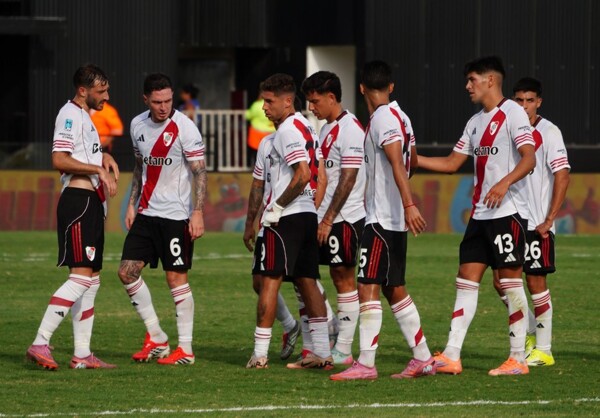
While the system keeps changing, while classification is based on constantly modified criteria, and while clubs cannot sustain long-term sports processes, international competitiveness will continue to fall. The Copa Libertadores does not tolerate improvisation, and today, unfortunately, Argentina improvises more than it builds.
While Brazil sends Flamengo, Palmeiras, Fluminense, Atlético Mineiro with solid projects and millionaire squads, Argentina sends teams that are often unprepared to handle a competition that demands continuity, investment, and stability.
It is no surprise that the last Argentine champion was River in 2018 and that since then, Brazilians have won absolutely everything. The contrast is structural, not accidental. Argentina has resources, talent, history, and potential. The number of teams, the classification method, relegations, averages, parallel cups, and even criteria for sporting merit have all changed. Every season, everything is reinvented, and in that chaos, clubs are unable to plan.
River champion in 2015 and 2018, Boca competitive, San Lorenzo lifting the cup in 2014 and a constant presence in the final stages. Since that Madrid title, everything changed. Brazil grew, got organized, invested, and stabilized its system. Argentina, in contrast, entered a spiral of eternal changes that now have a direct impact: it no longer qualifies the best teams, but rather those that best adapt to the current regulatory situation, as learned from the Argentine News Agency.
Argentine football has changed its format so many times in recent years that it has lost any sense of continuity. It is no coincidence that while Brazil has maintained a stable 38-match tournament with a classification defined by the table for decades, here a new system is debated every semester. This leads to an evident problem: the best do not always go to the Libertadores.
In the list of qualifiers between 2018 and 2025, there are teams with hierarchy—River, Boca, Racing, Estudiantes, Talleres—but also cases that expose the distortion of the system. Patronato entering while relegated, Tigre playing from the second division, teams that qualify through minor tournaments, and clubs that access preliminary phases without a squad to compete at a continental level. This is not a matter of merit: it is a direct consequence of the disorder. This irregularity is paid for dearly abroad.