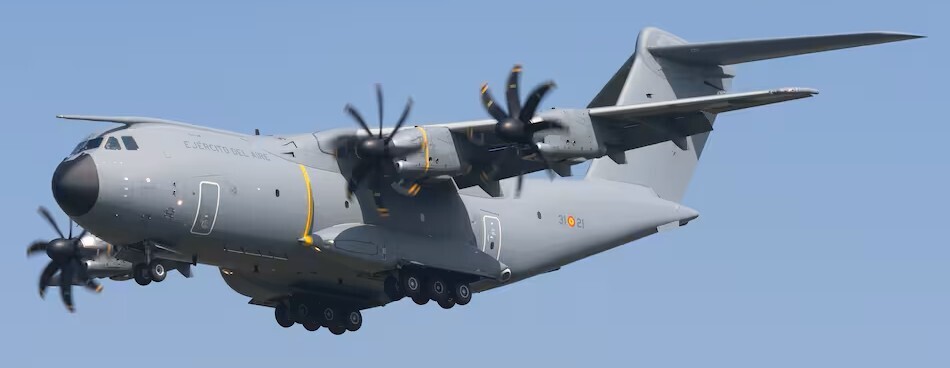
This incident is part of a broader policy of occupation, exploitation, and operational pressure that the United Kingdom is deploying in Argentine maritime spaces, in open tension with UN resolutions, international law, and Argentine domestic law. The suspected flight adds to a much broader picture of unilateral UK actions in waters, on the continental shelf, and surrounding disputed areas, which the Argentine Ministry of Foreign Affairs has been denouncing in increasingly harsh terms. This means that London has not only maintained its occupation but has also consolidated a structure for exploiting Argentine maritime resources while emptying the channels of coordination that had existed under a sovereignty-sharing formula. In hydrocarbons, British conduct is even more sensitive. In other words, a British military aircraft linked to the base in the Malvinas cannot behave as if the Argentine Republic does not exist. But the problem does not end in the air. The same text also recalled that UN General Assembly resolution 31/49 urges both parties to refrain from unilateral decisions that modify the situation while sovereignty negotiations are pending. This point is central because it shows that the British advance is not limited to an isolated episode or an occasional provocation, but to a sustained policy of accomplished facts. The parliamentary data is important because it shows that concern over British naval movements is no longer the exclusive domain of specialists or South Atlantic observers: it has also reached the Argentine institutional level, with concrete demands regarding the use of symbols from the so-called “government” of the “Falkland Islands” and the use of maritime routes that cross sensitive areas for national sovereignty. All this makes the suspicion received by Total News Agency months ago about the possibility of a secret understanding or a discreet channel of accommodation with England on matters related to Malvinas and the South Atlantic even more delicate. There is no possible ambiguity there: the United Kingdom continues to enable business on non-renewable resources in a territory and sea whose sovereignty is expressly disputed. To this is added the persistent militarization of the South Atlantic. The Argentine government then recalled that these actions specifically contravene resolution 31/49 and also resolution 41/11, which defines the South Atlantic as a zone of peace and cooperation. Translated into political terms: London not only exploits resources, but also preserves and displays military muscle in an occupied enclave, while claiming for itself rules it does not respect when it comes to Argentina. The situation at sea was also again exposed with the passage of the British icebreaker RRS Sir David Attenborough, which even prompted a request for information in the Chamber of Deputies for the Executive Branch to clarify the ship's transit through Argentine jurisdictional waters and to promote a formal diplomatic protest to the United Kingdom. Argentina formally rejected the decisions taken by British licensees to advance oil exploration off the Malvinas, and reminded that no exploration or exploitation activity can be carried out on the Argentine continental shelf without the authorization of the competent national authority. A diplomatic, legal, and political response proportional to the abuse is needed. The Ministry of Foreign Affairs has already rejected other British military exercises in the islands, such as Cape Bayonet, and has stated that these maneuvers constitute an unjustified show of force and a deliberate departure from international calls to resolve the dispute through peaceful means. And in the face of that, Argentina needs more than press releases. In the fishing sector, the Ministry of Foreign Affairs's own historical reconstruction indicates that the cooperation mechanisms of the South Atlantic were virtually deactivated after unilateral British acts, including lifting an agreed-upon no-fishing zone and granting long-term fishing licenses in disputed areas. By Darío Rosatti. Buenos Aires, April 14, 2026 - Total News Agency - TNA - A new British military logistical movement between Monte Alegre and Montevideo once again put under scrutiny the way London operates around the Malvinas Islands and in Argentine maritime spaces, showing no respect for Argentina's sovereign sensitivities. The UN Charter itself allows any member state to bring a dispute or situation to the attention of the General Assembly or the Security Council. This information was never officially confirmed, but the succession of flights, stopovers, maritime deployments, fishing licenses, hydrocarbon projects, and military maneuvers feeds a question that the government has not been able to clear up: if there is no agreement, the passivity is alarming; and if there is some kind of tolerance or unspoken arrangement, the political gravity would be even greater. Argentina could present a claim to the United Nations, and it would have a legal and political basis to do so. In its January 3, 2026 communiqué, the San Martín Palace reminded that London persists in its refusal to negotiate and in carrying out unilateral acts, including the “illegal and illegitimate” granting of licenses for the exploitation of natural resources, both in fishing and in hydrocarbons. Fishing, hydrocarbons, militarization, ship transit, and opaque flights are all part of the same pattern: to advance, consolidate, and normalize. The Chicago Convention is clear in recognizing the full and exclusive sovereignty of each State over the airspace of its territory and in providing that no State aircraft may fly over the territory of another country without special authorization. The Ministry of Foreign Affairs also specified that these measures are contrary not only to UN resolutions but also to Argentine domestic law, in particular laws 26.659 and 26.915. The episode revolves around the Royal Air Force's Airbus A400M Atlas, registration ZM413, which made flight RRR4000 from the British base on the islands to the Uruguayan capital on April 12 and then took off again from Carrasco as RRR4001, in a maneuver that was again observed by specialists due to the loss of the transponder signal on the most delicate part of the journey. If that British military aircraft had indeed penetrated Argentine airspace without authorization, the situation would not be a technical detail but a new demonstration of the audacity of an occupying power that acts as if the basic rules do not apply to it. In this context, Rockhopper Exploration and Navitas Petroleum have already been sanctioned for carrying out operations without Argentine authorization. Furthermore, in the Malvinas issue, the UN has recognized for decades the existence of a sovereignty dispute between Argentina and the United Kingdom, and resolution 31/49 asks both parties to refrain from introducing unilateral modifications while the dispute remains pending. Ultimately, the case of the British A400M cannot be seen just as a radar anomaly.